
Last updated 2026.09.16 · Edited by silveston · Compiled by an independent hobbyist without professional credentials
SPECIES WIKI · TESTUDINIDAE
Russian Tortoise
Testudo horsfieldii
A small tortoise inhabiting the arid steppes of Central Asia. It spends more than nine months of the year in burrows, leaving a period of less than three months for actual foraging.

30-Second Summary
- The Russian tortoise (Testudo horsfieldii) is a small tortoise found in the arid steppes and deserts of Central Asia. Its carapace reaches a maximum of about 22 cm and is nearly equal in length and width, appearing almost circular when viewed from above.
- A defining characteristic of this species is its extremely short active season. A five-year field tracking study reported that this tortoise spends more than nine months of the year in burrows, leaving a period of less than three months for actual foraging. It has four claws on its forelimbs, earning it the English name “four-clawed tortoise. The absence of a movable hinge on the plastron is another frequently cited characteristic. Observations in the wild indicate that they prefer toxic plants over grasses. This is interpreted as an evolutionary outcome of being pushed into a niche where they do not directly compete with grazing livestock for food. Its IUCN status is “Vulnerable” (VU), but this assessment has not been updated for 30 years since 1996. During this period, approximately 100,000 individuals have been removed annually for the pet trade, and recent studies point out that a significant portion of exports declared as captive-bred actually consist of individuals captured in the wild. As the notation for the genus name is split between It spends more than nine months of the year in a burrow, leaving a period of less than three months for actual foraging.
- It has four claws on its forelimbs, earning it the name “four-clawed tortoise” in English-speaking regions. The absence of a movable hinge on the plastron is another frequently cited characteristic.
- In the wild, it has been observed preferring toxic plants over grasses. This is interpreted as an adaptation to avoid direct competition for food with free-grazing livestock.
- Its IUCN status is Vulnerable (VU), but this assessment has not been updated in 30 years, since 1996. In the meantime, approximately 100,000 individuals have been exported annually through the pet trade, and recent studies indicate that a significant portion of these exports involves wild-caught animals falsely declared as captive-bred.
- and Testudo and Agrionemys, both names must be searched when looking up literature.
Basic Species Information Sheet
| Common Name | Russian Tortoise (Horsfield’s Tortoise, Steppe Tortoise) |
|---|---|
| Scientific name | Testudo horsfieldii Gray, 1844 |
| Synonyms | Agrionemys horsfieldii (Khozatsky & Mlynarski, 1966) · Testudo (Agrionemys) horsfieldii (TTWG) |
| Classification | Order Testudines > Family Testudinidae > Testudo Genus |
| Type Locality | Kabul, Afghanistan (Holotype BMNH 1947.3.4.3) |
| Distribution | Southern Kazakhstan, Uzbekistan, Turkmenistan, Tajikistan, Kyrgyzstan, northern and eastern Iran, Afghanistan, northern Pakistan, Xinjiang (China) |
| Habitat | Arid steppes and deserts; up to 2,400 m above sea level |
| Carapace Length | Max. approx. 22 cm (ranges of 13–25 cm reported in literature) |
| Activity | Diurnal; bimodal activity pattern (morning and evening peaks) |
| Diet | Herbivorous (over 80 plant species recorded in the wild) |
| Reproduction | Oviparous. 2–6 eggs per clutch, 2–3 or more clutches per season (varies significantly by source) |
| Lifespan | Reported to exceed 40 years (no verified record of maximum longevity confirmed) |
| Conservation | IUCN Vulnerable (VU, Assessed in 1996) · CITES Appendix II |
Classification and naming
Testudo horsfieldii was described by John Edward Gray in 1844. The specific epithet horsfieldii honors the American naturalist Thomas Horsfield (1773–1859); the holotype is BMNH 1947.3.4.3 at the Natural History Museum in London, and the type locality is Kabul, Afghanistan.
A crucial point regarding this species is that the generic name varies across literature. In 1966, Khozatsky and Mlynarski established a monotypic genus—containing only this turtle—based on morphological differences, Agrionemys and T. horsfieldii became its type species. Opinions subsequently diverged on whether to recognize this genus.
Currently, the most widely cited treatment is the checklist by the Turtle Taxonomy Working Group, Agrionemys which downgrades it from a genus to Testudo a subgenus within the genus, Testudo (Agrionemys) horsfieldii designating it as Testudo horsfieldii. The Reptile Database also maintains the valid name as
. However, opposing views persist. Vasilyev et al. (2014) reported that the taxon forms a distinct cluster in both mitochondrial 12S rRNA and nuclear RAPD markers, supporting its recognition as a separate genus. They identified six haplotypes (including three new ones) within the taxon. A practically important point is that one must search for both names when looking for literature on this species. Many ecological studies of this species published in Russian-language journals use the other name in their titles; searching with only one name would result in missing half of the key literature. The classification of subspecies also varies by source. The Reptile Database lists five subspecies, whereas the *Turtles of the World* database series recognizes only three. Most of these subspecies were described by Chkhikvadze between 1988 and 2009, and few have been validated using molecular data. While various studies have confirmed the existence of morphological variation among regional populations, there is no consensus on how to categorize this variation into specific subspecies. Cases of hybridization with *Testudo graeca* have been reported in captive populations. As their natural ranges do not overlap, this situation is the result of humans bringing them together in one place. Agrionemys and Testudo reported that they form distinct clusters and advocated for recognizing them as separate genera. They A. horsfieldii identified six haplotypes (including three new ones).
A practically important result is this: one must search for both names when looking for papers. Many ecological studies of this species published in Russian-language journals use Agrionemys horsfieldii are used. Searching with only one of the names results in missing half of the key literature.
The classification of subspecies also varies by source. The Reptile Database lists five subspecies (horsfieldii, bogdanovi, kazachstanica, kuznetzovi, rustamovi), whereas the *Turtles of the World* series of databases recognizes only three (horsfieldii, kazakhstanica, rustamovi).
Most of these subspecies were described by Chkhikvadze between 1988 and 2009, and few have been validated using molecular data. While various studies have confirmed the existence of morphological variation among regional populations, it is accurate to say that no consensus has yet been reached on how to categorize that variation into specific subspecies.
In captive populations, T. graeca ibera, T. hermanni boettgeri Cases of hybridization with have been reported. Since their natural ranges do not overlap, this is the result of humans bringing them together in one place.

Evolution
Testudo The genus comprises a group of small tortoises distributed across the Mediterranean coast, North Africa, and Southwest Asia. Among them, the Russian tortoise is the species found furthest east and deepest within the continental interior.
Phylogenetic relationships within the genus were first extensively analyzed by van der Kuyl et al. (2002) using mitochondrial 12S rRNA, followed by subsequent studies; however, regarding the Russian tortoise, Testudo no conclusive evidence identifying its sister taxon within the genus could be confirmed at the time of writing this document. It is safest to understand its closely related taxa only Testudo(T. graeca, T. hermanni, T. marginata, T. kleinmanni at the level of the Mediterranean region.
Morphologically, the species’ evolutionary divergence is relatively distinct. The entire carapace is low and flattened, and the limbs are specialized for digging.
The fact that it has four claws on its forelimbs is understood in the same context. Other Testudo species have five claws on their forelimbs. While it is generally interpreted that a burrowing lifestyle altered the structure of their limbs, I have not been able to locate primary literature that directly verifies this interpretation, so it should be accepted merely as a functional inference.
Information regarding the fossil record and divergence dates could not be confirmed in this study. Current knowledge on this aspect is limited.
The same applies to when the life history of burrowing and spending most of the year underground was established. Although it is tempting to link this to the intensification of the continental climate in Central Asia, no chronological data to support this has been secured.
Natural Distribution
Its core distribution range is Central Asia. The Reptile Database lists southern Kazakhstan, Kyrgyzstan, Tajikistan, Turkmenistan, Uzbekistan, northern and eastern Iran, Afghanistan, and northern Pakistan. To this, the Turtles of the World database adds Xinjiang, China.(adds Xinjiang, China.)
It is worth noting that the list of countries within its distribution range varies by source. While *Fauna & Flora* includes Armenia, Azerbaijan, and Russia in the distribution range, the Reptile Database classifies records from these three countries and Nepal as “unconfirmed.” When examining distribution ranges in the literature, it is important to distinguish between the confirmed core range and unconfirmed peripheral records.
The elevational range is broad; the Reptile Database lists occurrences up to 2,400 m above sea level, while *Fauna & Flora* notes its presence above 2,000 m. This spans environments ranging from lowland deserts to mountainous steppes.
The total distribution area is quite large. Bondarenko and Peregontsev (2017) surveyed 287 sites in Uzbekistan alone and reported that this species inhabits approximately 67% of the country’s territory—an area of about 300,000 km²— characterized by desert landscapes.
However, a wide distribution range and high population density are different matters. The same study revealed that high-density areas—exceeding 10 individuals per hectare— account for merely 0.6% of the total habitat range. Although widely distributed, population densities are low across most of the territory.
Introduced populations have also been established. Donini (2024) compiled field records of this species in southwestern Florida and reported the discovery of a newly hatched individual on June 10, 2021. This observation suggests the possibility of natural reproduction occurring within the United States. This is a byproduct of the scale of the pet trade. The pattern of a species—removed from its native range in the hundreds of thousands—establishing a foothold on another continent is a recurring phenomenon among reptiles. A Russian tortoise on dry soil near Bukhara, Uzbekistan. Bukhara, Uzbekistan — Jamshid Nurkulov · CC BY-SA 4.0 · Wikimedia Commons Two Russian tortoises side-by-side on dry ground in Forish, Uzbekistan. Forish, Jizzakh Region, Uzbekistan, May — Vyacheslav Yusupov · CC BY 4.0 · iNaturalist Habitat Typical habitats include arid steppes and deserts. They are found across sandy and loamy steppes, rocky deserts, and hilly terrain, primarily in open landscapes with sparse shrubbery. A newly hatched individual reported a case where was found. This observation suggests the possibility of natural reproduction occurring within the United States.
This is a byproduct of the scale of the pet trade. The pattern of a species—exported by the hundreds of thousands from its native range—establishing a foothold on another continent is frequently observed among reptiles.


Habitat
Typical habitats include arid steppes and deserts. They are found in sandy and loamy steppes, rocky deserts, and hilly terrain, primarily in open landscapes with sparse shrubbery.
To understand the habitat of this species, burrows must be examined first. Russian tortoises avoid both midday heat and nighttime cold by staying inside their burrows. While burrow depths of up to approximately 2 meters have been reported, this figure relies on secondary sources.
Burrows cannot be dug at just any time; digging requires rainfall to soften the soil. Consequently, these tortoises may visit burrows dug by others, or multiple individuals may spend the night in a single burrow.
A study on thermal biology by Bondarenko and Peregontsev (2019) provides specific figures regarding the thermal conditions of this habitat. The lowest body temperature recorded when a tortoise emerged from its burrow was 9.4 °C, and the lowest surface temperature was 11.8 °C.
During morning activity, body temperatures ranged between 22.1~38.0 °C, with an average of 30.5 ± 0.3 °C; for active individuals, 76% fell within the 28.0–35.9°C range. The range of body temperatures actually utilized by this species is narrower than expected.
There is also a crucial observation. From mid-May onwards, the surface temperature consistently exceeds 40°C. From this point on, even if food remains, they cannot emerge onto the surface to feed. This is the physical cause of the extreme activity patterns discussed later.
Reliable sources for climatic data, such as annual average temperature or precipitation, could not be confirmed for this study.


Appearance
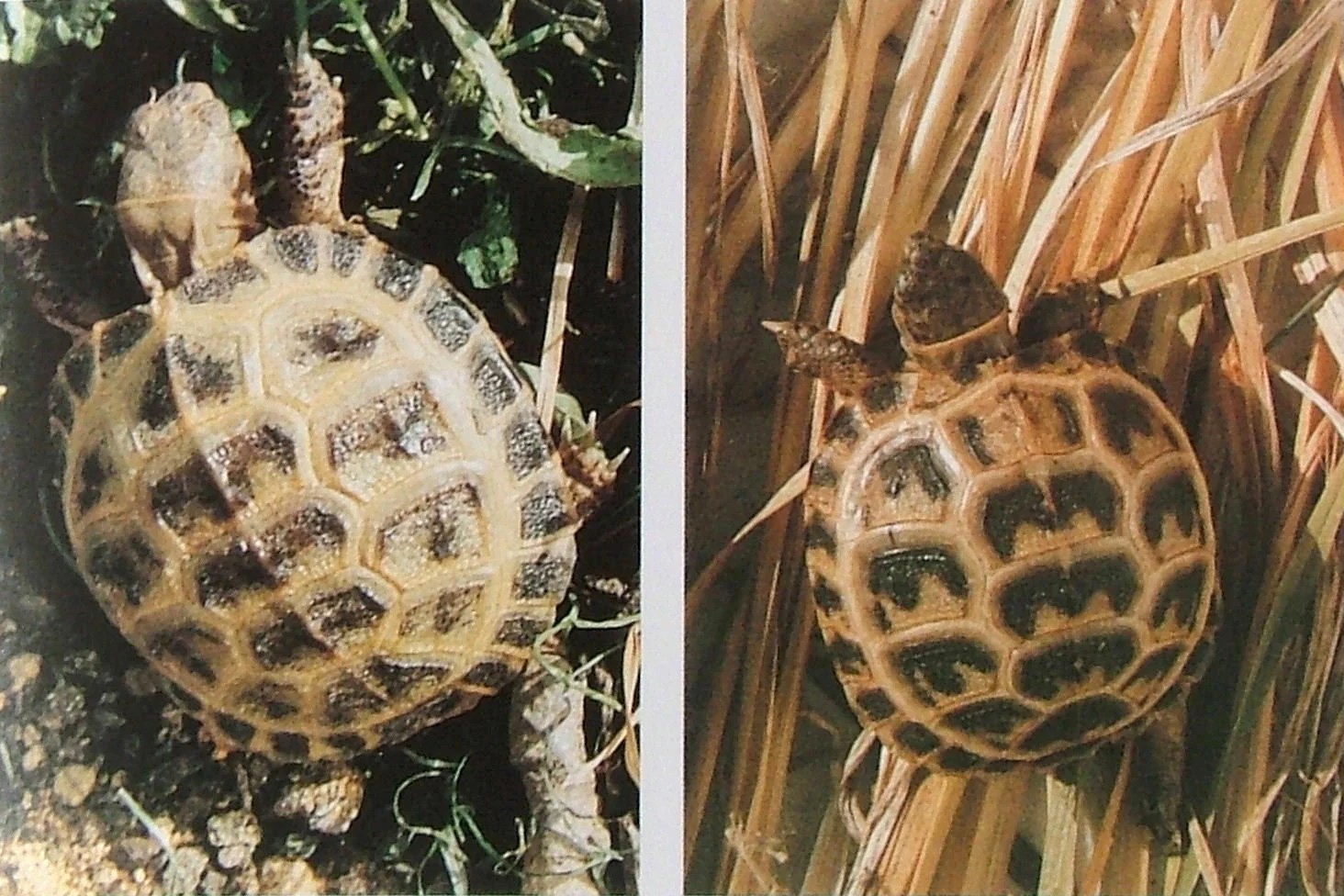
The carapace is low and rounded. Its length and width are nearly equal, giving it a nearly circular appearance when viewed from above—a feature that distinguishes it at a glance from the elongated forms of other species. The background color ranges from light brown to yellowish-brown, with dark brown pigmentation overlaying the centers and borders of the scutes. The plastron lacks a movable hinge between the abdominal and femoral scutes. While this area shows slight flexibility in some Mediterranean tortoise species (such as females of certain types), the plastron of this species is rigidly fixed. However, since Hermann’s tortoises also lack this hinge, the presence or absence of a hinge cannot be used to distinguish between the two species. It has four claws on its forelimbs; this contrasts with the five claws found on other tortoises, earning it the English common name “four-clawed tortoise.” Note, however, that primary literature documenting this specific trait has not been verified, and widely cited references rely on secondary sources. The head features a hooked jaw, and the limbs are covered with large, overlapping keratinous scales. There is a spur-like structure on the heel and a tubercle on the thigh. Overall, the body is adapted for burrowing and traversing rough terrain. There is a hard, keratinous projection at the tip of the tail. Each scute on the plastron features brown or black blotches; in some individuals, the surface may appear almost entirely black. Sexual dimorphism manifests primarily in two ways. Males are smaller, and possess longer tails and claws. Females have shorter, thicker tails and shorter claws. The shape of the cloaca also differs. In males, it appears as a longitudinal slit near the tip of the tail, whereas in females, it is shaped like an asterisk near the base of the tail. While these traits are widely cited, the information comes from secondary sources. There are also studies specifically addressing sexual dimorphism in body shape and mobility. A paper on sexual dimorphism published by Bonnet et al. examined the effects of the environment and sexual selection on body shape and mobility; however, as the specific bibliographic details (volume, page, DOI) could not be verified at the time of writing, the conclusions are not cited here. Dorsal view of the Russian tortoise’s carapace. It has a rounded outline with nearly equal length and width, and each scute features a dark brown pattern. T. graeca It T. hermanni is a feature that distinguishes it at a glance. The background color ranges from light brown to yellowish-brown, with dark brown pigment overlaid along the scute borders and centers.
The plastron lacks a movable hinge between the abdominal and femoral scutes. T. graeca Females or T. marginata certain other Mediterranean tortoises exhibit slight flexibility in this area, whereas the plastron of this species is rigidly fixed. However, Hermann’s tortoise (T. hermanni) also lacks this hinge, so the presence or absence of the hinge alone cannot distinguish the two species.
It has four claws on its forelimbs. In contrast to other tortoises that have five, it earned the English common name “four-clawed tortoise. However, I have not been able to verify the primary literature regarding this trait, and the widely cited evidence comes from secondary sources.
The head features a hook-like, curved snout, and the limbs are covered with large, overlapping keratinous scales. There is a spur-like structure on the heel and a tubercle on the thigh. Overall, the body is adapted for burrowing and navigating rough terrain.
There is a hard, keratinous spur at the tip of the tail. The plastron features brown or black blotches on each scute; in some individuals, the surface may appear almost entirely black.
Sexual dimorphism is evident in two main ways. Males are smaller and have longer tails and claws, whereas females have shorter, thicker tails and shorter claws.
The shape of the cloaca also differs. In males, it is a longitudinal slit located near the tip of the tail, while in females, it is asterisk-shaped and located near the base of the tail. Although these traits are widely cited, the information comes from secondary sources.
There is also research directly addressing sexual dimorphism in body shape and mobility. A paper on sexual dimorphism published by Bonnet et al. Biological Journal of the Linnean Society examined the effects of environment and sexual selection on body shape and mobility; however, as the specific bibliographic details (volume, page, DOI) could not be verified at the time of writing this document, their conclusions are not cited here.

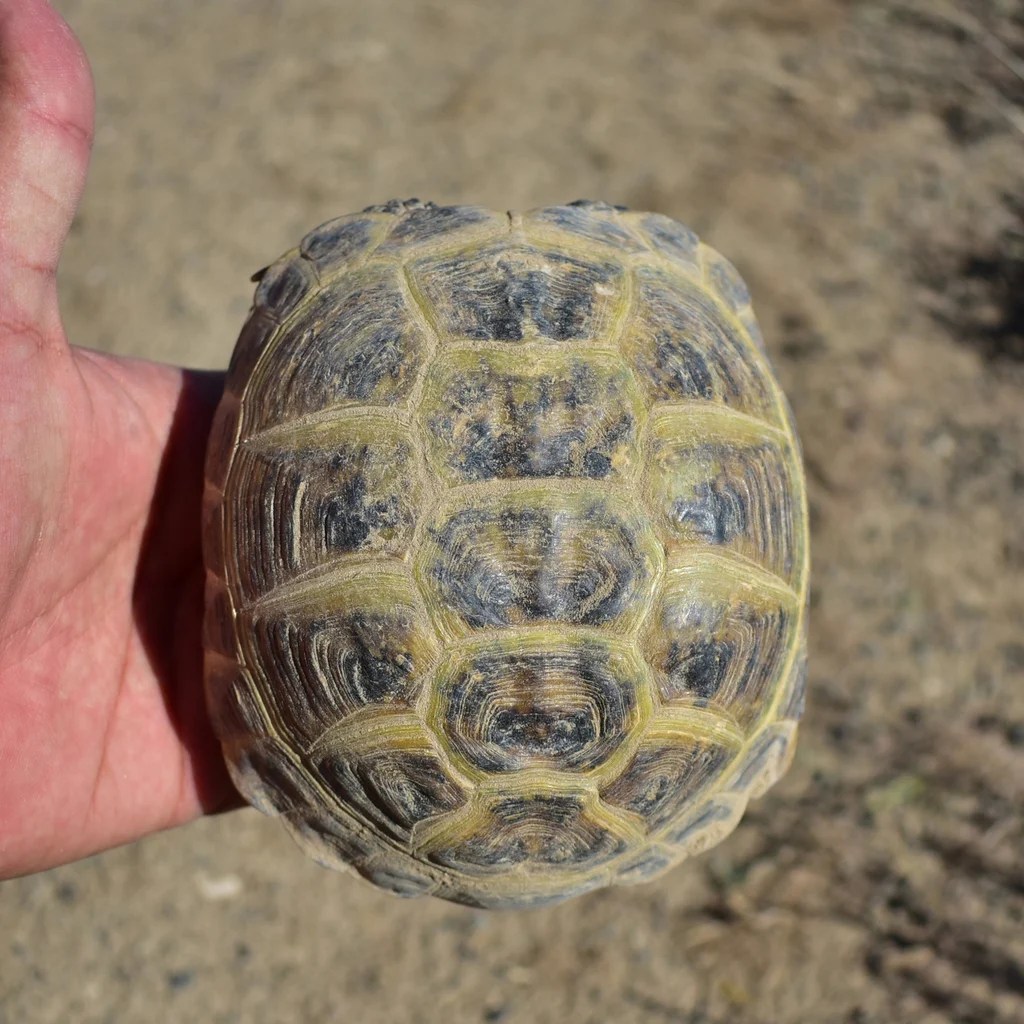
Size
The most reliable figure is a maximum carapace length of approximately 22 cm. This value is provided by the *Turtles of the World* database series, and various secondary sources concur, noting that “it is rare for adults to exceed 22 cm.”
Sizes commonly encountered are smaller than that. The California Turtle & Tortoise Club states a general range of 15–20 cm, noting that they rarely exceed 23 cm. The English Wikipedia lists an overall range of 13–25 cm, with females at 15–25 cm and males at 13–20 cm.
No figures with cited sources were found regarding body weight. Weight values (in grams) circulating within the captive-keeping community are not included in this document because their sources cannot be verified.
There is excellent primary literature regarding sexual dimorphism in size. Lagarde et al. (2001) analyzed growth, maturation, and individual variation in a wild population in Uzbekistan and showed that females mature later and, consequently, are larger at the time of maturity.[continued from above]
A more interesting finding of this study is that there was no difference in juvenile growth rates between males and females. The size difference arises not from differing growth speeds, but from differing times of maturation.
Furthermore, individuals that grew faster matured at a smaller size. In other words, what determines maturation in this species is the growth rate, not the size attained itself. Food resource availability varies among individuals, and the timing of maturation shifts in response to these conditions.
This also implies a loose correlation between size and age in wild populations. Estimating age based solely on carapace size is particularly unreliable for this species.
Behavior
To summarize the behavior of this species in a single sentence: They spend most of the year underground.” This statement is not a metaphor but the conclusion of field tracking studies.
In a five-year field study, Lagarde et al. (2002) reported that this tortoise spends more than nine months of the year underground, with a period available for actual foraging in the spring of less than three months. The title of the paper itself is A short spring before a long jump.”
Lagarde et al. (2003) add another layer to this: the extreme climate of Central Asia limits activity to three months a year, and even within that active period, the animals remain inactive 90% of the time, spending very little time actually feeding.
Males and females allocate their time differently during the short spring. During the mating season, males invest heavily in courtship behavior, while females invest in foraging. This divergence in priorities stems from the differing needs of females—who must secure a year’s worth of energy within a few weeks—and males, who must find a mate during that same period.
A similar differentiation appears in spatial usage; another study by Lagarde et al. (2003) tracked 36 individuals using radiotelemetry and found that males intensively patrol a narrow range, whereas females travel long distances in a single direction, utilizing a larger area.[continued from above]
Dormancy occurs twice. It engages in both aestivation—to avoid summer heat— and brumation—to avoid winter cold— with both processes taking place inside burrows. The active period in spring is a brief window between these two dormant phases. It also possesses surprising capabilities. Various sources note its exceptional climbing ability, allowing it to scale steep inclines. Its low, rounded carapace and sturdy limbs appear to facilitate movement across rocky terrain. It is diurnal, though its activity is not evenly distributed throughout the day. Bondarenko and Peregontsev (2019) found that the species exhibits a bimodal pattern of daily activity, with the morning peak being more pronounced than the evening peak. aestivation and avoiding winter’s low temperatures brumation both occur within burrows. The active period in spring is a brief window sandwiched between these two dormant phases.
It also possesses surprising capabilities. Various sources note its excellent climbing ability, allowing it to scale steep surfaces. Its low, rounded carapace and sturdy limbs appear to facilitate movement across rocky terrain.
Activity Period
It is diurnal, though its activity is not evenly distributed throughout the day.
Bondarenko and Peregontsev (2019) found that the species’ daily activity is bimodal and that the morning peak is greater than the evening peak. The researchers described daily activity and thermoregulation by dividing the day into eight segments.
This observation carries practical implications. As the paper explicitly points out, surveying only during the evening hours leads to an underestimation of population density. When reviewing population survey results for this species, one must also consider the time of day the survey was conducted.
Seasonal patterns are even more dramatic. They emerge from their burrows to become active roughly between March and May; by June or July, rising surface temperatures cause them to cease activity and enter estivation, while they hibernate during the winter.
As previously noted, surface temperatures consistently exceed 40°C starting in mid-May. This marks the effective end of their active season; even if food remains available, they cannot emerge.
The observation that their body temperature had dropped to 9.4°C upon emerging from the burrow indicates that they begin their period of potential activity at a remarkably low body temperature. This behavior is interpreted as an attempt to maximize the use of a brief window of opportunity.
The probability of encountering this turtle is highest during spring mornings, whereas in the heat of a summer day, one might walk across their vast habitat without spotting a single individual. It is a species for which observational results vary drastically depending solely on the season.
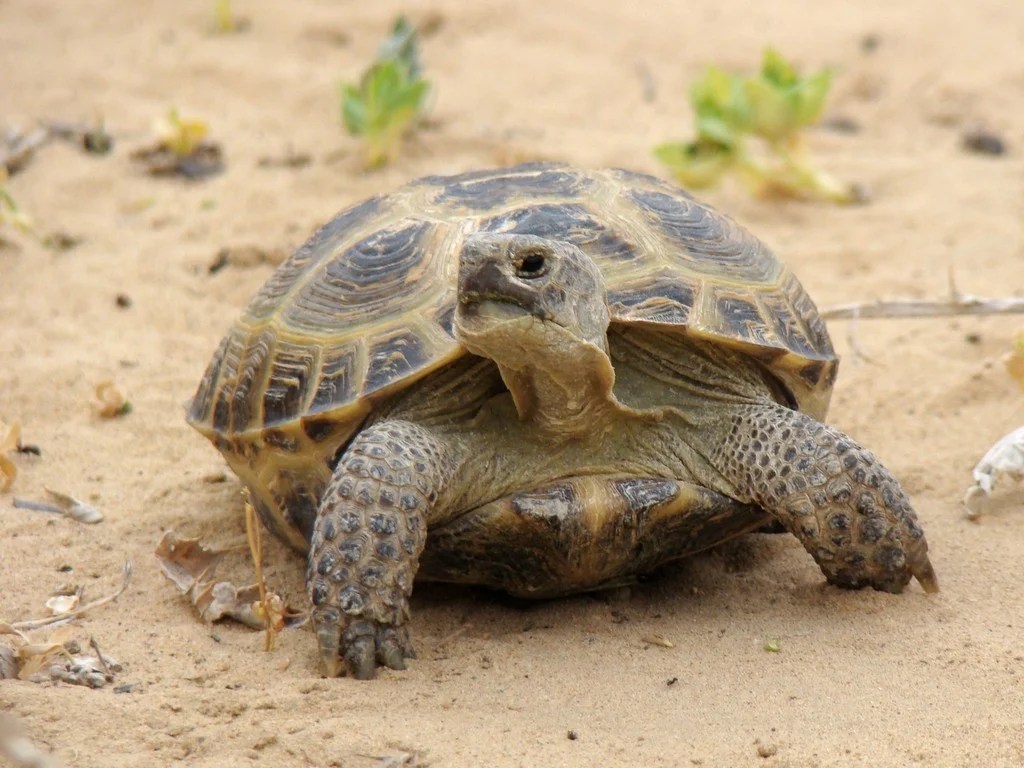
Sensory organs
No studies specifically examining the senses of the Russian tortoise itself were found for this entry. The information below reflects general knowledge regarding tortoises and should not be interpreted as species-specific data.
Tortoises are known to rely heavily on vision. Research on closely related species provides useful references regarding color vision. Pellitteri-Rosa et al. (2010)Testudo hermanni conducted experiments to determine whether Hermann’s tortoises ( ) could distinguish colors under natural and artificial stimuli. However, as the specific conclusions of the paper could not be verified,
the results are not cited here. Olfaction is also considered an important sense in tortoises. Chemical signals are generally understood to play a role in individual recognition, foraging, and reproductive interactions. No data experimentally confirming this in Russian tortoises was found.
Turtle hearing is generally known to be biased toward the low-frequency range. This is due to their anatomy, which lacks an external ear canal and has an eardrum covered by skin.
Given their burrowing lifestyle, one might expect the ability to detect ground vibrations to be useful; however, no studies confirming such an ability in this species have been found. We do not rely on speculation.
In summary, regarding this aspect, current knowledge is limited. While there is abundant data on the Russian tortoise regarding its ecology in the wild and trade statistics, there is a notable lack of species-specific research concerning its sensory physiology.
Diet
It is herbivorous, and the specific nature of its diet is particularly interesting.
Field observations by Lagarde et al. (2003) reported that this tortoise prefers consuming toxic plant species over grasses. Researchers interpreted this as a strategy to avoid direct competition for food with grazing mammals.
The Central Asian steppe is a region where large-scale grazing has taken place for a long time. If they were driven to consume plants that sheep and goats avoid, then this tortoise’s diet is not merely a matter of preference but a legacy of competition. The number of plant species consumed is substantial. Records indicate that in the wild, they feed on over 80 plant species, including some that are toxic. They consume a wide variety of plant parts, including herbaceous and succulent plants, fresh and dried grasses, twigs, flowers, fruits, and fleshy leaves and stems. Their feeding strategy is strictly opportunistic: they eat as much as possible during their brief active period to build up fat reserves, then survive on those stores for the remaining nine months. A specific list of plants at the genus or species level could not be confirmed in this study. Compiling a single list is difficult because the vegetation varies by region. A Russian tortoise emerging amidst the lush green spring vegetation in Otrar, Kazakhstan, in late April. An individual seen on green vegetation during the short spring active period in late April — Kudaibergen Amirekul · CC BY-SA 4.0 · iNaturalist Predators No primary literature specifying natural predators at the species level was found.
The number of plant species consumed is high. In the wild, over 80 plant species have been recorded in their diet, including some toxic plants.
The parts consumed vary widely, encompassing herbaceous and succulent plants, fresh and dried grasses, twigs, flowers, fruits, and fleshy leaves and stems.
Their feeding strategy is strictly opportunistic; they consume as much as possible during their brief active period to accumulate fat, then survive the remaining nine months on these reserves.
A specific list of plants at the genus or species level could not be confirmed in this survey. Compiling a single list is difficult because vegetation varies by region.
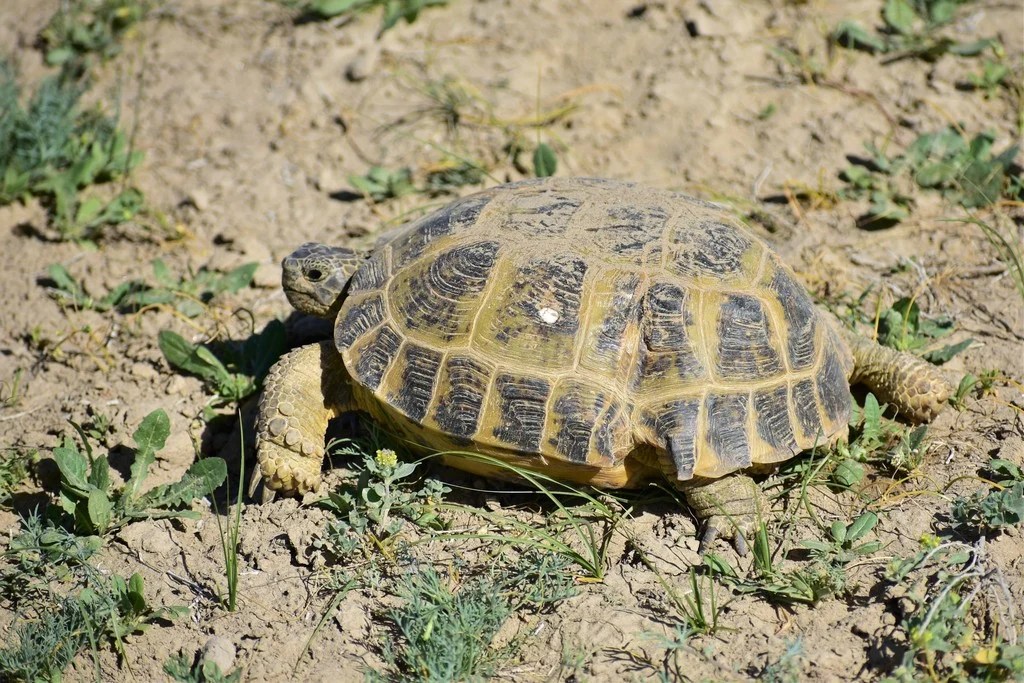
Predators
No primary literature specifying their natural predators at the species level was found. Knowledge regarding this topic is currently limited.
There is indirect evidence; a report from the EU research project EFFACE estimates the predation rate within the first year of life at 70–90%. However, the report does not specify which predators are responsible for these deaths.
Given that hatchlings measure 3–5 cm, individuals at this stage fall within the prey size range of numerous carnivorous birds, mammals, and reptiles inhabiting the steppe. Once they reach adulthood, their carapace serves as a physical barrier against most predators.
CITES documentation from Uzbekistan indicates that the survival rate of juveniles in the wild 1~3% stands in contrast to that of captive-reared juveniles released into the wild, 50~96% of which a certain proportion survived. This comparison clearly illustrates a life history characterized by very high early-stage mortality.
Natural predation is unlikely to be the primary cause of mortality among adults. As noted in the section on conservation status, adults of this species are subject to collection by humans, an exceptionally strong pressure.
This section remains to be supplemented as further literature becomes available.
Reproduction
Information regarding reproduction in this document is the area with the greatest uncertainty. The figures below rely largely on secondary sources, which often conflict with one another.
Courtship behavior is relatively well-documented. Males bob their heads, circle the female, and bite her forelimbs to restrict her movement. They emit high-pitched sounds during mounting.
Sex-based differences in time allocation during the breeding season are as previously noted. Lagarde et al. (2002) quantitatively demonstrated that during the mating season, males devote their time to sexual behavior, while females focus on foraging. For females, this brief spring period represents the only opportunity to acquire the resources needed to produce eggs.
Clutch size estimates vary by source. The California Turtle & Tortoise Club reports 2–6 eggs laid twice (or three times, if possible) per season, whereas the EFFACE report cites 2–3 eggs laid 2–3 times a year, and Fauna & Flora states more than three times per season.
All three sources are secondary, and the figures do not align. This document notes that the frequency is described in the literature only as a range of “2–6 eggs per clutch and 2–3 or more clutches per season,” and acknowledges that no primary literature quantitatively addressing the wild reproductive habits of this species has been identified.
The same applies to the incubation period; while there are descriptions citing 80–110 days in the wild, these are based on secondary sources. Information regarding egg length and weight, as well as the precise months of egg-laying in the wild, could not be confirmed.
Particular caution is required regarding the mechanism of sex determination. Temperature-dependent sex determination (TSD) is well-documented across turtle species Testudo and has been reported within this genus, but no research paper reporting the pivotal temperature for the Russian tortoise has been identified. Specific temperature figures circulating within the captive-rearing community are not addressed in this document.
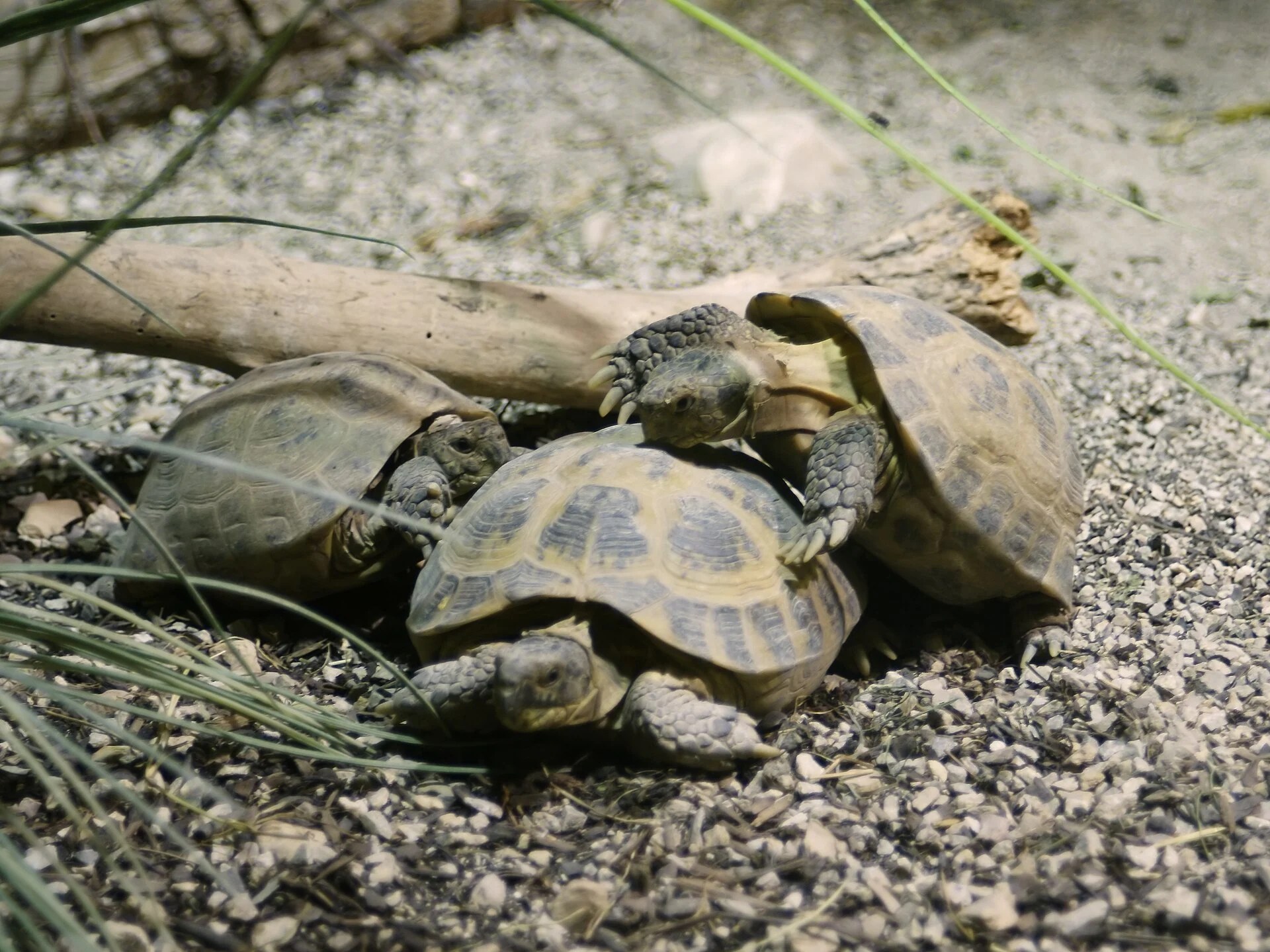
Growth
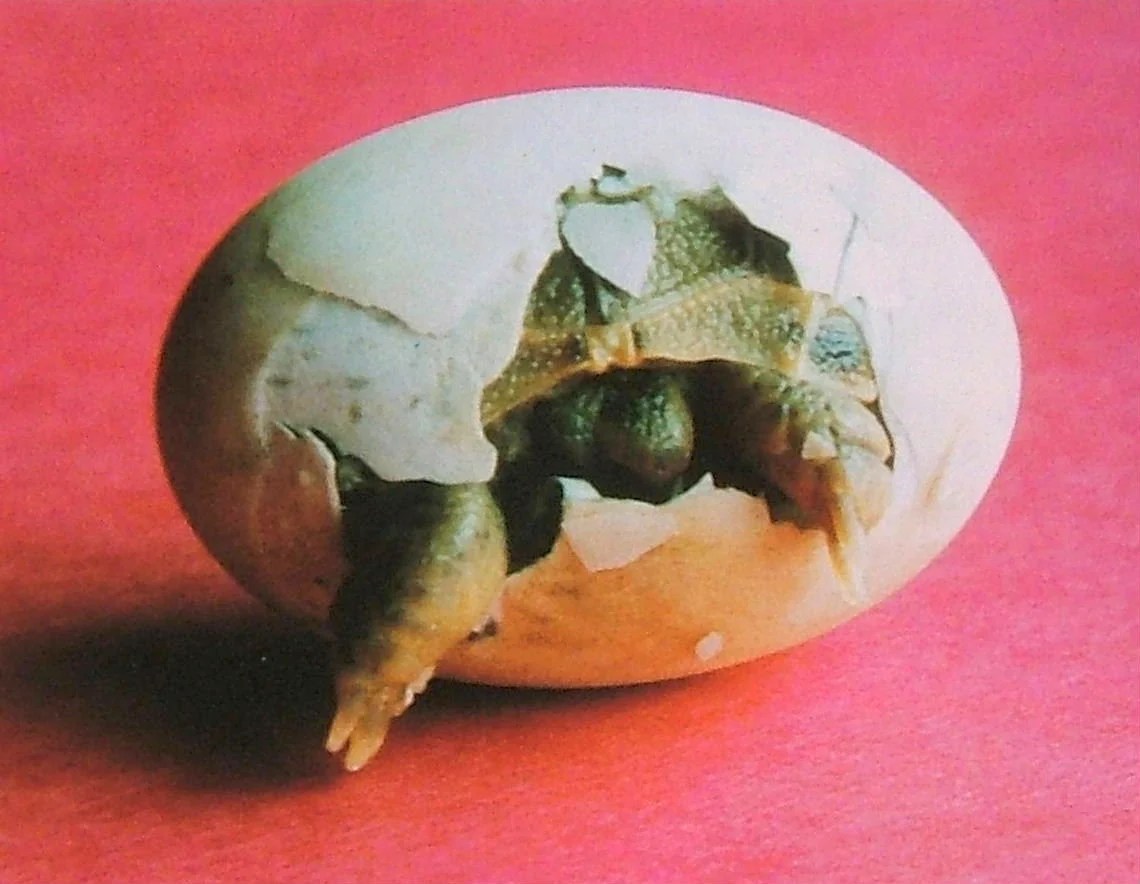
Sources differ regarding hatchling size. The California Turtle & Tortoise Club 32~34 mm cites one figure, while Fauna & Flora cites approximately 5 cm. cites that figure. The discrepancy between the two values makes it impossible to settle on a single figure.
Subsequent growth is slow. It takes approximately 10 years to reach sexual maturity, and 20 to 30 years to reach full maturity, according to repeated statements in various secondary sources.
However, it is necessary to revisit the conclusions of Lagarde et al. (2001) mentioned earlier regarding size. For this species, maturity is determined by growth rate rather than the size attained, and there is significant variation between individuals and sexes.
This variation is interpreted as reflecting differences in food resource availability. In environments where the active season lasts less than three months, the quality of the foraging grounds secured during that brief window determines an individual’s growth trajectory.
Early survival rates are extremely low. According to CITES documentation from Uzbekistan, the survival rate of wild juveniles is 1~3% at that level. For a species that takes ten years to reach maturity, such a high early mortality rate means it takes a very long time for the population to recover from the loss of adult individuals.
This links directly to the conservation section discussed later. If large numbers of adults are harvested, the population declines rapidly, and recovery is slow, taking decades.
Lifespan
In the AnAge database, Testudo horsfieldii and Agrionemys horsfieldii there are no entries for either. Searches were conducted using both designations, but no listing was found.
There are accounts from secondary sources. Fauna & Flora cites over 40 years, while the English Wikipedia suggests a maximum of 50 years.[Citation/Source]
No verified record of the maximum lifespan has been confirmed. Longevity figures frequently cited for tortoises often rely on incomplete records of captive individuals, and this species is no exception.
The lifespan of wild individuals is even harder to determine. While an osteochronological approach—counting growth lines—is possible, I have not found any studies on age structure for this species.
What can be stated with certainty is that it is an animal with a slow life history, taking 10 years to reach maturity and 20 to 30 years to reach full growth. Given this pace, it is natural for its natural lifespan to span several decades.
More important than the specific lifespan figure itself are its implications. For species with long generation times and high early-life mortality, the population is highly sensitive even to slight increases in adult mortality.
Relationship with other species
The most frequently cited distinguishing feature is having four claws on the forelimbs. Other Testudo species have five foreclaws. However, the basis for this trait is a secondary source.
The second feature is the absence of a hinge on the plastron.. T. graeca Females or T. marginata In other species, there is a slight fold between the abdominal and femoral scutes, whereas in this species, it is fixed. However, since Hermann’s tortoises also lack a hinge, this single trait cannot distinguish between all three species.
The third feature is the proportion of the carapace. The Russian tortoise’s carapace is round, with length and width being nearly equal. It is immediately distinguishable when placed alongsideT. graeca the elongated carapaces of the Greek tortoise (T. hermanni) or Hermann’s tortoise (
). Cases of hybridization have also been recorded. Hybridization with T. graeca ibera, T. hermanni boettgeri has been reported; since their natural ranges do not overlap, this occurred in captivity. The fact that hybridization is possible is sometimes cited as evidence that they are “not that distantly related” in the debate over whether to classify Agrionemys as a separate genus. Ecologically, the contrast is even more pronounced. While the Mediterranean
The ecological contrast is even more striking. Mediterranean region Testudo enjoys a relatively long active period in a mild Mediterranean climate, the Russian tortoise spends over nine months of the year in underground dormancy and is active for less than three months, representing an extreme adaptation.
Such divergence in life history within the same genus occurred because this species Testudo settled in the harshest environment imaginable. Conditions requiring a creature to withstand both summer surface temperatures of 40°C and bitter winter cold in the same location do not exist along the Mediterranean coast.
It is also useful to compare them with other arid-land reptiles featured on herp.blog. Uromastyx is also an arid-land herbivore, but it is a lizard with a much longer active period. Bearded dragon is an omnivorous agama from the Australian arid zone. It is fascinating to compare the different solutions that the same arid environment forced upon reptiles of distinct lineages.
Conservation Status
Its IUCN status is Vulnerable (VU) The classification is based on criterion A2d. The assessment was conducted by the IUCN SSC Tortoise and Freshwater Turtle Specialist Group.
However, the assessment dates back to 1996. No re-assessment has taken place in the last 30 years. Fauna & Flora explicitly points this out, adding that the population is known to have plummeted during the intervening period.
It is listed in CITES Appendix II. This category permits commercial trade but requires the exporting country to set quotas and certify that the trade will not harm the population.
The volume of trade is substantial. According to EFFACE data, the total annual trade volume between 2006 and 2014 was 67,001–102,523 individuals. Uzbekistan’s quota increased from 25,000–35,000 in 1998–99 to 100,000 100,000 (50,000 wild-caught + 50,000 ranch-raised) in 2014. Bondarenko and Peregontsev (2017) estimated that approximately 100,000 individuals are removed annually from Uzbekistan through a combination of legal and illegal means. As previously noted, this volume is significant for a species where high-density areas account for only 0.6% of its total range. Long-term changes in population density illustrate the consequences. In Kazakhstan, density dropped from 5–72 individuals per hectare in the 1950s to 3.9–10.3 in 2000; in China, it fell from 4,136 ± 2,162 individuals per km² in the 1960s to 6.04 in the 1990s. The figure for China represents approximately 1% of the level recorded in the 1950s. A more recent concern involves the reliability of trade declarations. In a review of harvesting history in Uzbekistan, Bondarenko (2022) noted that export quotas for captive-bred individuals were increased without justification during 2018–2019. Citing the fact that the actual production capacity of breeding facilities fell short of declared figures, he concluded that wild-caught individuals were being falsely declared as captive-bred. He recommended a temporary suspension of exports and stricter penalties for poaching. The major threats can be summarized into four categories: ① overexploitation for the pet trade (the greatest threat since the 1970s); ② false declarations regarding the captive breeding of wild-caught individuals; ③ quota increases made without population surveys; and ④ habitat loss due to agricultural development between the 1950s and 1980s.
Bondarenko and Peregontsev (2017) estimated that, combining legal and illegal trade, approximately 100,000 individuals are removed annually from Uzbekistan. As previously noted, this volume is significant for a species where high-density areas account for only 0.6% of its total range.
Long-term changes in population density illustrate the consequences: in Kazakhstan, density fell from 5–72 individuals per hectare in the 1950s to 3.9–10.3 in 2000; in China, it dropped from 4,136 ± 2,162 individuals per km² in the 1960s to 6.04 in the 1990s. The figure for China represents approximately 1% of the level seen in the 1950s.
A more recent concern involves the reliability of trade declarations. Reviewing the history of collection in Uzbekistan, Bondarenko (2022) noted that export quotas for captive-bred specimens in 2018–2019 were increased without justification and that the actual production capacity of breeding facilities fell short of reported figures; he concluded that wild-caught individuals were being falsely declared as captive-bred. He recommended a temporary suspension of exports and stricter penalties for poaching. The major threats can be summarized as follows: ① overexploitation for the pet trade (the greatest threat since the 1970s); ② false declarations regarding the captive breeding of wild-caught individuals; ③ quota increases without population surveys; and ④ habitat loss due to agricultural development between the 1950s and 1980s.
In summary, there are four major threats: ① overexploitation for the pet trade (the greatest threat since the 1970s), ② false declarations regarding the captive breeding of wild-caught individuals, ③ quota increases without population surveys, and ④ habitat loss due to agricultural development between the 1950s and 1980s. The first three issues all stem from human-generated documentation.
Interesting studies
Bondarenko (2022) — Harvesting and population impacts in Uzbekistan
Current Studies in Herpetology 22(3-4): 95–104. DOI 10.18500/1814-6090-2022-22-3-4-95-104
This study outlines the progression from harvesting for livestock feed in the 1930s–1950s to the start of commercial trade in the 1960s, a surge in the late 1990s, and legal harvests reaching 85,000 individuals annually by 2017. It reports population declines and altered age structures at collection sites, concluding that a significant portion of individuals declared as captive-bred were actually wild-caught.
Donini (2024) — Introduced population in Florida and reproductive potential
Reptiles & Amphibians 31(1): e20927. DOI 10.17161/randa.v31i1.20927
This study compiles seven field records of the species in southwestern Florida (2011–2022) and confirms seven additional records across five other counties based on EDDMapS data. A newly hatched individual found on June 10, 2021, suggests the possibility of natural reproduction within the United States.
Bondarenko & Peregontsev (2019) — Thermal biology and diurnal activity
Current Studies in Herpetology 19(1-2): 17–30. DOI 10.18500/1814-6090-2019-19-1-2-17-30
This provides the quantitative basis for the habitat and activity period sections of this document. It was shown that 76% of active individuals are found within the 28.0–35.9°C range, and that activity ceases after mid-May when surface temperatures exceed 40°C. The study also notes a methodological limitation: relying solely on evening surveys leads to an underestimation of population density.
Bondarenko & Peregontsev (2017) — Distribution in Uzbekistan
Current Studies in Herpetology 17(3-4): 124–146. DOI 10.18500/1814-6090-2017-17-3-4-124-146
Based on data from 287 survey sites, the species was found to inhabit approximately 67% of the country’s territory, yet high-density areas accounted for only 0.6% of its total range. The study quantified this pattern of widespread distribution coupled with low population density.
Lagarde et al. (2002) — A short spring before a long leap”
Canadian Journal of Zoology 80: 493–502. DOI 10.1139/z02-032
A five-year field study confirmed that the species spends more than nine months of the year underground and has a foraging period of less than three months. This is the most widely cited study defining the species’ life history.
Vasilyev et al. (2014) — Testudo vs Agrionemys Divergence
Russian Journal of Genetics 50(10): 1060–1074. DOI 10.1134/S1022795414090154
Supported the separation of the two genera using mtDNA 12S rRNA and nuclear RAPD markers. This is a primary source that can be cited as evidence for the opposing view in taxonomic debates.
Most PubMed-indexed papers on this species published since 2020 focus on veterinary studies of captive individuals (herpesvirus, ticks, Hyalomma aegyptium tumors, etc.). This falls outside the scope of this natural history document and is not covered here. How active is the Russian tortoise throughout the year? A five-year field tracking study (Lagarde et al., 2002) reported that these tortoises spend more than nine months of the year in burrows, with an actual foraging period of less than three months. They undergo estivation in the summer and hibernation in the winter. Are the Russian tortoise and Horsfield’s tortoise different species? They are different names for the same species ( ). Steppe tortoise, Russian tortoise, and Afghan tortoise all refer to the same species. Why do some publications use the name? It is a separate genus name proposed by Khozatsky and Mlynarski in 1966. While the prevailing classification treats it as a subgenus of, some still advocate for recognizing it as a distinct genus. You should use both names when searching the literature. Do they really have four claws on their front feet? Unlike other species that have five front claws, this species is described as having four; this is the origin of the English common name “four-clawed tortoise. However, no primary literature directly addressing this trait has been identified; the information is based on secondary sources.
Frequently Asked Questions
How active are Russian tortoises throughout the year?
A five-year field tracking study (Lagarde et al., 2002) reported that these tortoises spend more than nine months of the year in burrows, leaving a period of less than three months for actual foraging. They undergo estivation in the summer and hibernation in the winter.
Are the Russian tortoise and Horsfield’s tortoise different species?
They are different names for the same species (Testudo horsfieldii). Steppe tortoise, Russian tortoise, and Afghan tortoise all refer to the same species.
Why do some publications use Agrionemys?
It is a separate generic name proposed by Khozatsky and Mlynarski in 1966. While the prevailing classification treats it as a subgenus of Testudo, some still advocate for recognizing it as a distinct genus. You should use both names when searching the literature.
Do they really have four claws on their front feet?
Unlike other Testudo species that have five front claws, this species is described as having four; this is the origin of the English common name “four-clawed tortoise. However, no primary literature specifically addressing this trait has been identified, and the evidence relies on secondary sources.
What is the status of the wild population?
It is classified as Vulnerable (VU) by the IUCN, but the assessment dates back to 1996. In the intervening years, approximately 100,000 individuals annually have been removed from their native range, and a 2022 study pointed out that a significant portion of exports declared as captive-bred actually consisted of wild-caught individuals.
Related species
- Uromastyx — Interesting ecological parallel as a herbivorous reptile inhabiting arid regions
- Bearded dragon — Omnivorous agama of the Australian arid zone
- Blue-tongued skink — Large, ground-dwelling, omnivorous skink
- Chinese Water Dragon — Contrast with agamas inhabiting humid environments
Related internal links
- What is a reptile? — Parent article covering reptiles in general (Reptile → Turtle → Tortoise → Russian Tortoise)
- Reptile Wiki — Species exploration hub
- Species comparison — Comparison of species characteristics
- Reptile glossary — Terms such as aestivation, hibernation, carapace, and plastron
Care article: Not yet written. This article covers only wild natural history. It does not include husbandry information such as enclosures, temperature, humidity, lighting, substrate, or feeding.
References
- Reptile Database, Testudo horsfieldii — reptile-database.reptarium.cz
- Turtles of the World / Naturalis, Testudo horsfieldii
- Lagarde F. et al. (2001) Sexual size dimorphism in steppe tortoises (Testudo horsfieldi): growth, maturity, and individual variation. Canadian Journal of Zoology 79(8): 1433–1441. DOI 10.1139/z01-097
- Lagarde F. et al. (2002) A short spring before a long jump: the ecological challenge to the steppe tortoise (Testudo horsfieldi). Canadian Journal of Zoology 80: 493–502. DOI 10.1139/z02-032
- Lagarde F. et al. (2003) Sex divergence in space utilisation in the steppe tortoise (Testudo horsfieldi). Canadian Journal of Zoology 81: 380–387. DOI 10.1139/z03-023
- Lagarde F. et al. (2003) Ecography 26(2): 236–242. DOI 10.1034/j.1600-0587.2003.03365.x
- Bondarenko D.A. & Peregontsev E.A. (2017) Current Studies in Herpetology 17(3-4): 124–146. DOI 10.18500/1814-6090-2017-17-3-4-124-146
- Bondarenko D.A. & Peregontsev E.A. (2019) Thermal Biology and Daily Activity of Central Asian Tortoise. Current Studies in Herpetology 19(1-2): 17–30. DOI 10.18500/1814-6090-2019-19-1-2-17-30
- Bondarenko D.A. (2022) History of Central Asian tortoise harvesting in Uzbekistan. Current Studies in Herpetology 22(3-4): 95–104. DOI 10.18500/1814-6090-2022-22-3-4-95-104
- Donini J. (2024) Regional records and reproductive potential of the non-indigenous Central Asian Tortoise in southwestern Florida. Reptiles & Amphibians 31(1): e20927. DOI 10.17161/randa.v31i1.20927
- Vasilyev V.A. et al. (2014) Differentiation of tortoises of the genera Testudo and Agrionemys. Russian Journal of Genetics 50(10): 1060–1074. DOI 10.1134/S1022795414090154
- van der Kuyl A.C. et al. (2002) Phylogenetic Relationships among the Species of the Genus Testudo. Molecular Phylogenetics and Evolution 22(2): 174–183. DOI 10.1006/mpev.2001.1052
- CITES SC78 Doc. 35.1 Annex 5 — Uzbekistan T. horsfieldii Trade Report
- Fauna & Flora, Steppe tortoise — fauna-flora.org
- California Turtle & Tortoise Club, Russian Tortoise — tortoise.org
Not cited: Papers on sexual dimorphism by Fritz & Bininda-Emonds (2007) and Bonnet et al. were identified in the bibliography, but the full texts could not be accessed, so their conclusions were not cited. The study on shrub shade by Lagarde et al. (2012) focused on T. graeca in Morocco and is therefore irrelevant to this species.
Photo source · License
- Wild specimen (Baikonur) — Yuriy75 · CC BY-SA 3.0 · Wikimedia Commons
- Carapace — Norbert Kaiser · CC BY-SA 2.5 · Wikimedia Commons
- rustamovi Specimen identified by subspecies — Massimo Lazzari · CC BY-SA 3.0 · Wikimedia Commons
- Mating — Hans Hillewaert · CC BY-SA 4.0 · Wikimedia Commons
- Hatching / Juvenile — Richard Mayer · CC BY-SA 3.0 · Wikimedia Commons
- Specimen from Bukhara — Jamshid Nurkulov · CC BY-SA 4.0 · Wikimedia Commons
- Lateral view — Drtrotsky · CC0 1.0 · Wikimedia Commons
- Burrow entrance (Tajikistan) — Alexander A. Fomichev · CC BY 4.0 · iNaturalist
- Ventral view / Spring activity period — Kudaibergen Amirekul · CC BY-SA 4.0 · iNaturalist
- Two specimens — Vyacheslav Yusupov · CC BY 4.0 · iNaturalist
- Frontal view of head — Yuri Danilevsky · CC BY 4.0 · iNaturalist
- Shrubland landscape — kirinzi · CC BY 4.0 · iNaturalist
Related species


Suggest an edit
Tell us which sentence may be incorrect and provide a verifiable source. Submissions are reviewed before publication.