Last updated 2026.09.16 · Edited by silveston · Compiled by an independent hobbyist without professional credentials
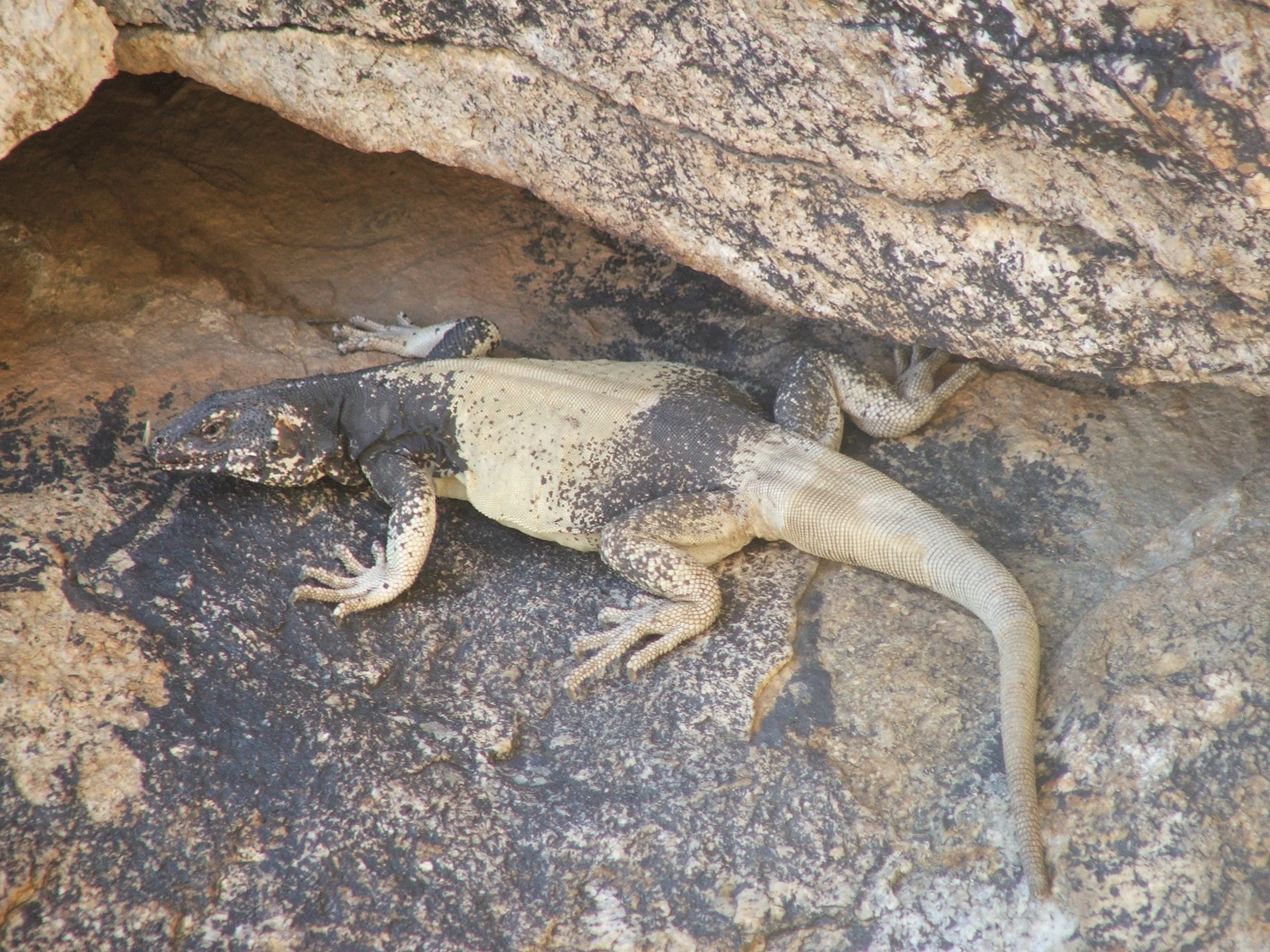
Common Chuckwalla(Common Chuckwalla, Sauromalus ater) is a hot It is a large iguana-like lizard that symbolizes the deserts of North America. With its round, heavy belly, flattened body, and thick, blunt tail, it appears leisurely; however, the moment it senses danger, it vanishes instantly into a rock crevice. It then inflates its body with air, wedging itself firmly into the gap. This defensive maneuver—making it nearly impossible for a predator to pull the lizard out by its tail—is the most iconic behavior associated with the chuckwalla.
The life of this species cannot be summed up by the simple phrase “a lizard that tolerates heat well.” Success depends on a precise alignment of factors: the time spent warming its body in the morning sun, the season when edible flowers and leaves emerge, and the availability of deep crevices where it can lower its body temperature. The rock serves as a sunbathing platform and a bedroom, a shield against predators, and a cooling mechanism to escape the midsummer heat. The common chuckwalla is an animal that demonstrates just how important the structure of space—even more than water—is in the desert environment.
30-Second Summary
- The currently accepted scientific name is Sauromalus ater, and in older literature, Sauromalus obesus was a widely used synonym.
- Inhabits the Mojave and Sonoran Deserts of the southwestern United States and northwestern Mexico, particularly rocky mountains and lava fields.
- A diurnal, herbivorous lizard that feeds on leaves, flowers, and fruits; its activity is heavily influenced by seasonal changes in vegetation.
- When threatened, it retreats into rock crevices and inflates its lungs and body, making it difficult for predators to pull it out.
- While its overall conservation status is relatively stable due to its wide distribution, local populations become vulnerable if rock crevices are destroyed by collection or urbanization.
Basic Information
| Classification | Class Reptilia · Order Squamata · Family Iguanidae · Genus *Sauromalus* |
|---|---|
| Scientific name | Sauromalus ater Duméril, 1856 |
| Common Name | Common Chuckwalla, Northern Chuckwalla |
| Former scientific name | Sauromalus obesus — Widely used for North American populations in the past |
| Size | Generally 30–40 cm in total length; large males can exceed this size |
| Distribution | Mojave and Sonoran Desert regions of the southwestern US and northwestern Mexico |
| Activity | Diurnal; exhibits strong basking behavior |
| Diet | Feeds primarily on leaves, flowers, and fruits Herbivorous |
| Conservation | IUCN Least Concern; local habitat destruction poses a separate risk |
1. Name and Classification: From ‘obesus’ to ‘ater’
When looking up the scientific name of the common chuckwalla, Sauromalus ater and Sauromalus obesus both names appear. This does not indicate two different species but is a remnant of the process of refining taxonomic nomenclature. It was given various names in the 19th century, and for a long time, S. obesus was customarily used for U.S. populations. However, in accordance with the principle of priority under the International Code of Zoological Nomenclature, the name published earlier as valid— S. ater—was retained as the accepted name.
The English name “chuckwalla” is known to have originated from a Native American language of the Southwestern United States before becoming established in English. The genus name Sauromalus is a coined term conveying the impression of a flat lizard, while the specific epithet ater means “dark” or “black” in Latin. Indeed, the head and shoulders of adult males often turn dark, so the name aligns well with their appearance.
The genus *Sauromalus* (chuckwallas) includes several closely related species isolated on islands. While the common chuckwalla is the mainland species with the widest distribution, the island species have very limited ranges and have evolved distinct colorations and body sizes. This contrast serves as a natural experiment, illustrating how deserts and the islands of the Gulf of California isolate populations and drive the evolution of unique forms. Recent phylogeographic studies suggest that even within a single “widespread species,” deep genetic structuring may exist.

2. Body Shape and Color: A Round, Flattened Body Adapted for Rock Crevices
The common chuckwalla has a torso that is exceptionally wide relative to its head, along with a rounded belly. Viewed from above, the body is oval-shaped; viewed from the side, it appears compressed, with a low profile between the back and the belly. This body shape is adapted for navigating narrow rock crevices rather than sprinting long distances across open sand. Its thick tail aids in balance and short bursts of speed, yet it differs significantly in appearance from the long, whip-like tails found in other iguanas.
Adult size varies by region and sex, with males tending to grow larger than females. While the total length is commonly cited as around 30–40 cm, large males can exceed this range, and body weight fluctuates significantly depending on the season and nutritional status. Therefore, rather than relying on a single ‘maximum size’ figure as a standard for all individuals, it is more accurate to consider variations based on sex and region.
Coloration can differ markedly between juveniles, females, and adult males. Juveniles display thick bands across their bodies and tails, while females often retain spots and bands against a brown or grayish-brown background. Adult males develop dark black heads and forelimbs, while their bodies exhibit regional color variations—ranging from red and orange to gray and yellowish-brown. It is this combination of age, sex, and habitat location that causes photos of the same species to look like entirely different lizards.

3. Distribution: Rocky Dwellers Spanning the Mojave and Sonoran Deserts
The common chuckwalla inhabits arid regions extending from eastern and southern California, southern Nevada, southwestern Utah, and western Arizona in the United States down to Baja California and northwestern Sonora in Mexico. Although they occupy a vast desert expanse on the map, the individuals are not evenly distributed; population density is higher in areas with abundant crevices—such as volcanic rock formations, canyon walls, rocky outcrops, and mountain foothills—than in the middle of sandy plains.
This distribution is not determined solely by food availability. Even if leaves and flowers are plentiful, an area without deep crevices for concealment makes for a poor habitat for the chuckwalla. Conversely, even in rocky terrain, a lack of seasonal vegetation makes it difficult for them to obtain sufficient energy. A study of urban conservation areas in the Phoenix region also found that population numbers were linked to the combined availability of preferred food plants and refuges.
As cities expand, mountain conservation areas become “rock islands” surrounded on all sides by roads and residential developments. Although the mountain itself remains intact, it becomes difficult for individuals to migrate to other mountains; furthermore, if crevices are shattered or rocks overturned during illegal poaching activities, critical hiding spots are lost. A wide global distribution does not equate to the security of local populations.

4. Microhabitat: Rock crevices serve as bedrooms, shields, and cooling systems
Desert surface temperatures can soar far above the chuckwalla’s body temperature during the day, yet plummet rapidly at night. Chuckwallas maintain their optimal body temperature by warming themselves on sunlit rocks and moving between shaded areas and crevices. The broad surfaces of rocks serve as morning sunbathing spots, while crevices—varying in orientation and depth—act as shelters at different times of day. Even on the same hillside, the utility of these spots varies depending on the angle of sunlight, wind, and rock color.
Deep crevices experience slower temperature fluctuations and maintain more stable humidity levels than the outside air. Chuckwallas rely on these microenvironments not only to avoid overheating at midday but also for survival during the night and winter. In essence, these rock crevices are not merely holes but miniature climate chambers that buffer against the desert’s extreme temperature swings.
Consequently, actions such as lifting rocks or widening crevices to take photographs can cause more significant damage than one might expect. The crevices used by chuckwallas may be occupied repeatedly over many years, and once damaged, they do not easily return to their original state. The best practice when observing wildlife is to wait at a distance rather than attempting to extract the animal.
5. Daily Rhythms and Body Temperature: Choosing, Not Just Enduring, the Heat
Chuckwallas are diurnal animals, active during the sunniest parts of the day. On cold mornings, they rapidly warm up by exposing their dark bodies and broad surface areas to the sun; once their body temperature rises, they forage or patrol their territory. When the rocks become dangerously hot at midday, they retreat to shade or deep crevices, emerging again only when conditions improve.
It is a common misconception to assume that desert animals simply love high temperatures. While the chuckwalla functions efficiently—utilizing its muscles and digestive system—at high body temperatures, it will overheat if that upper limit is exceeded. Its crucial capability is not merely enduring heat indefinitely, but rather practicing behavioral thermoregulation by carefully selecting between sun and shade, or between open surfaces and crevices.
They also exhibit distinct seasonal rhythms. Activity levels drop significantly during the cold temperatures and short daylight hours of winter, while foraging increases in spring as temperatures rise and plants grow. During periods of extreme drought, surface activity and reproductive investment may decline. Therefore, when the number of individuals sighted in a specific location varies from year to year, it is important to distinguish between an actual population decline and a mere reduction in activity.

6. Diet: A large herbivorous lizard that selects desert flowers and leaves
The common chuckwalla is a herbivorous lizard that feeds primarily on leaves, flowers, new shoots, and fruits. It consumes desert vegetation—such as creosote bushes—and the blossoms of spring annuals, with its dietary choices varying by location and season. When plants grow explosively during the brief period following rainfall, the lizard intensively consumes food rich in moisture and nutrients.
Desert plants do not always provide food of consistent quality. Young leaves are tender and rich in protein and moisture, though fiber and defensive compounds may increase as the plant matures. Chuckwallas selectively feed on various plant parts and bask in the sunlight to raise their body temperature, thereby facilitating fermentation and digestion by gut microbes. Their large bodies and long digestive tracts are advantageous for processing low-calorie plant matter.
While instances of them eating insects have been reported, animal matter should not be considered the mainstay of their diet. Small invertebrates may be ingested accidentally along with flowers or leaves, and such rare, opportunistic behavior does not represent their overall nutritional ecology. The species’ core ecological role is that of a herbivore that consumes plants and contributes to the dispersal of seeds and nutrients.
7. Salt and Water: The Misconception of the “Animal That Doesn’t Drink Water”
Chuckwallas obtain significant moisture from succulent leaves and flowers and also generate water through metabolic processes. They excrete excess salt via salt glands located around their nostrils; salt particles may be expelled during actions that resemble sneezing. This is a crucial adaptation for conserving water and maintaining electrolyte balance while consuming desert plants.
However, the fact that they derive moisture from plants does not mean they never utilize free water. They can drink from temporary sources such as dew or rainwater pools in rock crevices, with water availability varying by season and location. The conclusion in captivity that “no water dish is needed because it is a desert species” is a misapplication of this natural history.
Strategies for conserving internal water are also evident in their excretion processes. Excreting nitrogenous waste as concentrated uric acid, rather than as dilute urine, helps minimize water loss. The chuckwalla’s survival is not the result of a single miraculous organ, but rather the combined effect of plant selection, the use of shade, salt excretion, and concentrated waste elimination.

8. Sociality and Territorial Behavior: Visual Language on the Rocks
Adult males exhibit territorial behavior centered around an area that includes prime basking spots and hiding places. When another male approaches, they raise their bodies, display their broad sides, and perform “head-bobbing”—moving their heads up and down. These visual signals—conveyed through color, posture, and movement—communicate the individual’s size and intentions even from a distance.
Such behaviors do not necessarily lead to a fight. Exchanging signals before a confrontation allows the weaker individual to retreat, thereby avoiding injury. In environments where suitable rock crevices are limited, a territory represents a resource that secures not only food but also safety and opportunities for thermoregulation.
Females and juveniles also select specific areas, though their territoriality may be less conspicuous than that of adult males. Observing multiple individuals on a single rock does not necessarily imply a stable social group; one must also consider the possibility that they have gathered temporarily at a spot with good sunlight and food, while observing the distances between individuals and any threat signals.
9. Defense Mechanism: A “Living Wedge” Inflating Within Rock Crevices
Upon sensing danger, the chuckwalla runs to the nearest crevice rather than confronting the threat in the open. It wedges its body into the gap, takes a deep breath, and inflates its neck and torso. This action presses its flattened body against the rock walls, increasing friction and making it difficult for a predator to pull it out.
This strategy succeeds only when the lizard combines its body shape with a memory of the location. Crevices that are too shallow or wide provide a weak wedging effect, and navigating unfamiliar terrain increases the time required to reach safety. This is why chuckwallas tend to stay near familiar refuges; choosing the right path is a matter of life and death, far more critical than a rapid, long-distance escape.
Predators vary by region and include birds of prey, snakes, coyotes, and foxes. Juveniles are smaller and thus exposed to a wider range of predators. While tails, claws, and biting can serve as last-ditch defenses, the primary strategy remains avoiding confrontation and holding firm within the crevice.
10. Reproduction and Growth: Spring Activity Leads to Summer Eggs
Spring, a time when temperatures rise and vegetation recovers, marks a period of increased mating activity. Males patrol their territories, compete using visual signals, and approach females. Females lay their eggs in stable locations, such as burrows or underground soil cavities; the number of eggs and the frequency of reproduction depend on the lizard’s body size and food availability during both the previous and current years.
The eggs typically develop during the warm season and hatch in late summer. Juveniles display more vivid banding than adults and, being smaller, can utilize narrower crevices. As they grow, their ability to process food and their range of movement increase, and males develop darker head coloration and pronounced sexual dimorphism.
The chuckwalla exhibits a slower life-history strategy compared to smaller, short-lived lizards. Osteochronological studies—analyzing lines of arrested growth in their bones—suggest a longer lifespan and the potential for continued growth beyond what was previously thought. Because the removal of a single adult from a long-lived species can impact future generations for years, illegal collection is a serious matter that cannot be taken lightly.

11. Relationship with Humans: A Gentle Demeanor, A Heavy Responsibility
The common chuckwalla is non-venomous and does not actively attack humans. While their docile nature and unique appearance make them popular as pets, extracting wild individuals from rock crevices can harm both the animals and their habitat. Breaking or prying open rocks destroys shelters used by other reptiles and small mammals.
If you encounter one in the wild, it is best to observe from a distance that does not disturb its basking or foraging, rather than crowding it. Regulations regarding collection and ownership vary by region, so you must verify the legal status. If considering keeping one in captivity, prioritize legally bred individuals with documented origins, and factor in the costs of high-intensity heat and UVB lighting, as well as the commitment required for decades of care.
Although this species can inhabit mountains near urban areas, their proximity to humans does not imply a preference for human-altered environments. Factors such as the release of pets, the expansion of hiking trails, vandalism (graffiti and rock damage), and the spread of invasive plants alter microhabitats in various ways. The ability to survive in close proximity to humans is not the same as being unaffected by them.
12. Conservation and Climate Change: Local Vulnerability within a Broad Range
Thanks to its wide distribution and presence in numerous protected areas, the common chuckwalla is classified as a species of “least concern” in international assessments. However, this does not mean all populations are secure. Activities such as rock quarrying, road and residential development, illegal collection, and increased fire frequency driven by invasive plants can fragment local habitats.
Climate change involves more than just rising average temperatures. Prolonged droughts reduce the availability of spring flowers and young leaves, while excessively hot days limit the time available for foraging on the ground. Even though chuckwallas are tolerant of high temperatures, their energy balance is compromised when the critical links between food availability and activity periods are disrupted simultaneously.
Effective conservation requires looking beyond the mere surface area of rocky terrain to consider the quality of rock crevices, vegetation, and connectivity between populations. For long-lived species with inconsistent annual reproductive rates, it is difficult to assess population stability based on short-term surveys alone. Long-term monitoring—which involves repeatedly surveying the same sites over several years and distinguishing between the influx of juveniles and the survival of adults—is crucial.
13. Observation Tip: To Spot One, Scan the Entire Rock
The best way to find a chuckwalla in the wild is not to peer directly into crevices, but to slowly scan the tops of rocks where sunlight hits at an angle. In the morning, they spread their bodies wide to bask, making their outlines clearly visible; however, if an observer approaches too quickly, they will immediately dash into familiar cracks. By remaining quiet in one spot and using binoculars, you can observe their paths to food plants and how they rotate between various basking sites.
When estimating age and sex, do not rely on color alone. While a dark head is a clue indicating an adult male, body color varies by region, and the banded patterns of juveniles fade as they grow. To minimize misidentification, one must consider body size, head width, the base of the tail, and behavior, while also recording the location and season of the photograph.
“While citizen science records help us understand distribution changes and activity periods, it is safer to obscure coordinates for locations where revealing exact positions could increase the risk of poaching. Good observation practices involve not moving rocks, not driving the animal away, and not subjecting the same individual to prolonged pressure from multiple angles. Photographs capturing a chuckwalla’s natural behavior provide more ecological information than close-up shots of a captured animal.
FAQ
Is the common chuckwalla dangerous to humans?
They are non-venomous and typically flee from humans. However, if captured, they may bite or scratch, so it is safest not to handle wild individuals.
Sauromalus obesus Is it a different species?
In the context of the common chuckwalla, it is generally regarded as an older synonym that was widely used. In the latest databases, Sauromalus ater is the valid name.
Do they live in the desert without water?
While they obtain much of their moisture from plants and conserve water efficiently, this does not mean they do not use water at all. It can drink water from temporary sources.
Why does it inflate its body?
It is a defensive behavior used within rock crevices; by increasing the contact area and friction between its body and the rock, it makes it difficult for predators to pull it out.
Related Articles
- Common Chuckwalla Care Guide
- Argentine Black and White Tegu Ecology Wiki
- Sulcata Tortoise Ecology Wiki
References
- The Reptile Database — Sauromalus ater
- Animal Diversity Web — Sauromalus ater
- Arizona-Sonora Desert Museum — Common Chuckwalla
- Sullivan, B. K. & Williams, A. A. (2010). Common Chuckwallas in Urban Preserves: Do Food Plants or Crevice Retreats Influence Abundance?
- Petermann, H. & Gauthier, J. A. (2020). Skeletochronology Reconciles Differences in Growth Strategies and Longevity in the Common Chuckwalla. Copeia 108(1):72–82.
Suggest an edit
Tell us which sentence may be incorrect and provide a verifiable source. Submissions are reviewed before publication.