
Electrochemical therapy, typically used for conditions such as human skin cancer, was applied to treat a jaw tumor in a 50kg python. On August 21, 2026, Chester Zoo in the UK announced that ‘Jodie Foster,’ a 23-year-old reticulated python, was eating and behaving normally—with no signs of recurrence—several months after undergoing surgery and electrochemical therapy for a recurring fibrosarcoma.
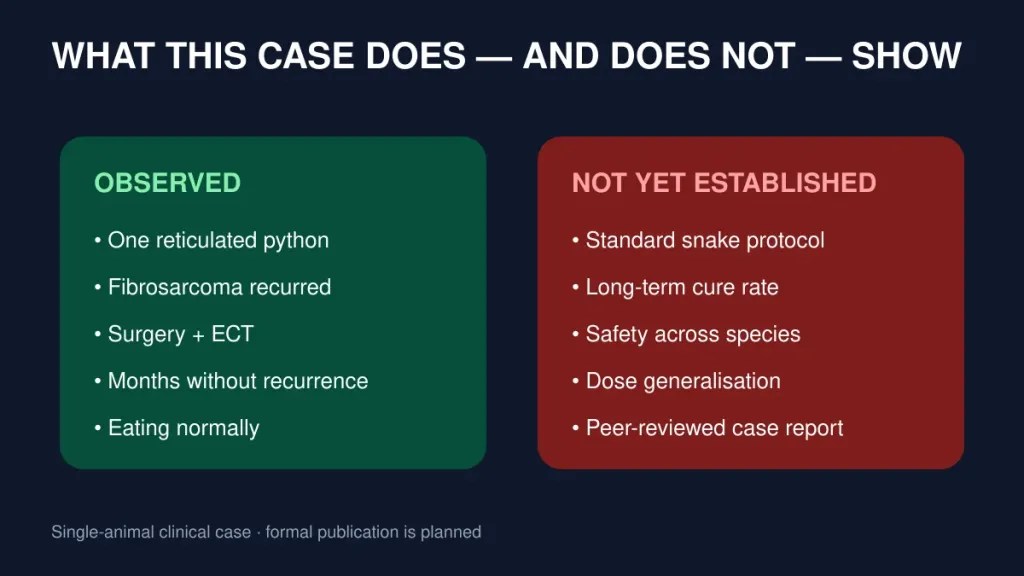
Chester Zoo and the University of Liverpool state that this is the first known instance of applying electrochemotherapy to a snake. However, a peer-reviewed case report has not yet been published, and the recovery of a single individual cannot be generalized into a standard treatment for all snakes. The significance of this news lies not in a ‘finalized treatment protocol,’ but in the record of a multidisciplinary approach tested on a reptile tumor that was difficult to manage through surgery alone.
30-Second Summary
- The subject is a 23-year-old reticulated python at Chester Zoo, measuring approximately 4.5 meters in length and weighing 50 kg.
- A malignant fibrosarcoma in the jaw recurred after the initial surgery, invading the jawbone and making it difficult for the snake to feed.
- The veterinary team removed the mass and a portion of the affected jawbone, then administered electrochemotherapy combining bleomycin with local electrical pulses.
- Following a 90-minute surgery, months of observation and recent check-ups have shown no signs of recurrence, and feeding behavior is normal.
- An official case report is scheduled for publication; however, optimal dosage, long-term safety, and applicability to other species have not yet been established.
Target Species and Patient Information
| Category | Details |
|---|---|
| Common Name | Reticulated python |
| English name | Reticulated python |
| Scientific name | Malayopython reticulatus |
| Classification | Order Squamata, Family Pythonidae |
| Natural Distribution | South Asia and Southeast Asia |
| IUCN Status | Least Concern (LC) |
| Individual Information | Female, 23 years old, approx. 4.5 m, 50kg |
| Diagnosis | Fibrosarcoma of the jaw |
Why a second surgery alone wasn’t enough
Keepers first noticed that Jodie’s food intake had dropped and her activity levels had decreased. Examinations confirmed a malignant fibrosarcoma in her jaw; although the tumor was removed, it subsequently recurred and began destroying part of the jawbone. If the tumor progressed, it could threaten the massive snake’s ability to capture and swallow prey. Chester Zoo’s veterinary team collaborated with cancer treatment specialists from the University of Liverpool’s Department of Small Animal Clinical Science to explore ways to target any remaining cancer cells after surgery.
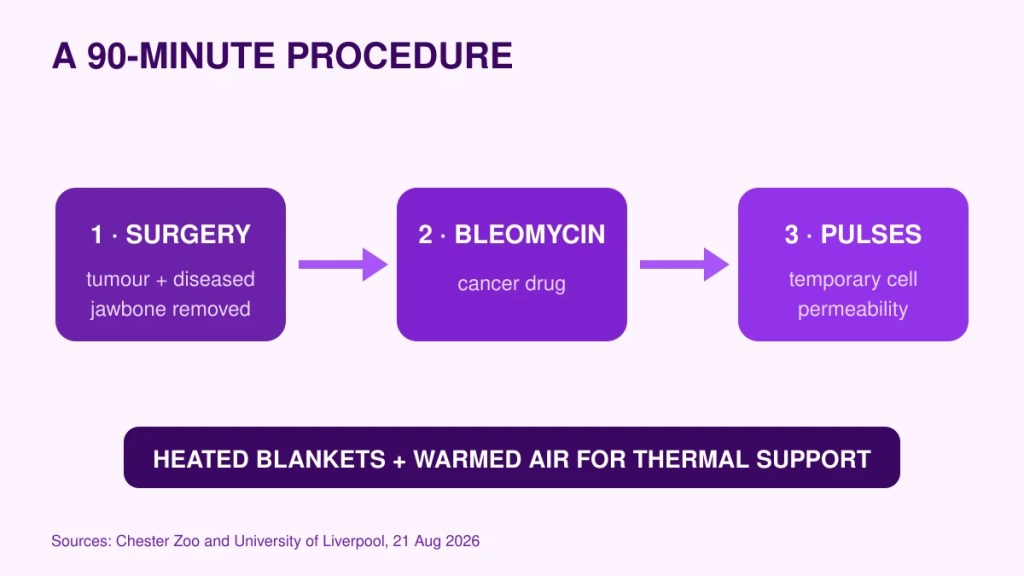
The chosen method was electrochemotherapy (ECT). This technique involves administering the chemotherapy drug bleomycin and delivering precisely controlled electrical pulses to the tumor site to temporarily increase the permeability of cancer cell membranes. The goal is to enhance the drug’s local effect by facilitating its entry into the cells.
Findings from the 90-minute surgery
The veterinary team anesthetized Jodie in the exhibit area before transporting her to the zoo’s veterinary center. As there was no single operating table large enough for her size, two tables were joined together; heating blankets and warm air were used to maintain a stable body temperature, as reptiles rely on external heat sources. The procedure involved removing the tumor mass and performing a unilateral mandibulectomy—resecting a portion of the diseased lower jawbone—followed by the application of electrochemical therapy. The entire process took approximately 90 minutes.
According to the zoo, after recovering, Jody was able to strike at, seize, and swallow prey normally. Although part of the jawbone was lost, the ability to feed was maintained throughout the observation period. A final examination conducted several months later showed no signs of cancer recurrence. While this indicates positive short- and medium-term clinical outcomes for this specific individual, it does not represent a statistically established cure rate.
Why is this significant for reptile veterinary medicine?
Anesthesia, body temperature maintenance, surgical positioning, drug administration, and recovery management for large snakes involve constraints that differ from those for mammalian patients. This case represents a collaboration where a zoo veterinary team and university oncology experts adapted techniques from human and companion animal medicine to suit the specific needs of the species. Future formal case reports—detailing electrode placement, drug dosages, anesthesia and temperature management, side effects, and follow-up examinations—could assist other veterinarians in making clinical decisions.
However, one must avoid oversimplifications suggesting that the issue can be resolved in a single session using a low dose of chemotherapy drugs. Treatment plans vary depending on the tumor type and location, the extent of resection, and the patient’s weight and overall condition. The use of bleomycin and electric pulses involves medical procedures requiring specialized equipment and expertise in anesthesia, surgery, and oncology; it is not a treatment that animal keepers can replicate on their own.
Limitations and Unresolved Questions
- The information currently available comes from official announcements by the zoo and the university; no peer-reviewed paper has been published yet.
- As the sample consists of a single individual, it is not possible to calculate recurrence rates, long-term survival rates, or the frequency of adverse effects.
- Surgery and electrochemotherapy were performed concurrently, making it difficult to isolate the contribution of each.
- There is no basis for applying the same dosage and procedure to other snake species or other types of tumors.
- Long-term follow-up results spanning several years are required.
Key takeaways for readers
- “Surgery and electrochemotherapy were combined to treat recurrent mandibular fibrosarcoma.
- The treated reticulated python showed normal feeding behavior and no recurrence of the condition for several months.
- The claim of being a ‘first for snakes’ reflects the extent of the organization’s knowledge and awaits formal publication in the literature.
- This case represents a promising clinical record rather than a universal treatment guideline.
Related HERP.BLOG Articles
- Ball python Wiki
- Green Tree Python Wiki
- Why recording weight changes in reptiles is important
- California Kingsnake Care Guide
- Reptile news roundup
Reply 남기기