Last updated 2026.09.28 · Edited by silveston · Compiled by an independent hobbyist without professional credentials
First Decision: Can You Build a Room for This Species?


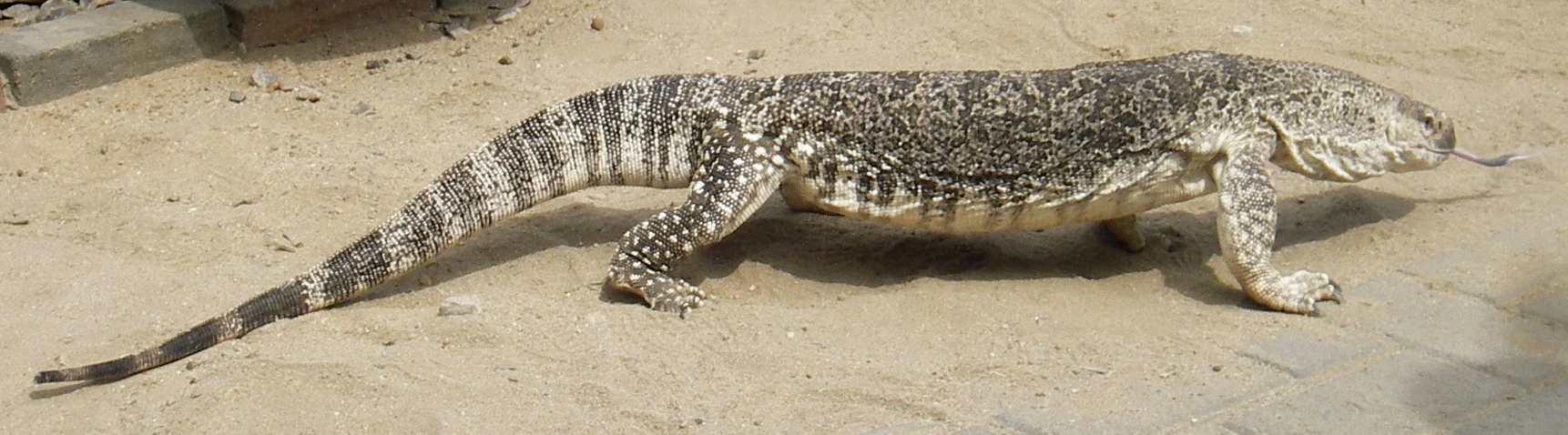
A cheap, small juvenile does not make a savannah monitor a beginner reptile. Adult size, digging, very hot basking, and large invertebrate requirements must all be met. Even a calm individual has powerful jaws and claws; this is not an animal for unsupervised child care or free-roaming as a substitute for housing.
Before acquisition, calculate adult enclosure space, electrical capacity, ventilation, feeder-insect supply, access to an experienced exotic veterinarian, and costs lasting more than a decade. Wild-collected juveniles may combine dehydration, parasites, and stress. Prefer traceable captive origin and discuss baseline examination and fecal testing with a reptile veterinarian.
This guide describes routine care for a healthy animal and does not replace diagnosis or prescription. Rapid weight change, persistent lethargy, respiratory noise, repeated regurgitation, failure to defecate, or deformity of jaw or limbs should be treated as reasons for examination, not as a diagnosis made at home.
Space by Growth Stage and Escape Prevention


Even a juvenile should begin around 120 × 60 × 60 cm and expand every few months according to trunk length and turning radius. A temporary enclosure must not become permanent. Adults are widely advised to have at least about 244 × 122 × 122 cm (8 × 4 × 4 ft), with more floor area and height for large or active animals.
Dimensions are a starting point, not an exemption from observation. The animal must fully extend, turn, and travel several body lengths between basking and cool refuge. Deep substrate reduces usable internal height, so external measurements alone do not prove adequacy.
Use a rigid front-opening enclosure with locks, checking vents, cable ports, and gaps around fixtures. A light lid is unsafe against repeated pushing by snout and claws. Guard or externalize heat and UV-B fixtures to prevent contact, while measuring how much a screen reduces UV-B.
Cohabitation is not recommended. One animal may monopolize food or basking while the other develops chronic stress without obvious fighting. Even breeding introductions require separable space and experience; a human impression of loneliness is not evidence for pairing.
Substrate Is Excavation Infrastructure, Not Decoration


Provide adults with at least 45–60 cm of diggable depth and more where possible. A soil–sand mixture should hold shape when compressed and support a tunnel. Dry sand alone collapses and produces dust, while a shallow layer of wood chips cannot support natural excavation or buffer moisture.
Do not saturate the entire floor. Keep lower layers slightly moist and the surface comparatively dry. A depth gradient lets the monitor choose. After watering, check for rot or anaerobic odor, and add moisture in small portions where a sealed base cannot drain.
Anchor heavy rocks and logs to the enclosure base rather than resting them on substrate. They must remain stable if soil is removed beneath them. Provide at least two refuges, a stable burrow entrance, and cork or boxes that conceal the whole body, using visual barriers to complicate travel routes.
Remove spot waste daily without repeatedly destroying the entire burrow and its scent map. Excavate a broad contaminated patch and replace it with equivalent material. If parasites, mold, or mites are confirmed, schedule complete replacement with veterinary and quarantine guidance.
Thermal Gradient: Measure the Basking Surface, Not Just Air


Begin with a broad basking surface around 54–60°C. Some specialist guides use higher surface values, but the whole body must fit and escape must always be possible. Use an infrared thermometer at several points on the rock or platform at back height, replacing a single dangerously hot spot with a cluster that creates a broad heat field.
A useful starting air gradient is roughly 30–35°C on the warm side and 24–29°C on the cool side. Do not rely on one sensor high on a wall. Measure the basking surface, warm-side body height, cool hide entrance, and burrow interior separately. Required wattage changes with room temperature and enclosure construction.
Turn visible light off at night and allow a gentle drop to about 21–24°C for a healthy adult. If the room falls substantially below that range, connect a non-light-emitting ceramic heater or radiant panel to a thermostat. Red or blue night lamps do not provide darkness.
Verify every heat source with a reliable controller and independent thermometer. Remap surface temperatures after replacing bulbs or when seasons change. Persistent open-mouth panting or fleeing every heat source may indicate overheating, while remaining tightly hidden all day may indicate low temperature or illness; check environment and health together.
UV-B and Visible Light: Distance, Mesh, and Back Height

.jpg)
As a strongly diurnal monitor, it needs a linear T5 HO UV-B lamp overlapping the basking zone. The target is not the distance printed on a box but the UV Index measured at the animal’s back. Begin around UVI 4–7 at the basking center while providing shade and burrow zones near UVI 0–1 for self-regulation.
Distance to the back, reflector, mesh density, and lamp age can change output sharply. The same 12% lamp behaves differently above dense screen and inside an enclosure. When possible, measure with a Solarmeter 6.5 at installation and regularly thereafter, following manufacturer replacement guidance while recording actual decline.
Strong UV-B in a dim enclosure is not a natural daytime environment. Add high-output white LEDs or daylight lamps, aligning heat, brightness, and UV-B in the same direction. The opposite side still needs a completely dark refuge.
Glass and most clear plastics block useful UV-B, so window sunlight does not count as a lamp substitute. Outdoor sunlight also requires protection from overheating, escape, and predators. UV-B supports calcium metabolism but cannot alone correct a poor diet or inadequate temperature.
Humidity, Ventilation, and Water: Microclimates over One Number


Use roughly 50–70% ambient humidity as a starting range, while ventilation dries the surface during the day and deeper substrate stays more humid. Persistently wet walls and condensation indicate insufficient airflow. If both surface and burrow remain extremely dry, hydration and shedding may suffer.
Place digital hygrometers at body height on warm and cool sides and check burrow conditions with a probe. Do not record only the peak immediately after misting; follow morning, basking-period, and pre-lights-off trends. Adjust watering and ventilation when seasons or indoor heating change.
Provide a stable clean bowl large enough for partial soaking. Replace water daily and clean immediately after contamination. This is not a semiaquatic species requiring a pool, but drinking and optional soaking must be possible. Do not place the bowl directly under heat and raise both humidity and bacterial growth.
When shed remains in patches, do not simply saturate the entire enclosure. Review burrow humidity, drinking, skin injury, nutrition, and temperature together. Retained skin on toes or tail can impair circulation. Do not pull it off forcefully; use gentle humidity support and decide whether veterinary care is needed.
Diet: Invertebrates as the Staple, Rodents as Exceptions


Build the staple diet from varied invertebrates: crickets, dubia or discoid roaches, locusts, silkworms, black soldier fly larvae, and snails. Feeding only one insect narrows both nutrition and behavioral enrichment. Do not use wild-caught insects unless pesticide, parasite, and legal risks are known.
Gut-load feeders for 24–48 hours with nutritious vegetables and appropriate diets, and apply a light calcium dust for growing animals according to veterinary and product guidance. Do not stack vitamin D3 supplements and UV-B without a plan. Supplements fill gaps in a complete system; more is not automatically better.
Juveniles may receive small varied insect meals five to seven days weekly according to body condition, while adults often begin around two or three feeding days per week. A fixed prey count is impossible because feeder size and animal mass vary. Reduce portions if the abdomen becomes excessively distended or remains enlarged by the next meal.
Boiled egg, lean aquatic foods, or a small rodent should be considered occasional adjuncts, not staples. Weekly rodents and chicks deliver more fat and energy than the wild invertebrate diet and increase obesity and fatty-liver risk. Live vertebrate prey is unnecessary and adds welfare and injury concerns.
Feeding Records and Body Condition Prevent Obesity
Weigh on the same day, scale, and similar time each week, keeping top and side photographs. Gradual gain can be normal in growth, but persistent adult gain is not proof of thriving. A thick tail base and neck, belly dragging, and disappearing flank folds call for review of portions and exercise space.
If pelvis and spine become sharp and the tail base thins, do not dismiss it as pickiness. Inadequate temperature, oral pain, parasites, and systemic disease are among many possibilities. Taking environmental measurements and stool and feeding records to the veterinarian is far more useful than guessing.
Offer prey with tongs or across a broad feeding zone, varying location so the animal searches by scent. Moving it to a separate feeding tub can increase handling stress and accidents. Reduce incidental substrate ingestion through appropriate temperature, hydration, particle size, and presentation without removing the diggable environment itself.
If every human interaction predicts food, an adult may become conditioned to test hands with its mouth. Do not feed every time the door opens, and distinguish target training from empty tongs. Short predictable sessions are safer than excessive training based on hunger.
Behavior, Handling, and Enrichment
Give a new animal at least two to four weeks to establish hiding, feeding, and defecation before attempting capture. Approach visibly from the side rather than dropping a hand from above. Repeated brief cleaning and target sessions teach that a person does not always mean restraint.
When lifting is necessary, support chest, pelvis, and tail base together and keep the body near yours. Never hold only the tail tip or a limb. Move large adults with two people; gloves are a backup, not permission for force. Hissing, inflation, and tail lashing are signals to increase distance.
Enrichment means increasing choices rather than simply adding objects. Vary dig depth, surface texture, scent-trail feeding, low logs, visual barriers, sun, and shade. Change structures in portions rather than replacing everything at once, leaving at least one familiar refuge.
Free roaming removes reliable heat, UV-B, and humidity gradients and adds wires, gaps, pets, and fall risks. Brief supervised exploration can supplement but never replace the enclosure. Outdoor sun requires a fully escape-proof pen, shade, thermometry, and predator protection.
Cleaning and Daily Checks
Daily tasks include replacing water, removing waste, checking locks and heat, and recovering uneaten prey. Weekly, compare thermometers and hygrometers with a reference and inspect fixture guards, cables, and structural stability. Monthly, review weight trends and photographs together.
Organic debris must be physically removed before disinfection. Follow reptile-safety labeling, dilution, contact time, and rinsing instructions, and return the animal only after drying. Do not mix household disinfectants or use strongly scented cleaners. Keep feeding and cleaning equipment away from the human kitchen.
Reptiles may shed Salmonella while appearing healthy. Wash hands with soap after contact and keep the animal away from faces and food-preparation areas. Households with immunocompromised people, young children, or older adults should follow medical and veterinary hygiene advice.
Log basking surface, warm and cool air, burrow humidity, prey type and amount, stool, shedding, weight, and behavioral change. Converting a feeling that something is different into dates and measurements helps narrow possible causes.
Warning Signs and Common Beginner Errors
A healthy animal moves voluntarily between basking and shelter, tongue-flicks actively, and responds to prey when conditions are correct. Persistent closed eyes, a soft jaw, bowed limbs, or tremors can signal serious disease including metabolic bone disease. Do not merely replace the UV-B lamp and wait; seek prompt examination.
Foam around the mouth, nasal discharge, labored breathing with the head raised, or repeated gaping may reflect respiratory disease, overheating, or other causes. Red oral tissue, odor, bleeding, or dropping prey also need examination. Unprescribed antibiotics or vitamins can delay diagnosis and cause toxicity.
Common errors are a small enclosure, shallow dry substrate, measuring only air temperature, a tiny basking spot, weak UV-B, and rodent-heavy feeding. These errors interact. Low body temperature slows digestion, restricted movement plus dense food drives obesity, and shallow substrate removes both moisture buffering and behavioral choice.
Good care is not one perfect number but a set of choices tracked over time. One skipped meal matters less than continuing weight loss, and one humidity peak matters less than daily change across surface and burrow. If abnormalities persist after environmental correction, do not keep waiting.
Core Management Table
- Adult space: at least about 244 × 122 × 122 cm, measured as usable interior after deep substrate
- Basking surface: about 54–60°C, measured at several whole-body points with an infrared thermometer
- Air temperature: warm 30–35°C / cool 24–29°C, measured at body height and the hide entrance
- Night: a drop to about 21–24°C, using non-light heat on a controller only when needed
- UV-B: about UVI 4–7 at basking back height with shade at 0–1
- Humidity: begin around 50–70% ambient with a more humid deep burrow
- Substrate: at least 45–60 cm for adults in a soil–sand mix that supports tunnels
- Feeding: small juvenile meals 5–7 days weekly and adult meals 2–3 days weekly, adjusted to body condition
Continue to the Natural-History Wiki
For the wild context behind invertebrate feeding, deep burrows, and seasonality, read the Savannah Monitor natural-history wiki. Husbandry ranges do not copy nature literally; they safely reconstruct the choices required by wild behavior.
Adjusting Ranges for Season and Growth
The same lamps at the same height do not produce the same enclosure in summer and winter. Indoor heating, ventilation, and sunlight change, so remap heat and UV-B at least monthly. In summer prevent overheating with control and airflow; in winter avoid raising the basking surface until the cool side also becomes hot.
During growth, increase substrate depth and basking area as well as enclosure length. A small stone that warms a juvenile may leave an adult with a hot belly but a cool back and tail. When adding heat sources, map the surface as a grid and record both hottest and coolest points.
Do not imitate wet-season activity simply by increasing food. Extend searching with scent trails, digging, and several small feeding locations, reducing total energy if mass rises quickly. Do not force dormancy by sharply reducing heat and water when seasonal resting appears. Seasonal manipulation of captives can be dangerous without breeding experience and veterinary oversight.
Change only one or two environmental variables at a time and record the date. If appetite falls and lamp, substrate, food, and supplements all change, cause and effect become impossible to interpret. Immediate dangers such as overheating, burns, or severe respiratory distress are different: move to safety and seek care rather than waiting like an experiment.
Before a routine examination, assemble four weeks of weights, prey types and amounts, stool photographs, temperature and humidity minima and maxima, UV-B readings, and supplement labels. The date of the last normal meal and percentage weight change are more useful than saying appetite is poor. Store a fecal sample according to clinic instructions and do not deworm first without direction.
Before opening the enclosure, locate the animal and check fixtures, and keep a lockable transport box ready during cleaning. An emergency plan should include closing the room and sealing gaps after escape, first aid for bites or deep scratches, backup warmth during outages, and the clinic’s contact details. A prepared procedure reduces situations that end in forceful restraint.
References
- Merck Veterinary Manual — Management and Husbandry of Reptiles
- Merck Veterinary Manual — Nutrition in Reptiles
- Merck Veterinary Manual — Nutritional, Metabolic, and Endocrine Diseases
- LafeberVet — Savannah Monitor client handout
- Arbor View Animal Hospital — Savannah Monitor care
- Exotic Pet Vet — Savannah Monitor Care
- UV-Tool: evidence-based reptile UV lighting guidance
- Coiro 2007, Captive Breeding of Varanus exanthematicus
Suggest an edit
Tell us which sentence may be incorrect and provide a verifiable source. Submissions are reviewed before publication.