Last updated 2026.09.16 · Edited by silveston · Compiled by an independent hobbyist without professional credentials
%2C_Entomica_2.jpg?width=1280)
This document compiles essential information on temperature, humidity, enclosures, diet, nutrition, and health monitoring for the practical care of Gargoyle geckos.
Information on their distribution in the wild, behavior, and evolution Gargoyle gecko Wiki can be found here.
Housing Environment
| Category | Recommended Range & Key Points |
|---|---|
| Daytime temperature | Approx. 22–26°C |
| Upper Basking Spot | Approx. 26–28°C |
| Nighttime | Approx. 18–22°C |
| Humidity | Approx. 50–70%; rises after nighttime misting and dries out somewhat during the day |
| Substrate | Paper towels or a mixture of coco fiber, soil, and moss with a drainage layer |
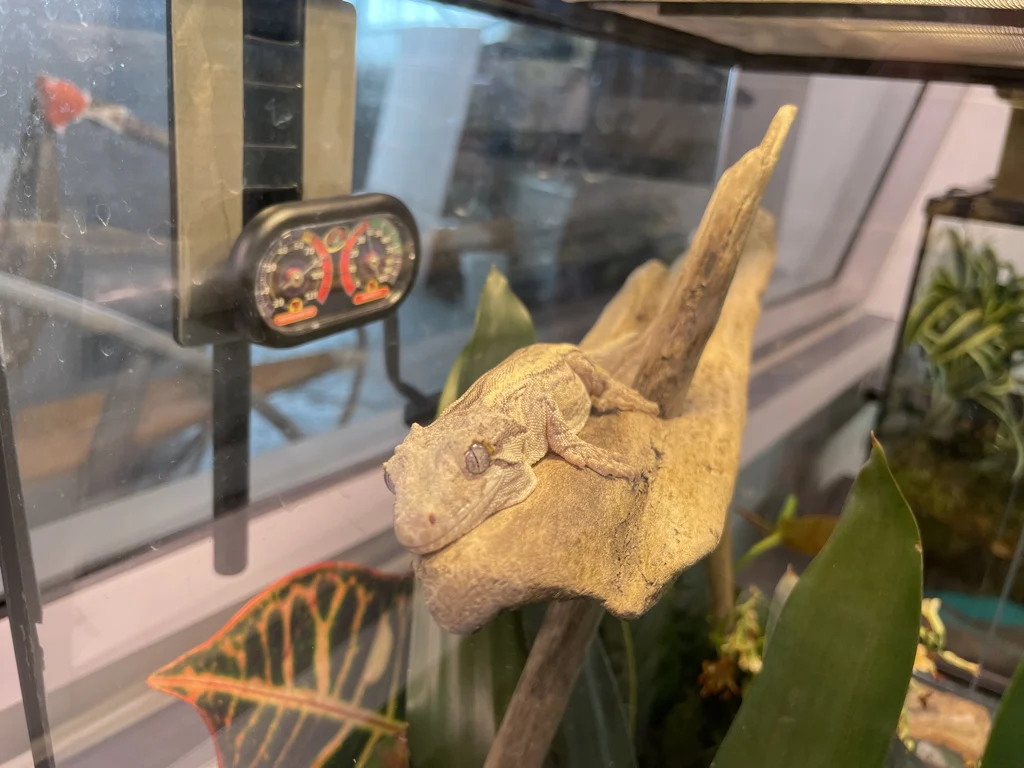
| Essential Supplies | Vertical enclosure, thick cork bark and horizontal branches, dense foliage for hiding, feeding station, low-level UVB, thermo-hygrometer |
Prevent prolonged exposure to high temperatures exceeding 28°C; create a
temperature gradient between the top and bottom of the enclosure. Avoid stagnant air and constantly wet surfaces, even when increasing humidity.
Diet and Supplements
- Use a complete diet formulated for New Caledonian geckos as the staple food.
- Provide appropriately sized crickets, Dubia roaches, or grasshoppers as a supplement.
- Gut-load insects and lightly dust with calcium as needed.
- Regularly monitor weight during the growth phase, but do not judge health
solely based on daily color changes.
Temperament, Handling, and Health Concerns
- Juveniles can be fast and prone to sudden jumping; handle them briefly
at a low height to help them acclimate. - They may bite or prey on smaller individuals of the same species, so
housing them singly is safer. - Watch for metabolic bone disease, dehydration, shedding issues, obesity,
tail biting, and egg-laying complications. - Weak grip, repeated falls, weight loss, and abnormal curvature of the jaw
or spine are signs requiring veterinary attention.
Branches for support and areas for hiding
Arboreal enclosures require usable branches and perches that span the
full height of the habitat. Securely anchor branches capable of supporting the Gargoyle gecko’s weight and create pathways connecting feeding stations, hiding spots, and shaded areas. Even if the enclosure is filled with decorative foliage, you should rearrange the layout if there are no places for the gecko to fully conceal itself or if access to food is difficult.
Addressing summer overheating and misting separately
Zilla guidelines emphasize avoiding excessive heat and providing a temperature gradient. Simply increasing misting during hot periods is not a solution for indoor overheating. Measure temperatures at the top of the enclosure and the cooler side during the hottest part of the day, and ensure surfaces dry out after misting. If temperatures remain high while the substrate stays constantly wet, you must check cooling, ventilation, and drainage systems individually to identify the root cause.
Points to check regarding feeding and handling
First, verify whether the New Caledonian gecko food is a complete diet or a supplement. Keep separate records of insect intake and consumption of prepared mixes; do not rely on a single food type simply because the gecko shows a preference for it. When moving the gecko, support its entire body from below and anticipate potential jumping movements. Avoid repeatedly handling the animal solely to inspect tail colors or patterns; instead, take time to observe its resting posture and feeding response.
Checklist for evaluating the Gargoyle gecko enclosure’s usability
Aesthetically pleasing plantings may differ from structures that are actually functional for the gecko. Specifically check for spots where the gecko can fully hide, perches strong enough to support its weight, and clear pathways to food sources. The variety of options for movement and resting is more important than the sheer number of decorative items.
| Observed Situation | Items to Check | Details to Record |
|---|---|---|
| Stays only around the feeding ledge | Presence of thick branches leading to different heights and availability of hiding spots | Heights utilized and movement paths taken at night |
| Consumes only one type of food (either the prepared mix or insects) | Check the amount of each food provided, whether it is a complete diet, and the amount remaining | Record traces of provision and consumption separately for each food item |
| Wounds visible on the tail or toes | Check for cohabitation and potential hazards like sharp decorations or risks of getting caught in the door | Report the wound location, time of discovery, and movement patterns to the veterinary team |
Can I handle them the same way as a Crested gecko?
Even if you use a similar New Caledonian gecko diet, you cannot assume their physique and behavior are identical. Provide a perch sturdy enough to support a Gargoyle gecko’s weight and avoid housing small individuals together. The fact that their tail can regenerate does not mean it is safe to pull on it. When moving them, support their entire body at a low level; if repeated biting or sudden jumping occurs, re-evaluate your handling method rather than simply extending the handling time.
Record-keeping and Medical Safety
Keep a dated log of feeding, waste elimination, shedding, activity levels, weight, and environmental readings. If a loss of appetite coincides with weight loss, or if you observe respiratory issues, tremors, bleeding, hernias, suspected egg-binding, or impaired limb function, prioritize a consultation with a veterinarian specializing in reptiles over attempting self-treatment.
References
Suggest an edit
Tell us which sentence may be incorrect and provide a verifiable source. Submissions are reviewed before publication.