Last updated 2026.09.16 · Edited by silveston · Compiled by an independent hobbyist without professional credentials

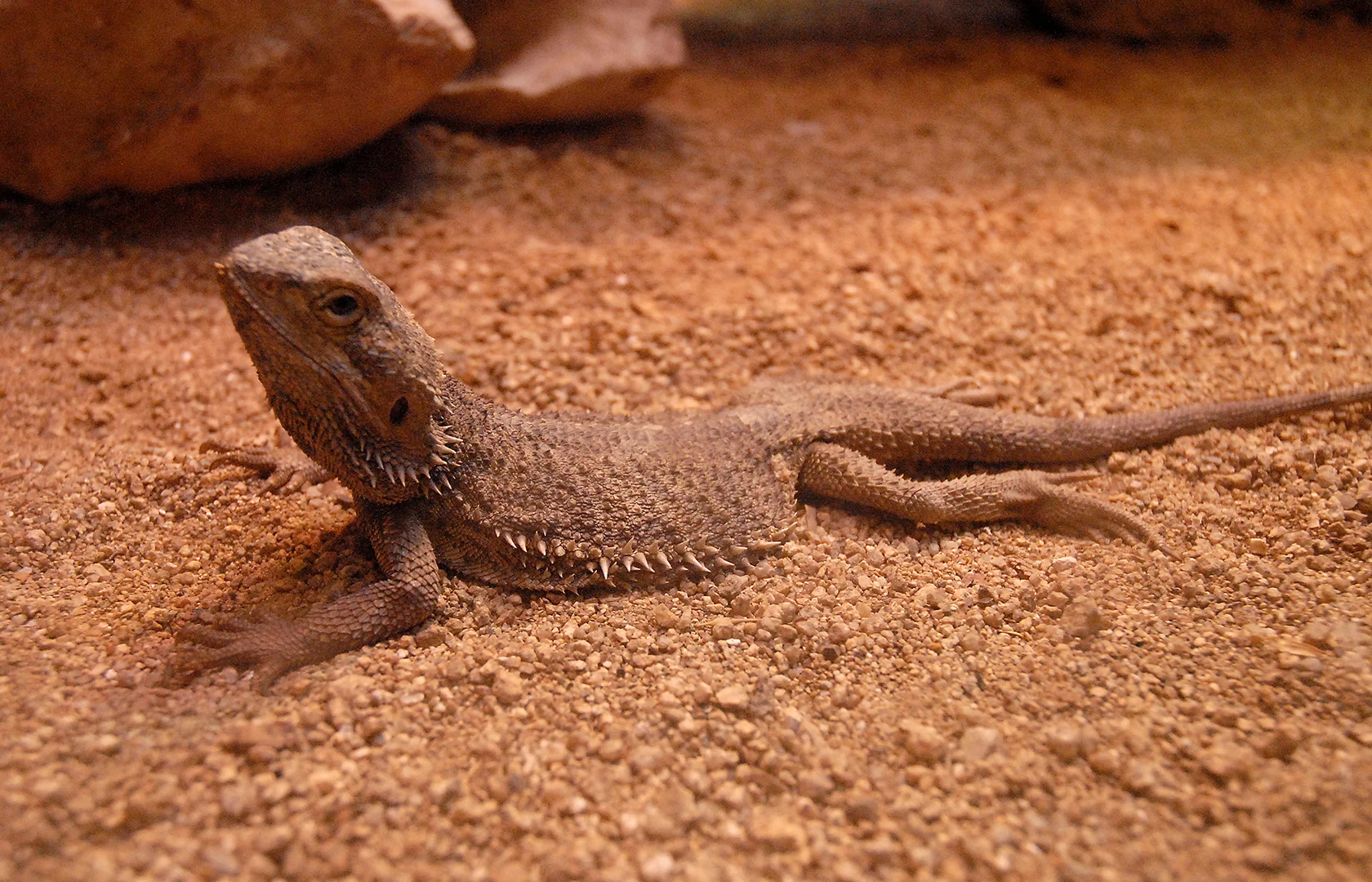
This document compiles essential information for Bearded dragon care, covering temperature, humidity, enclosure setup, diet, nutrition, and health monitoring.
Information on their distribution in the wild, behavior, and evolution Bearded dragon Wiki can be found here.
Housing Environment
| Category | Recommended Range & Key Points |
|---|---|
| Basking surface | 38~42°C |
| Warm zone air temperature | Approx. 28–32°C |
| Cool zone | 22~26°C |
| Nighttime | Generally 20–22°C or higher; use a non-light-emitting heat source only if necessary |
| Humidity | Approx. 30–40% |
| Substrate | Paper for quarantine enclosures. For adults, use a firm soil/sand mix that allows for digging behavior, or a safe naturalistic substrate |
| Essential Supplies | Spacious enclosure, basking rock, thermostat, infrared thermometer, high-output T5 UVB, bright visible light source, hide |
Target UVI in the basking zone is typically 3.0–5.0; a light gradient approaching
zero in the shaded area is required. Glass windows do not
provide effective UVB.
Diet and Supplements
- Juveniles require a diet high in insects; increase the proportion of leafy greens as they grow.
- Rotate a variety of leafy greens and safe vegetables as staples; limit fruit
to small amounts as treats. - Gut-load insects; avoid prey items that are excessively larger than the
width between the animal’s eyes. - Adjust the frequency of calcium, D3, and multivitamin supplementation based on
age, egg-laying status, UVB readings, and product concentration.
Temperament, Handling, and Health Concerns
- Support both the chest and pelvis to prevent falls from heights.
- Housing them individually is safer due to territorial disputes and competition for food among males.
- Common issues include metabolic bone disease, obesity/fatty liver, constipation/intestinal obstruction, respiratory diseases,
stomatitis, and dystocia (difficult labor) in females. - Veterinary attention is required for symptoms such as softening of the jaw and limbs, tremors, prolonged blackening of the beard,
severe lethargy, and abdominal bloating.
Size and measurement of the basking area
Installation is not complete simply because the target temperature has been reached at the center of the basking spot. Ensure the area supports the animal’s entire body and allows for easy movement to cooler or shaded areas. Measure and record surface temperatures (using an infrared thermometer) and ambient air temperatures (using a probe) separately. Whenever you replace the UVB lamp or adjust the height of the basking perch, re-check the distance between the lamp and the animal’s back.
Avoid maintaining the same feeding regimen used during the growth phase.
Do not feed juveniles and adults the same number of insects. Track growth, activity levels, and leafy green consumption, and monitor weight trends. If you keep replenishing insects simply because the animal leaves vegetables uneaten, it becomes difficult to determine exactly what and how much is being consumed. Recording insects, vegetables, and supplements separately aids in reviewing the diet.
When observing reduced activity
If activity decreases, first check the lighting schedule, thermometer logs, and recent feeding, defecation, and weight records. Do not delay veterinary care for a sick animal by assuming the lethargy is merely seasonal dormancy. Upon adoption, verify the animal’s age, previous husbandry conditions, and medical history to establish a baseline for future observations. This checklist is not a diagnostic tool for illness, but a way to prepare accurate information for a veterinarian.
Checklist for equipment replacement and growth stages
Bearded dragons change their dietary habits and use of space as they grow. Do not assume the initial setup remains suitable; re-measure conditions whenever you replace lamps, adjust perch heights, or observe changes in body size due to growth. When recording observations, note not only the date but also any changes made to conditions to help trace the cause.
| Observed Situation | Items to Check | Details to Record |
|---|---|---|
| Lamp replaced with a new one | Check distances (from product to reflector, mesh, etc.) and shaded areas | Replacement date, installation distance, surface and air temperatures |
| Only seeking out insects, just like when young | Cross-check growth stage, vegetable intake, and consumption of treats/supplements | Intake by food type and trends in body shape/weight |
| Reduced activity and darkening of the beard | Prioritize comparing environment, defecation, and appetite over guessing seasonal effects | Duration, accompanying symptoms, and recent environmental changes |
Does an open mouth always indicate overheating?
It is important not to immediately attribute a single behavior to a single cause. Record whether the behavior occurs while basking or persists in a cool area, and note any respiratory sounds, secretions, or lethargy. While the environment must be corrected immediately if the animal lacks a place to escape the heat, respiratory abnormalities should not be dismissed as simple temperature issues. Do not arbitrarily stop feeding or heating by assuming reduced activity is brumation; instead, consult a professional based on your records.
Record-keeping and Medical Safety
Keep a dated log of feeding, waste elimination, shedding, activity levels, weight, and environmental readings. If a loss of appetite coincides with weight loss, or if you observe respiratory issues, tremors, bleeding, hernias, suspected egg-binding, or impaired limb function, prioritize a consultation with a veterinarian specializing in reptiles over attempting self-treatment.
References
- RSPCA
Bearded Dragon Care Sheet - Merck
Veterinary Manual: Nutritional and Metabolic Diseases of
Reptiles
Suggest an edit
Tell us which sentence may be incorrect and provide a verifiable source. Submissions are reviewed before publication.