Last updated 2026.09.29 · Edited by silveston · Compiled by an independent hobbyist without professional credentials
Practical care for Abronia graminea in a cool, ventilated arboreal environment.
Before acquisition: provenance and space


Abronia graminea is a montane Mexican lizard that uses trees. Before its attractive green color, check the scientific name, breeding and transfer history, relevant trade documents, and whether a cool enclosure can be maintained even in summer. Abronia is regulated under CITES Appendix II for international trade; a seller’s claim alone does not prove legality. A document may use an older synonym, so verify that it belongs to the animal. If records are incomplete, postpone the transaction and check current requirements with the relevant authority. This guide is neither a legal ruling nor a health guarantee.
A useful starting enclosure for one adult is at least 60 × 45 × 90 cm, with more usable volume welcome. This is a husbandry starting point, not a universal legal minimum or an experimentally established absolute. An empty tall glass box provides little usable space without branches and cover. Plan secure doors and cable openings, firmly fixed furnishings, and airflow at more than one level. A juvenile can begin in a smaller, easily monitored temporary setup, but should move promptly into a larger structure as it grows.
Do not make cohabitation the default. Two males, animals of different sizes, or a newcomer immediately placed with a resident may hide food competition and stress. Even planned breeding needs a spare enclosure, quarantine space, weight records, and observation time. Provide multiple retreats and basking choices, and separate animals promptly if conflict appears. An animal remaining in one spot may be secure or may be avoiding a dominant cage mate; feeding response and weight trends help distinguish the two.
A separate, simply furnished enclosure makes it easier to monitor feeding, feces, and movement after acquisition. Do not share bowls, tongs, or cleaning tools with resident reptiles; record initial weight, photographs, and documents. Repeatedly removing a new animal because it has not eaten can prolong hiding. If examination is needed, provide a reptile veterinarian with trade history and climate logs. A monitoring enclosure is temporary and does not replace the height and cover needed long term.
Thermal gradient, cool nights, and UVB

| Position measured | Starting range | Interpretation |
|---|---|---|
| Mid-level daytime air | 18–24°C | Air in shade |
| Local basking surface | 25–27°C | Branch contact surface |
| Cool retreat | 16–20°C | A place the animal can enter |
| Night air | 14–18°C | After lights out |
Keeping this species like a hot lowland tropical lizard risks overheating. Do not rely on one thermometer in the middle of the enclosure: measure the surface of the upper warm spot, mid-height air, and a shaded cool retreat separately. Initial reference ranges are daytime air 18–24°C, local basking surface 25–27°C, cool retreat 16–20°C, and night air 14–18°C. These are Herpeton Academy husbandry ranges, not a constant wild temperature or a universal tolerance limit. If the entire upper enclosure remains above 27°C without a cool refuge, address cooling first.
Connect a modest local heat source to a thermostat and confine it to the warmer side. Glass and mesh alter the temperature beneath a lamp, so check branch and contact surfaces with an infrared thermometer. In an already warm room, extra heat may not be needed. Turn lights off at night and permit a cooler period, while avoiding abrupt cold drafts with condensation. Increasing misting cannot compensate for an uncooled summer room; it may combine heat, stagnant air, and wetness. Record both maximum and minimum readings with sensor positions.
Provide bright visible light and low-level UVB while retaining shaded choices. Ferguson Zone 1 does not call for unfiltered desert midday exposure; measure the UV index at the animal’s back. Deep shade should approach zero, and exposed sites should start low and be adjusted to equipment, mesh, distance, and behavior. Sunlight through window glass is not a UVB substitute. Record lamp installation and replacement dates, and recheck output after a new bulb is fitted. Calcium supplementation must be considered alongside diet and UVB exposure.
Correct numbers at one sensor do not settle the matter if the animal clings to one place or gapes. A cool floor probe does not prove the animal’s upper perch is safe. Check the highest branch under heat, the air in shade, and the fall in room temperature overnight. A temporary cool container and backup power plan are part of temperature management. If summer overheating repeatedly cannot be prevented, postpone keeping the species.
Misting, humidity, ventilation, and water

A cloud-forest animal does not need a cage soaked all day. A care-sheet starting range is roughly 60–80% relative humidity, with brief rises to 75–90% after misting. More important than a single number are opportunities to drink droplets and a cycle in which some surfaces later dry. Put the sensor in shaded airflow at the animal’s usual height, not against a nozzle or wet floor. Repeated readings near 90% together with odor and condensation call for changes to airflow, drainage, and mist timing. Dry-looking skin or sunken eyes call for review of heat and water as well.
Begin with fine misting in the morning or shortly after lights come on to leave drinkable droplets on leaves and branches. If droplets sit for hours or the substrate smells sour, there is too much water. Keep a shallow, washable bowl available and change its water daily. Clean reservoirs and hoses to limit biofilm, and provide a way to drain a saturated base layer. Misting needs vary by season and indoor cooling, so adjust from real leaf surfaces and sensor records rather than a fixed number of minutes.
Ventilation exchanges wet air; its purpose is not to erase humidity. Vents at more than one height create a gentle flow without placing the lizard directly in a cold draft. A moist retreat and a relatively dry position let the animal move between conditions. Wet leaves do not require permanently saturated stems and floor. Record temperature with humidity: a rise in relative humidity as air cools at night does not by itself justify more misting.
Do not block vents merely to achieve a humidity target. Without airflow, a wet floor and warm upper area can persist even when the sensor looks stable. The same 70% relative humidity at 20°C and 28°C comes with different thermal burdens. Interpret temperature and humidity together, and record how long leaves take to dry after misting. If water pools in one corner, correct drainage and enclosure slope.
Branches, substrate, retreats, and cleaning

Join firmly fixed branches of different widths in several directions and heights, and break sightlines with cork and foliage. Routes under the lamp, at mid-height, and in cool areas prevent the animal from being trapped at one position. Remove gaps that can entrap a body, loose wire, and sharp decor. Check plants for pesticide or fertilizer residues, toxicity, and load-bearing safety. Replace damaged pieces without repeatedly removing every familiar route at once.
Put fertilizer-free soil and leaf litter over drainage, separating the drainage layer so it cannot be swallowed. Even an arboreal animal leaves prey and feces below. Inspect hidden feeder insects, wet leaf litter, and the backs of cork pieces. Natural-looking bark and moss need replacement if contaminated or repeatedly moldy. Avoid strongly aromatic wood chips, sharp sand, and small swallowable stones. A simple substrate may be better during quarantine, when cleaning and stool checks are priorities.
Check the water bowl and feces daily; each week inspect branch fixings, vents, misting lines, and odors at floor level. If a disinfectant is used, move the animal away and complete the manufacturer’s dilution, contact time, rinsing, and drying steps before return. Set partial and full cleaning intervals by contamination, not the calendar alone. Plan a cool temporary space for power failures, especially in hot weather when lighting and cooling may fail together. Daily handling just to clean can add stress.
Branch spacing must change with growth. Avoid gaps a juvenile cannot cross, and secure perches firmly enough for an adult. Do not hang heavy cork from one suction cup; distribute its load through the floor and walls. Keep branches from forming a direct escape route through an opened door, and locate the animal before cleaning. Safe structure supports exploration and reduces unnecessary handling.
Food, supplements, and growth records

Do not rely on one feeder. Rotate appropriately sized, lawfully obtained crickets, captive roaches, silkworms, black soldier fly larvae, and other suitable insects, and gut-load the insects first. A care-sheet starting point for adults is a small meal every 2–3 days, adjusted to body condition, activity, season, reproduction, and leftovers. Juveniles may need smaller prey more often; adjust from daily response and growth. Avoid oversized prey and remove insects that would harass the lizard overnight.
Use calcium and multivitamins according to product directions in light of feeder composition and actual UVB exposure. Heavy powdering is not automatically better; also consider excess when combining D3-containing supplements with UVB. Log weight, feeder type and amount, feces, and shedding in a consistent format. Trends are more informative than one missed meal. Do not diagnose pregnancy from a female’s shape or weight alone; watch for weight loss, lethargy, or abnormal stool as well.
Manage water separately from food. Do not rely only on mist droplets; check access to a clean bowl. If a newcomer hides for several days, inspect evidence of eating and drinking in a quiet setting instead of forcing it toward prey. Do not try to restore weight with a sudden oversized feeding; work through temperature, cover, and possible parasites. Take records to a reptile veterinarian if refusal persists or dehydration becomes apparent. Remember that the exact proportions of the wild diet remain poorly documented.
Match prey size to the actual mouth, jaws, and handling behavior rather than a calendar age. If the lizard struggles with an insect or hides from it, change the size and presentation. Consider short, controlled foraging among foliage, but do not leave live insects hidden behind cork. Weigh with the same scale at a similar time of day, and mark temporary changes immediately after feeding, defecation, or shedding.
Shedding, handling, warning signs, and routine checks


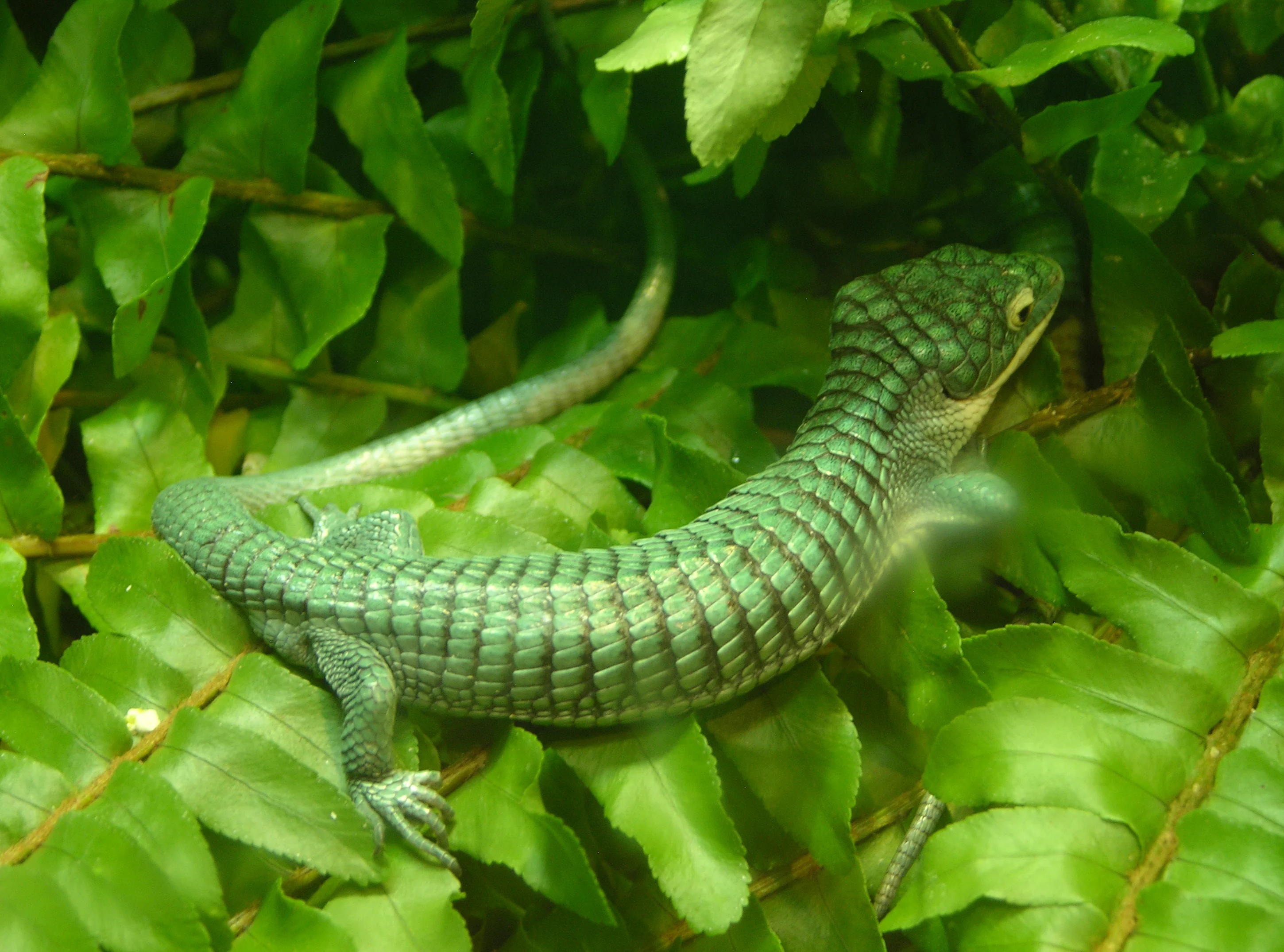
A healthy shed may come away nearly complete, as in the photograph, or in pieces. Repeatedly retained skin on toes, tail tip, or around the eyes, especially with swelling or discoloration, is the concern. Pulling it by force can damage tissue. Review the humid retreat, safe rough bark, water, and thermal gradient first. Loss of toe use or a discolored tail tip warrants prompt veterinary advice. The pictured shed documents one adult, not a universal shedding pattern.
Do not treat this as a lizard for frequent hand-held interaction. For essential transfer or examination, support the whole body over a secure low surface; never grab the tail or chase it from a height. Quarantine newcomers and minimize contact until feeding is established. Hidden conflict in a shared enclosure may go unnoticed. Separate animals promptly if competition, weight loss, repeated pursuit, or injury appears, then review the cause.
Each morning, check lighting, cooling, temperature and humidity logs, water, and feeding response; in the evening, confirm that the animal retreats normally. Weekly, check weight, grip and gait, eyes, mouth, toes, feces, branch security, and drainage. Open-mouth breathing, noisy respiration, abnormal movement, sustained appetite loss, or marked weight loss should not be dismissed as normal hiding. Correct environmental problems while consulting a reptile-experienced veterinarian. Do not assign a diagnosis or drug from a photograph. Share provenance and recent care records. The ecology wiki explains the natural history behind these choices.
A common beginner error is the combination of a hot room, frequent misting, and blocked vents. Another is choosing an attractive photograph before checking provenance documents and cooling costs. A third is treating every period of hiding as disease, or dismissing illness-related inactivity as normal secrecy. Brief daily checks and weekly trends reduce these errors. When seeking help, share movement, weight, feeding, stool, and equipment status, not one thermometer number alone.
References
- Herpeton Academy — Abronia husbandry ranges
- The Reptile Database — species and range
- Journal of Zoo and Aquarium Research — UV-Tool
- CITES Checklist — international trade rules
- Clause et al. 2018 — montane ecology and conservation
Suggest an edit
Tell us which sentence may be incorrect and provide a verifiable source. Submissions are reviewed before publication.