Last updated 2026.10.01 · Edited by silveston · Compiled by an independent hobbyist without professional credentials
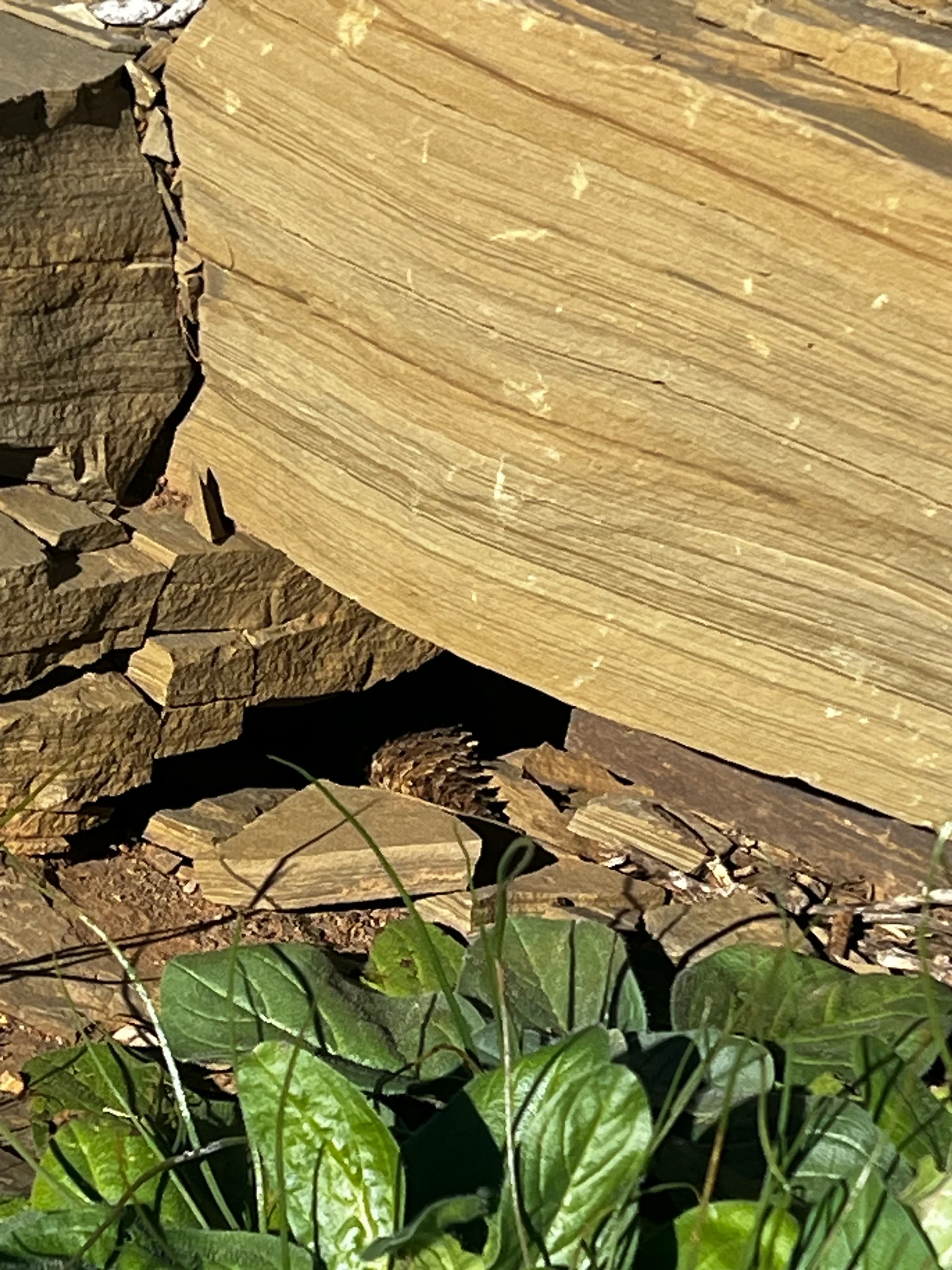
Spiny Armor Emerging from a Rock Crevice

The gidgee skink is a lizard of rock outcrops and split timber in semi-arid Australia. Its accepted name is Egernia stokesii (Gray, 1845), a member of the skink family, and it is also called the gidgee spiny-tailed skink. Trade labels for age, color or breeding line do not define a taxonomic species. This article concerns the wild species rather than any animal for sale.
The legs are low beneath a stout body, while ridged scales run down the back and tail like armor. The tail is shorter and more pointed than the long whip of many other lizards. When threatened, the skink slides into a crevice and inflates its body. Rock walls and spiny scales then make it harder for a predator to pull the animal out.
The Australian Museum gives a snout-to-vent length reaching about 195mm. That excludes the tail and should not be confused with total length on a trade listing. Ground color ranges from brown to rusty red, interrupted by scattered paler scales. Camera white balance and shedding affect appearance, so one photograph cannot establish a regional subspecies or sex.
The Reptile Database currently lists E. s. stokesii, E. s. badia and E. s. zellingi as subspecies. Older sources may use Silubosaurus stokesii or the separate subspecies name aethiops. The conservation standing of a regional population may differ from the global species assessment, and research on one named population cannot automatically be applied to every captive animal.
The epithet stokesii honors the British naval officer John Lort Stokes, who sailed on HMS Beagle. The historical type specimen came from the Houtman Abrolhos islands off Western Australia. Observations now span mainland rock ridges and some western islands, joining separate landscapes under one name. Provenance and lineage records therefore tell us more than a marketing morph label.
Cunningham’s skink Egernia cunninghami and Hosmer’s skink E. hosmeri also have rough scales and rocky refuges, but differ in range, proportions and scalation. Sharing the genus Egernia does not make their social systems or environmental needs identical. The key to the gidgee skink is the crevice life that its spines protect.
A Small Rock City in Semi-Arid Australia

The species has a patchy range from western New South Wales to inland Western Australia, with populations on some western islands. Rock outcrops, split logs and tree hollows provide actual living space within shrubland and open woodland. A large shaded area on a range map does not mean all of it is suitable. Sun and a narrow refuge need to be available within a few steps of one another.
As morning rock warms, a skink emerges near an opening and angles its body toward the sun. When conditions become too hot it retreats into the crevice. The outer face and inner chamber of the same rock can differ greatly in temperature. Moving between basking and refuge is thermoregulation; heating an entire enclosure to one temperature removes that choice.
A crevice buffers falling night temperatures as well as excluding predators. If it is too wide or shallow, the defensive body inflation is less effective. Staying loyal to a refuge may reflect memory of a safe structure matched to body size rather than mere stubbornness. Studies of artificial refuges likewise show that form and placement affect choice.
A dry landscape is not devoid of water. Rain leaves damp vegetation and small moist pockets, while the inside of a rock shelter can remain more humid than the exposed surface. Plants and invertebrate prey also supply water. A localized humid retreat within a ventilated, otherwise dry enclosure better reflects this pattern than permanently wet ground everywhere.
The Australian Museum describes the species as shy. An apparently empty rock may be where a skink disappeared seconds before a person arrived. A daily activity budget that ignores time inside refuges misses exploration, rest and social contact. The frequently photographed basking pose tells only part of the story.
Restricted western populations need not be as resilient as more widespread mainland populations. Destroying one outcrop or introducing a predator may erase both its refuges and resident family groups. Natural history therefore asks which locality and which microhabitat are involved, rather than settling for “found across Australia.”
Families That Share a Crevice for Years

Its society among the rocks is what makes the gidgee skink remarkable. Genetic field studies show that a group may contain a breeding pair, offspring from several years and related adults. A reported maximum of 17 individuals does not mean every crevice holds seventeen animals. Group composition varies with locality and refuge size.
A study that revisited three populations almost a decade apart found 28 of 43 recaptured lizards in their original space; 15 of those again shared it with a former companion. That is evidence of lasting site and social fidelity rather than a chance gathering for one season. Familiar crevices and neighbors can shape escape routes over a long life.
A pair bond does not make every mating outcome identical. In 16 litters from field-collected gravid females, 75% of litters had a single male parent, and multiyear family data also support repeated partnerships. Yet 75% is not 100%. Claims that every animal is exclusively monogamous for life overstate the evidence.
Group living is not a free safety net. Sharing a crevice can improve vigilance but also exposes members to ticks and blood parasites associated with the same place. A mark-recapture study of four populations found that the network linking animals that used a crevice at different times could be broader than the network of animals seen together on the same day.
Communal scat piles are another part of the social system. In a 2020 experiment, refuge choices differed according to whether the cue was a pile or a single scat and whether it came from the animal itself or an unfamiliar skink. Odor conveys information about a refuge, although the experiment does not prove that every wild pile marks a territorial border. Invisible signals connect the rock city.
Wild family groups do not justify placing unfamiliar captive skinks together at once. A 2020 study of captive juveniles observed hierarchy, chasing and biting, with more aggression when preferred crickets were at stake. Related animals choosing a wild refuge and strangers confined in a small enclosure face different social conditions.
Eating Plants as Well as Catching Insects

This species is more than an insect hunter. The Australian Museum describes a wild omnivore that eats substantial vegetation, including leaves and fruit, as well as catchable invertebrates. Studies report shifts in plant and insect intake with season and age, so daily crickets alone narrow the range of its natural diet.
A skink emerging from a crevice can browse nearby leaves, pursue a small arthropod and retreat to the same entrance when danger appears. Foraging depends less on running endlessly across open land than on a safe starting point and return route. Food placement, refuge distance and separated feeding stations therefore change behavior in captivity.
Food items are not equally valued at every moment. Captive juveniles fought more often when crickets rather than plant food were at stake. That does not mean wild skinks dislike plants. Immediate preference and a balanced lifetime diet are different questions, and distributing both types of food among several sites reduces competition.
The Australian Museum describes a captive program that varies vegetables, a small animal-based feed, and cockroaches or crickets across a week, with calcium and vitamin supplementation. It is one institution’s program, not a fixed menu for every animal. Faster growth from excessive animal protein would not justify ignoring the plant component of wild feeding.
Summer drought and growth after rain alter available food. A juvenile may appear to eat the same things as an adult, yet jaw strength, body size and safe foraging distance differ. Appropriately sized cultured insects and verified safe plants are sensible choices; wild-collected food of uncertain pesticide history is not.
Scat records digestion and also carries social information. A visible pile is not evidence that the lizard meets a human standard of cleanliness. For an animal that uses one place for years, both odor and location can convey information. In captivity that role is worth understanding, but it is not a reason to postpone sanitation.
Live Young and Lasting Relationships

The gidgee skink gives birth to live young rather than burying eggs. A three-year study of 29 litters near Hawker, South Australia, recorded an average of about 5.07 young per litter in February and March. The wider one-to-eight range and geographic differences in breeding season matter. There is no rule that every female delivers exactly five each year.
In that study newborns averaged about 8.15g and 6.73cm in snout-to-vent length. A litter was delivered over an average of 2.8 days rather than all at once. These are measurements from a particular South Australian population. They may vary with locality, maternal size and litter size and should not become rigid standards for a captive baby.
A newborn can move independently, but its relationship with the group does not end at birth. Family groups may retain offspring from several years and share a rock refuge with close relatives. Calling this mammal-like parental care would be imprecise, yet long-term tolerance of offspring is an unusual and well-studied aspect of lizard sociality.
Not every mature female breeds each year. The Australian Museum notes a study in which 26% of females did not reproduce in one year. Food, body condition and seasonal conditions can affect that outcome. A change in shape or behavior cannot by itself prove pregnancy in captivity, nor does reproduction justify imposing the same winter cooling on every animal.
When a season ends, the history of a pair and its offspring remains in the place they use. Repeated surveys that found the same animal and former companions at the same site show that breeding is more than a single year’s offspring count. In this concealed lizard, live birth and a long-used home are parts of one story.
This natural history is useful when captive young are born, but growth and conflict must be assessed individually. The existence of wild family groups does not make permanent mother-offspring cohabitation automatically safe. In a restricted feeding area, smaller animals can be displaced without an obvious fight.
Predators, Conservation and People

Spiny tails and crevices do not eliminate predation. The Australian Museum lists birds of prey, monitors and snakes, alongside introduced cats and foxes, among the threats. A lizard that retreats to a body-sized gap rather than sprinting far on short legs loses that defense when the rock structure disappears. Protecting refuges matters as much as preserving food.
A lower-risk global IUCN category does not settle the status of every local population. Restricted western subspecies have been subjects of separate recovery planning and threat assessment. Older subspecies names must be reconciled with current lists to avoid mixing conservation units. Fragmenting a small rocky refuge can also fragment the family system living there.
People study and observe this skink while also trading it. A current Korean listing describes captive-bred young, but a product page’s name and hatch date are details of that offer, not independent evidence for wild ecology. Provenance, lawful acquisition and any current reporting duties must be checked against the animal’s documents and current official guidance.
“Social reptile” is too simple a label for easy cohabitation. The skink distinguishes family and unfamiliar animals, remains attached to familiar refuges and may compete more strongly when food is valuable. That complexity is the interesting part. Sociality is an evolutionary pattern with costs, including hierarchy and parasite transmission.
Conservation begins with retaining rocky outcrops and tree hollows, avoiding wild collection and checking the provenance of traded animals. The Australian Museum states that wild collection is prohibited in Australia and keeping can require a permit by jurisdiction. Australian rules and Korean rules should be checked separately against current official information.
Behind one brown lizard on a rock lie years of refuge use, genetic ties among relatives and chemical traces of neighbors. The longer one watches the gidgee skink, the more memorable its lasting relationships become than its spiny tail. In captivity, the lesson is to provide safe choices rather than force an imitation of a wild family.
References
The Reptile Database, Egernia stokesii
Australian Museum, Gidgee Skink
Gardner et al. 2002, genetic monogamy, DOI 10.1046/j.1365-294x.2002.01552.x
Pearson et al. 2020, fine-scale genetics, DOI 10.1111/aec.12862
Thompson et al. 2020, scat and refuge choice, DOI 10.1111/aec.12864
Baines et al. 2020, captive dominance, DOI 10.33256/hj30.2.8392
Godfrey et al. 2009, parasite networks, DOI 10.1007/s00265-009-0730-9
Duffield & Bull 1996, litter characteristics, DOI 10.1071/WR9960337
Pearson et al. 2016, long-term site fidelity, DOI 10.1071/ZO16024
Baines et al. 2016, UVB guidance, DOI 10.19227/jzar.v4i1.150
Suggest an edit
Tell us which sentence may be incorrect and provide a verifiable source. Submissions are reviewed before publication.