Last updated 2026.09.30 · Edited by silveston · Compiled by an independent hobbyist without professional credentials
Adult Space and Quarantine: Low, Wide and Solitary

For one adult, use a low, wide enclosure of at least about 90×45×45cm as a recommended starting point. A body-length calculation alone cannot create warm and cool ends plus a dry surface and moist burrow. Floor area supports excavation and nocturnal hunting; height accommodates deep substrate and safe lamp distance.
A juvenile may begin in a smaller observation enclosure, but measure at two or more points so one heater does not warm the entire space. Set the upgrade point in advance according to mass and length. In a small enclosure, overheating and a missing gradient appear faster than any management advantage.
Quarantine a newcomer for 60–90 days on paper with separate dry and humid retreats. Sand enables normal behavior but can hide fecal change, regurgitation, parasites and intake during the first assessment. Log body mass, tail condition, prey counts, feces and sheds, and keep tools separate from resident reptiles.
Cohabitation is not routine care. A wild report of several animals in one burrow describes temporary refuge use in a broad landscape, not lifelong safety in a box. Size disparity and competition for food and tunnels can cause bites and tail loss. Individual housing is safer and easier to monitor.
Anchor heavy stone and décor on the enclosure base before adding substrate. Excavation must not undermine them. Seal cable ports, use vents that contain feeder insects and check the knobbed tail before closing a door.
Run the enclosure empty for at least 3–7 days. Measure after lights-on, midday, before lights-off and at the nightly low. Probes inside the warm retreat and at depth on the cool side are as important as a surface reading.
After arrival, avoid removal for photographs and frequent redesign. Stabilize water, burrows and the gradient, then allow nocturnal emergence. One missed meal is not a reason to release many insects; prolonged refusal combined with weight loss or abnormal feces requires a reptile veterinarian.
Where to Measure Heat, Night Conditions, Light and UVB

Use a daytime warm surface of 31–33°C, warm-side air around 24–28°C and a cool zone of 21–25°C as practical targets. Allow a gradual night drop to 18–22°C; if the room falls lower, use a thermostatted non-light heat source. Values only make sense within an escapable gradient.
The 2019 field study found active body temperatures of 19.5–33.5°C with a mean around 26°C, while mean selected temperature in a laboratory gradient was about 29°C. Night-active geckos are not always at an optimum. Provide a warm choice without making the entire enclosure exceed 30°C.
Place a low-wattage halogen or radiant source above the warm side and control it with a thermostat. Strong underfloor heat can make the supposedly safe deep layer the hottest and driest place. If a mat is needed, heat only a fraction of the floor, secure the probe and use measurements rather than touch.
An infrared thermometer reads surfaces; digital probes record air and burrow change. One laser point cannot represent the whole body. Map the warm-hide roof, entrance sand, cool-hide interior and room temperature at night.
Provide roughly 11–13 hours of day according to season and complete darkness at night. Do not leave red or blue lamps on. The enclosure need not be as bright as a diurnal display, but visible day light supports a clear rhythm. Burrows must retain full shade.
Low-level UVB is not meaningless for a nocturnal species. Use a weak linear source producing about UVI 1–2 at the warm exposed area and nearly zero inside retreats. Distance and mesh alter output, so measure it or follow a tested placement guide rather than relying on the lamp label.
Seasonal cooling to 16–18°C is an optional breeding tool, not required pet care. Never cool juveniles, thin, newly acquired or ill animals, or individuals with undigested food. Any reproductive cycle should change gradually over weeks and stop if mass or intake declines.
Core Care Conditions
- Warm surface 31–33°C — check with an infrared thermometer.
- Warm-side air 24–28°C — check with a fixed digital probe.
- Cool zone 21–25°C — check with a fixed digital probe.
- Night 18–22°C — check with a minimum-maximum logger.
- Exposed UVB zone about UVI 1–2 — check with a Solarmeter or tested distance chart.
Building a Moist Chamber Beneath a Dry Surface

Use at least 8–12cm of smooth, fine natural sand; a small amount of clay-bearing soil can improve tunnel stability. Avoid sharp gravel, coarse play sand, calcium sand, dusty powders and expanding wood chips. Coarse grains can injure toes and skin and fail to hold a chamber.
Keep the surface mostly dry while maintaining a moist lower layer or large retreat on the cool side. Ambient relative humidity may often sit around 30–50%, but burrow moisture matters more. Two or three times weekly, add water to a small zone so it penetrates below and the top can dry again.
Moist is not wet. Substrate may hold shape briefly when squeezed but should not release water. Constantly wet sand promotes skin disease, mold and respiratory problems; a uniformly dry enclosure causes dehydration and poor sheds. Provide both zones.
Offer at least a warm dry retreat, cool humid chamber and one intermediate refuge. Include a broad cover under which the gecko can rearrange sand, not only a shell that touches the body. Low cork and light branches create hunting edges without unnecessary climbing risk.
Do not spray the face or body. Wet one substrate zone and the inner wall of a retreat. Cross-ventilation near the top and low side prevents stagnant humid air. Move probes periodically because one hygrometer cannot describe surface and burrow conditions.
Spot-clean feces and uneaten prey immediately and replace any wet, odorous patch. Full replacement depends on enclosure size and contamination; “bioactive” never means feces can remain. Suspected mites, mold or infection require complete substrate removal, quarantine and veterinary hygiene guidance.
Skin may dull and burrow use may increase before shedding. Afterward, check toes, eyelids and the tail tip for constricting rings. Correct the humid refuge before pulling skin or applying oil, and refer repeated or circulation-threatening retention to a reptile veterinarian.
Recording Prey, Calcium and Water

Feed an adult around three evenings weekly, beginning with two to four insects smaller than the head width. Adjust to body mass, tail-to-body proportion and activity. Juveniles may take smaller prey daily or every other day. Trend matters more than a fixed count.
Rotate crickets, small cultured roaches, legal locusts, silkworms, black soldier fly larvae and occasional beetles. Repeated mealworms or fatty larvae distort fat and mineral balance. Use legally cultured feeders; wild insects risk pesticides, parasites and toxins.
Gut-load insects for 24–48 hours with vegetables and a balanced commercial diet. More hungry insects do not create better nutrition. Crickets left overnight can bite toes and eyes, so count what enters and what is removed.
Lightly dust most meals with plain calcium and schedule multivitamin and D3 according to product concentration and actual UVB access. Stacking an all-in-one powder with separate D3 can cause excess. Supplements cannot replace dietary variety, UVB and correct heat.
Keep clean water in a shallow, heavy dish and wash it daily. Do not remove it because drinking is rarely observed. The gecko may lick droplets, but that should not be the only assumed water source. Replace water whenever sand enters.
Combine tongs, escape-resistant bowls and controlled loose hunting. Do not force a response by waving prey at the face, and do not eliminate searching through bowl-only feeding. Ingestion risk rises when coarse substrate combines with overfeeding, dehydration, low temperature, imbalance and oversized prey.
Weigh adults once or twice monthly and growing juveniles weekly at the same time of day. A suddenly thin tail and prominent pelvis, or a round body with reduced movement, calls for review. Weight loss lasting 2–4 weeks with refusal, diarrhea or suspected parasites requires testing rather than home medication.
Safe Limits for Behavior, Handling, Cohabitation and Cleaning

Being unseen by day is normal. If the entrance is sealed, prey disappears at night and feces and mass remain stable, do not excavate daily. If the entrance never changes, food remains and mass declines, increase observation. Hiding and illness are separated through several indicators.
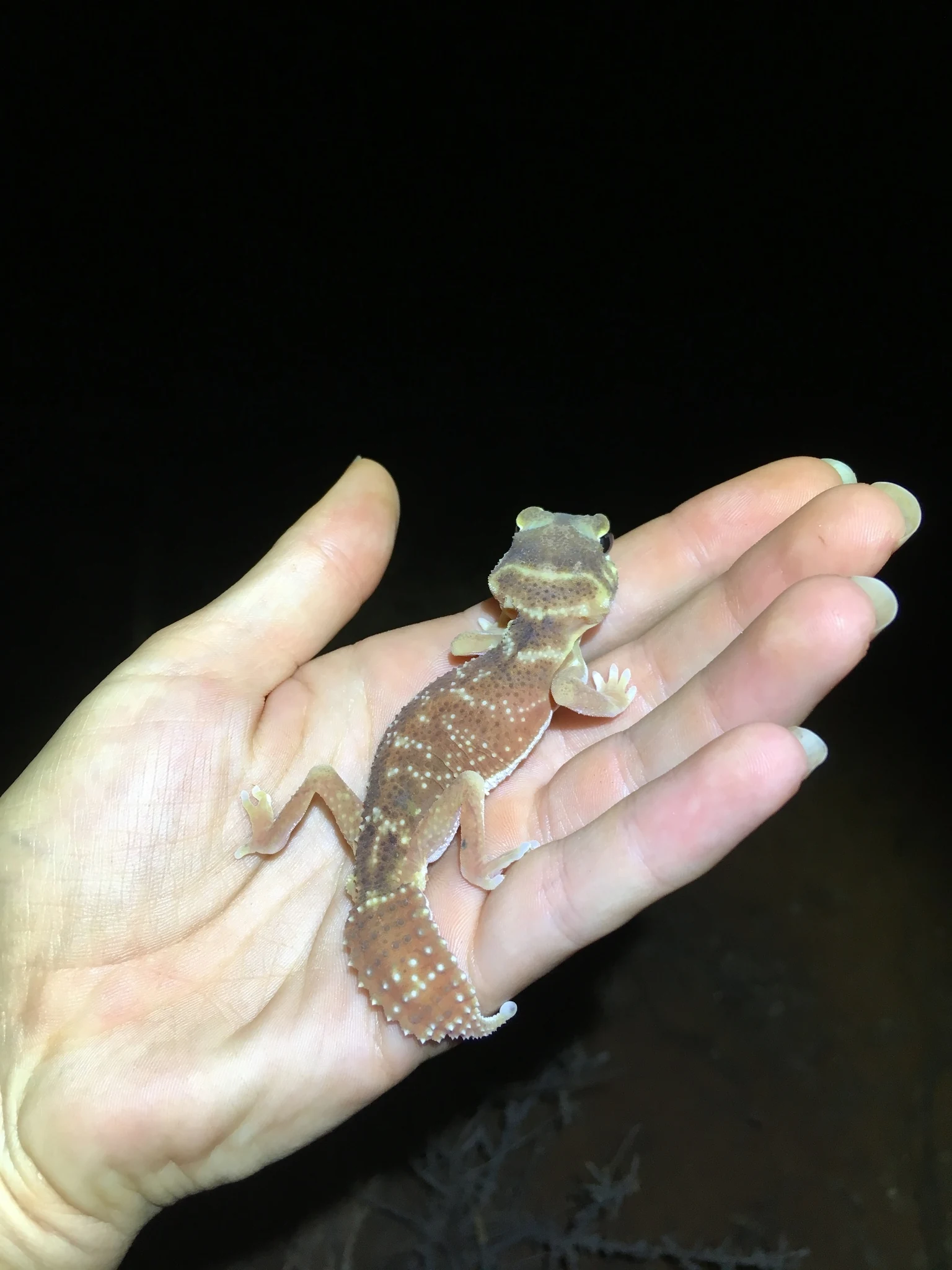
Restrict handling to examination and weighing. Guide the gecko into a container or support the whole body with two hands near the floor instead of grabbing from above. Never hold or press the tail knob. Inflation, gaping or rapid breathing means the session should end.
Predictable feeding cues can reduce surprise. Use one signal before opening and distinguish hands from food when using tongs. Repeated removal to “tame” the animal may increase hiding and defense. The goal is manageable care, not a frequently handled pet.
Even breeding introductions should not become permanent cohabitation. Assess female mass, calcium status and tail condition and supervise short meetings. Separate immediately after biting, chasing, burrow monopolization or sustained refusal. Prepare complete individual enclosures first.
Clean the water dish and visible feces or prey daily. Weekly, inspect décor, vents and probe position. Monthly, review mass and heater output, and replace UVB according to measurement or rated life. Use a ventilated secure tub during cleaning and remove all cleaner residue.
A bioactive arid setup does not make feces disappear instantly. The moist zone is small, cleanup organisms can be hard to sustain, and pests must be distinguished from feeders. Replace contaminated patches without destroying all tunnel structure and log odor, mold and mites.
Transport in a small opaque ventilated container with paper and a low refuge, keeping the tail clear of edges. Warm the outside gently in winter and prevent direct contact with heat packs; never leave the container in a summer vehicle. After travel, restore heat and burrows and avoid unnecessary handling for at least a day.
Health Signals, Breeding Cautions and the Weekly Check

A healthy animal moves steadily at night, strikes accurately and does not change body-to-tail proportion abruptly. Normal varies, so establish a baseline with intake photographs, mass, feeding and fecal records. Bright color alone is not a diagnosis; combine behavior, body trend and environmental measurements.
Warnings include sustained loss of mass or tail volume, tremors or weak gait, swollen limbs or jaw, repeated retained shed, sores or blisters, abnormal feces, prolonged closed eyes, open-mouth breathing or discharge, and prolonged digging or straining. Severe or combined signs require prompt care.
Metabolic bone disease, burns, overheating, dehydration, skin infection on wet dirty sand, impaction where coarse substrate meets poor husbandry, parasites and cohabitation bites are often preventable. Do not diagnose from internet photographs or use human medicine, antibiotics or oil. Bring environmental records and a fresh fecal sample to the veterinarian.
A female can form infertile eggs without a male, so provide a moist laying chamber. Repeated digging, straining, abdominal enlargement without laying and weakness may indicate dystocia. Do not rotate a found egg, and avoid cooling or male introductions when breeding is not planned.
Breeders must be fully grown, well-conditioned and calcium-replete. Repeated clutches can rapidly reduce a female’s mass and tail reserves. Several clutches may follow one mating, so record recovery and stop breeding when condition fails to return. Incubation temperature and duration vary with equipment and line.
Emergency supplies include a spare thermostat, minimum-maximum thermometer, digital scale, carrier, insulation and reptile-veterinary contact. During an outage, do not place hot bottles or ice inside the enclosure. Adjust the room gradually and measure before deciding on transport or temporary heat.
On the same day each week, check warm surface, cool zone and burrow temperatures, moist-zone condition, water, prey count, feces, skin, toes and tail shape. Monthly photographs and mass reveal subtle trends. Natural history and subspecies are covered in the Smooth Knob-tailed Gecko species profile.
Feeding records should be more specific than “ate” or “did not eat.” Note prey type and approximate size, number offered and removed, supplement used and feeding time. This makes seasonal and shedding-related changes easier to recognize. Remove insects left overnight because they can bite a resting gecko or hide in a humid chamber. Alternate tong presentation, a low feeding dish and controlled free hunting to provide behavior while preserving intake records.
Use the same scale at a similar time, but do not remove the animal daily. Monthly weighing suits a stable adult; every one to two weeks is more useful during growth or recovery. Interpret the number with matching dorsal and lateral photographs. Defecation and a large meal can shift mass, so follow a trend rather than one reading. A thinning tail, prominent pelvis and weaker feeding response together justify a veterinary review with the husbandry log.
An emergency plan for outages and heat waves is part of enclosure design. Keep a spare probe and independent thermometer in case the thermostat fails, and prevent direct summer sun from reaching the enclosure. If the room exceeds the safe upper range, switch off heat and cool the room with ventilation or air conditioning; do not place an ice pack inside. During a winter outage, use a ventilated carrier and gentle external insulation, and do not feed a chilled animal immediately.
Change one husbandry variable at a time. Altering temperature, substrate, retreats and lighting together after one missed meal obscures the cause and adds stress. First confirm measurement accuracy and consider season or shedding, then adjust the most likely factor and log activity and intake for several days. Breathing difficulty, paralysis, bleeding or severe swelling is different: seek a reptile veterinarian instead of waiting for an environmental trial.
For an extended absence, do not compensate by overfeeding. Leave a checklist so a caretaker can verify water, heaters, uneaten prey and the animal’s posture. An automatic mister cannot precisely replace a damp zone within deep sand, so test its coverage and drainage before departure. Explain that normal daytime hiding does not justify excavating the burrow, and provide a carrier, veterinary contact and clear triggers such as an open door or visible decline.
- Daily: water dish, feces, uneaten prey, doors and heater operation.
- Weekly: three temperature points, humid chamber, skin, toes, tail and prey count.
- Monthly: body mass, same-angle photograph, thermostat and lamp-output review.
- Urgent veterinary care: rapid weight loss, weakness, swelling, wounds, breathing signs or prolonged straining.
References
- Herpeton Academy: Smooth Knob-tailed Gecko Care — space, heat, substrate, humidity and feeding.
- Birdsville: Smooth Knob-tailed Gecko care guide — Australian husbandry and legal context.
- Hays et al. (2019). Field-active and laboratory-selected temperatures. Northern Territory Naturalist 29: 40–53.
- Baines et al. (2016). How much UV-B does my reptile need? Journal of Zoo and Aquarium Research 4(1): 42–63.
- The Reptile Database: Nephrurus levis.
- Australian Government: commercial wildlife trade.
Suggest an edit
Tell us which sentence may be incorrect and provide a verifiable source. Submissions are reviewed before publication.