Last updated 2026.09.28 · Edited by silveston · Compiled by an independent hobbyist without professional credentials
Sandfish care requires more than deep sand: provide a measured warm surface, a cool refuge, verified UVB, water, varied insects, and a simple observation log.
Before You Begin: Space and Layout


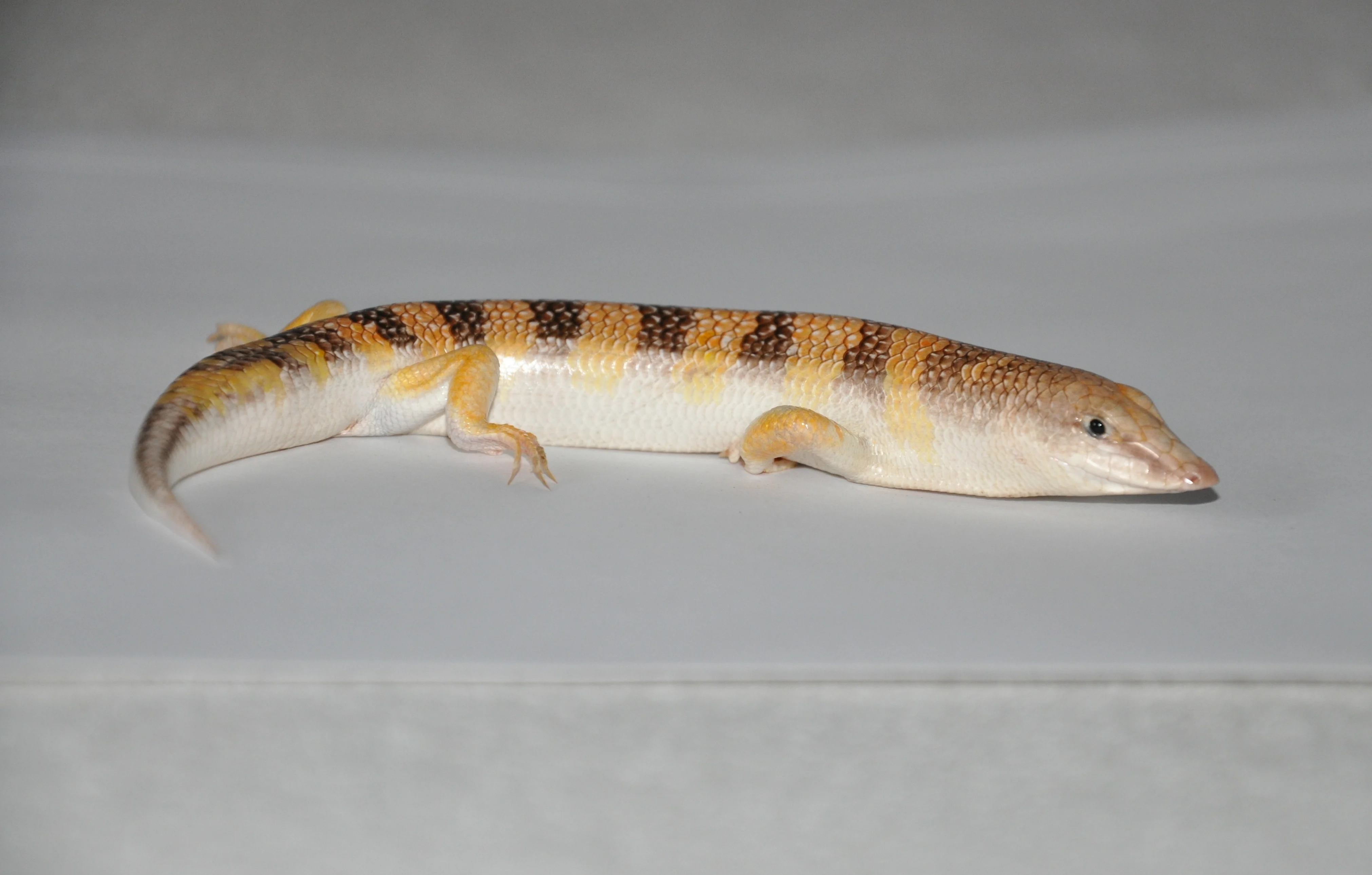
Scincus scincus is a small skink that hides and moves through sand. It is a poor choice if frequent handling is the main goal. Good observation depends on an enclosure where it can move between the surface and buried layers by choice. Before acquisition, confirm the scientific identification, legal source, feeding history, and condition of eyes, nose, and feet. Other Scincus species may share the trade name “sandfish.” Unclear wild-caught provenance adds health and transport risks.
For one adult, a starting minimum is about 75 × 30 × 30 cm, while 90 × 45 × 45 cm or larger makes a thermal gradient and varied terrain easier. These are starting dimensions in ReptiFiles’ Scincus care guidance, not a guarantee that every large individual will thrive in the minimum. Juveniles still need room to burrow and patrol the surface. A secure larger enclosure can work from the start if feeding and behavior can be monitored. Usable floor area and substrate depth matter more than climbing height.
Check the lid and every cable opening for escape routes. Ventilation needs a path for incoming and outgoing air, not simply a large hole in the roof. Secure lights and heaters out of reach. Heavy rocks should rest firmly on the enclosure floor so burrowing cannot undermine them; a stone balanced on sand can crush an animal. Run the empty enclosure through several heating and cooling cycles and record its real highs and lows before introducing the skink.
Single housing is the safer default. Males in particular may conflict, and animals seen close together are not necessarily comfortable. Any group requires reliable sexing, substantially more floor space, multiple heat and refuge sites, and a ready spare enclosure for separation. Food stealing or one animal remaining buried while another dominates the surface may reveal unequal access. A single skink is also easier for a new keeper to monitor.
Sand Layer and Refuges


Provide roughly 10–15 cm of clean, low-dust sand so the whole animal can submerge. This range from Scincus care guidance is a starting point; a deeper zone may suit the individual and enclosure. Avoid powdery material that becomes airborne or clumps when wet. Calcium sand, crushed walnut shell, and industrial sandblasting media are poor default substrates. Sandfish can swallow some sand, so both cleanliness and grain properties matter.
A convincing dune look does not require one uniform slope. Separate warm surface areas, cooler deeper sand, stable shelters, and open places where feeding can be observed. Cork pieces and low anchored structures offer momentary surface cover. Test by hand whether a decoration remains stable when sand beneath it is moved. Inspect artificial plants for exposed wire or adhesive.
Low environmental humidity does not mean removing all water. Even deserts have night, shade, and subsurface moisture differences. Repeatedly wetting the whole floor can create stagnant clumps, but a small local humid retreat can be considered if retained shed recurs in overly dry conditions. Keep that zone distinguishable and check for rot or mold. Substrate feel and the animal’s shedding outcome matter more than one humidity number.
Remove visible waste and uneaten insects promptly. Sift sand regularly, using a weekly check and replacement roughly every 1–3 months as a starting schedule from ReptiFiles, adjusted to waste load, odor, and local moisture. Organic material can remain buried under a clean-looking surface, so inspect deeper spots. After cleaning, restore ventilation, dryness where intended, and the original thermal gradient.
Measuring the Thermal Gradient


Create a warm illuminated surface at one end with a guarded overhead heater and leave an accessible cooler end. ReptiFiles suggests 54–60°C for the basking surface, 26–32°C on the cool side, and 21–26°C at night. The highest figure refers to a measured surface, not the lizard’s core body temperature or a target for all enclosure air. Confusing it with an experimental critical body temperature around 48.2°C would be dangerous. Never force prolonged contact with a hot surface.
Use an infrared thermometer at several points on the actual basking sand surface. Use separate digital probes for air at skink height on warm and cool sides. Check shallow and deeper sand as well to confirm that real choices exist. Glass temperature and thermostat settings alone are inadequate. Compare the hottest part of the day, the period before lights go out, and the pre-dawn minimum. Secure probes against movement and check them periodically.
On very hot room days, check first whether the cool end exceeds 32°C. Even if the heater is reduced, the animal must retain a usable refuge. If the room stays below the suggested night minimum for long periods, use a guarded, lightless auxiliary heater on a thermostat. Avoid red night bulbs that keep the enclosure illuminated. Verify a controller with an independent thermometer. Indoor temperatures change by season, so one setup is not a permanent answer.
Behavior is part of the instrument panel. Persistent open-mouth behavior or escape attempts under the heater can indicate discomfort. An animal buried only at the cool end and refusing food also calls for review of heat, light, and health. Because it is not visible every moment, log surface activity, feeding, and weight to establish a baseline. If behavior remains abnormal despite apparently acceptable numbers, revisit the layout and measurement points.
Photoperiod, UVB, and Water


Use a timer to make day and night distinct. About 12 hours of light and 12 of darkness is a starting schedule that can be adjusted consistently with seasonal conditions and the animal’s response. Provide appropriate UVB near the basking opportunity, but measure exposure at the animal’s position. ReptiFiles suggests a UV Index near 1–2 there. Wattage or a “desert” label alone cannot tell you the actual UV Index.
Measure UVB at the height of the skink’s back above the sand. Lamp distance, reflector, mesh lid, and lamp age all alter delivery. Glass or acrylic between lamp and animal can block much of the UVB. Offer full shade as well as a brighter choice instead of uniform exposure with no exit. If the skink repeatedly avoids the area or keeps its eyes shut, check the lighting layout. Use both manufacturer guidance and actual measurements to decide replacement timing.
Place a shallow, heavy water dish on the cool side, where it cannot tip easily. Replace water daily and clean immediately if sand or waste enters. Desert origin is not a reason to withhold drinking water. If the surrounding sand stays wet, change the dish position or size and remove contaminated material. Do not assume prey insects supply all needed moisture. Nor should the whole enclosure be kept uniformly humid.
Shedding should release the old skin naturally. If skin repeatedly remains on toes or tail tip, do not pull it off; review temperature, access to moisture, substrate, nutrition, and overall condition. A small quiet humid retreat may help, but avoid repeated unsupervised soaking or saturating the sand. Constriction or wounds require assessment by a reptile-experienced veterinarian.
Food, Supplements, and Monitoring


Offer a variety of appropriately sized, active captive-bred insects, such as crickets, small roaches, and grasshoppers. Avoid wild-caught insects because of pesticide, parasite, and identification risks. The widest part of a prey item should not exceed the skink’s head width. Feed and hydrate insects before offering them. A long-term diet of one insect type or fatty larvae is difficult to balance.
ReptiFiles gives starting frequencies of twice daily for hatchlings, daily for growing juveniles, and about every other day for adults. These are not automatic feeding rules that override body condition or appetite. Observe intake over a short feeding period and adjust to weight and waste output. Remove leftover insects rather than leaving them overnight; some hide and can harass or bite a shedding lizard. If a recently moved or cold animal eats poorly, first check the environment.
Calcium and vitamin supplementation depends on UVB provision, feeder composition, and product strength. A thick coat of powder is not automatically better. Set a schedule from product labels and reptile-veterinary advice; avoid stacking several vitamin D3 products. Well-fed insects and appropriate UVB remain the foundation. Even if a source mentions occasional plant material, do not replace the insect-based staple with fruit or vegetables.
The direction of weight change can matter more than any single reading. Check that juveniles grow and that adults are neither excessively rounded nor bony. Measure briefly at consistent times; a transparent container can go on the scale if direct handling is unnecessary. Persistent refusal accompanied by weight loss or lethargy is not merely a fussy appetite. Record unusually watery or bloody waste as well.
Handling, Health Signals, and Daily Checks


A startled sandfish can dive into sand instantly. Do not dig it out by force or pull it by the tail. When transfer is necessary, support the whole body with both hands or a small container close to a safe surface, and keep the event brief. Minimize disturbance during shedding, just after a meal, and immediately after a move. Tail and skin are not handles. Young animals can be especially vulnerable to overheating, dehydration, and stress, making observation preferable to handling.
Ordinary hiding must be distinguished from illness. Prolonged disappearance together with refusal of food, swollen eyes, nasal discharge, labored open-mouth breathing, or constricting shed on toes calls for assessment. Record skin lesions, asymmetric movement, repeated rolling, or rapid weight change. Swallowing some sand is not by itself a diagnosis, but absent waste with apparent abdominal discomfort warrants veterinary care.
If warning signs appear, bring records of heat, UVB, substrate, water, and feeding to a veterinarian experienced with reptiles. Photographs online cannot establish infection, parasites, or obstruction, and drugs should not be given without diagnosis. A setup with a very hot surface and a cooler refuge is especially vulnerable to measurement error, so use independent sensors from the beginning. Stabilize the environment and document it for professional assessment.
Each day, check water, temperature highs and lows, leftover insects, lid security, breathing, and surface behavior. Each week, inspect sand contamination, equipment stability, weight trend, and retained shed; photographs help. Remeasure room temperature and lighting when seasons change. Common beginner errors include providing deep sand without a thermal gradient, confusing a hot surface with air temperature, repeatedly digging out a hidden animal, and feeding a monotonous diet. The checklist protects a stable environment where the skink can choose for itself.
Do not change substrate, heater, lighting, and diet all at once unless safety demands it; otherwise causes of a new problem become hard to identify. Correct dangerous heat and ventilation first, confirm stable feeding and waste output, and adjust remaining variables step by step. Suspected burns or breathing distress call for immediate safety measures and veterinary care. Record the measurement location and time with every number so later readings are comparable.
Read Next
Sandfish Skink Natural History
References
The Reptile Database: Scincus scincus
Maladen et al. 2009, Science, sand swimming
Maladen et al. 2011, Journal of the Royal Society Interface
Baumgartner et al. 2008, PLOS ONE
Breathing while buried in sand, Journal of Experimental Biology
Vibration-mediated prey detection, Animal Behaviour
Thermal limits of the sandfish skink, Journal of Herpetology
ReptiFiles Sandfish Care Guide, revised 2024-02-21
ReptiFiles Sandfish Enclosure Size
ReptiFiles Sandfish Enclosure and Substrate
ReptiFiles Sandfish Temperature and Lighting
Suggest an edit
Tell us which sentence may be incorrect and provide a verifiable source. Submissions are reviewed before publication.