Last updated 2026.10.10 · Edited by silveston · Compiled by an independent hobbyist without professional credentials
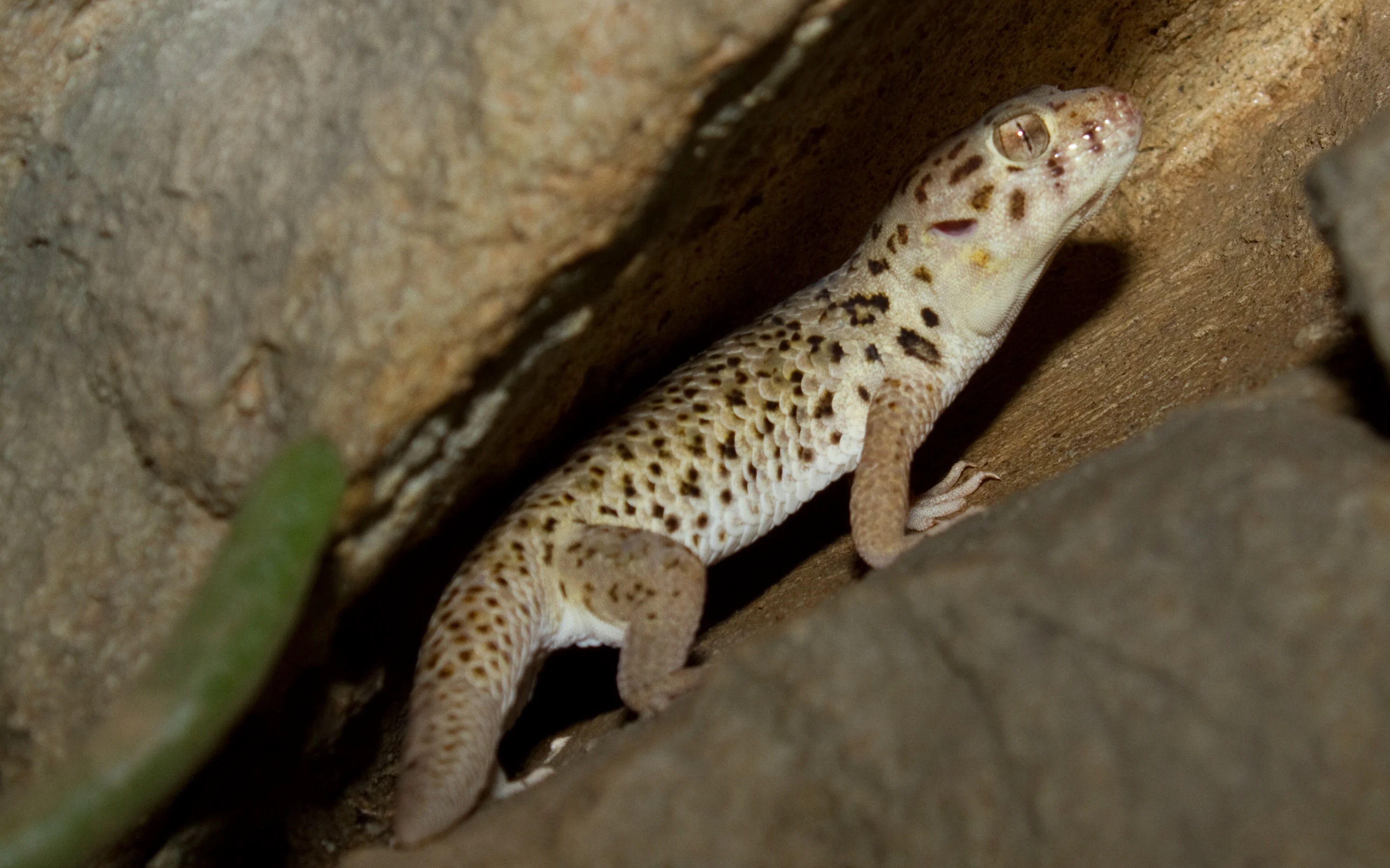
Core principle: the frog-eyed gecko (Frog-Eyed Gecko) is not a desert ornament that needs only a dry surface. It needs broad floor space, deep cohesive soil that allows stable burrows, temperature and humidity gradients between surface and burrow, and structures to explore at night. Large eyes, delicate skin, and plate scales make rough handling risky, while male aggression makes solitary housing the default.
For the natural-history reasons behind these requirements, see the companion Frog-Eyed Gecko Species Profile on distribution, burrow use, nocturnal senses, and defensive behavior.
The values below are adult starting points. Room temperature, enclosure material, ventilation, lamp distance, and body condition change the outcome, so use a thermostat, infrared thermometer, and digital probe thermometers/hygrometers to measure the actual environment. Do not diagnose disease or medicate by guesswork; record appetite, feces, weight, eyes, skin, and respiration, then involve a veterinarian experienced with reptiles.
| Management area | Starting point and measurement location |
| Adult enclosure | At least about 90×45×45cm with broad floor area; larger dimensions make thermal and humidity choice easier |
| Day surface | Warm surface 31–33°C, middle 26–28°C, cool end 22–25°C |
| Night | Usually 18–23°C; allow seasonal decline only in healthy adults and never cool abruptly |
| Humidity | Room air roughly 35–50% as a starting point, with a more humid burrow/humid hide; never keep the entire substrate wet |
| UVB | Low to moderate exposure, starting around UVI 1.0–2.0 at the animal’s occupied position |
| Substrate | 15–25cm or more of fertilizer-free soil, washed sand, and clay that holds a burrow |
| Feeding | Varied appropriately sized insects; adults often 2–3 meals weekly, adjusted to condition; juveniles smaller meals more often |
| Cohabitation | Solitary by default; never house adult males together |
Enclosure size and layout: floor and burrow before height
For one adult, start with a floor-oriented enclosure of at least about 90×45×45cm. Some commercial guidance recommends 90×60×60cm, and extra floor area makes it easier to provide warm and cool zones, a dry surface and humid burrow, and both open and sheltered routes. Juveniles also benefit from usable space; simplify the furnishing for monitoring rather than confining them long-term to a tiny box.
A front-opening enclosure with a broad upper ventilation panel is practical. An all-mesh cage can dry the burrow too quickly, while sealed glass can trap heat. Ventilation is not simply “more is better”: the surface should dry while deeper substrate remains buffered. Persistent overnight condensation or musty odor signals a need to change airflow and watering.
Place a stable burrow entrance and flat heated surface on the warm side, visual barriers and cork through the middle, and a water bowl plus another hide on the cool side. The gecko runs and digs more than it climbs glass, so do not consume all usable floor area with decoration. A completely bare floor is stressful, so preserve cover between movement routes.
Escape prevention is essential. Long limbs allow more jumping and pushing than the animal’s size suggests, so inspect doors, cable ports, and screen edges. Keep heat sources outside with burn guards. A sunny window or uncontrolled heated floor can create dangerous seasonal overheating.

Thermal gradient and measurement: more than one hot spot
Use a warm surface of 31–33°C, middle air of 26–28°C, and a cool end of 22–25°C as adult daytime starting points. This gradient is more useful than managing the whole enclosure to one number. It is a practical interpretation of the 22–32°C range in established care guidance and dryland ecology. If an animal occupies only the hottest area or never leaves the burrow, revise the gradient and hide placement.
Measure the rock or soil touching the body with an infrared thermometer. Record air temperature with probes 2–5cm above the ground at both warm and cool ends. A reading in the air directly below the lamp can miss the radiant load reaching skin. Connect heat to a thermostat and secure the sensor so it cannot be moved or buried.
Turn lights off at night and allow a natural drop, usually to 18–23°C. This reflects continental daily variation for a healthy adult, but juveniles, recovering animals, and severely underweight geckos should not be forced through a large decline. If the room falls below 18°C, use a lightless thermostatic source without warming the entire substrate and removing the cool refuge.
Seasonal cooling can influence breeding and activity, but abrupt cooling to induce reproduction is hazardous. First establish months of weight and appetite records and a health assessment. Compare activity and responsiveness at the same time of night so normal hiding is not confused with pathological lethargy.

Humidity, ventilation, and water: arid is not dehydrated
Start with daytime room-air humidity around 35–50%, but do not impose one number on the entire habitat. The deep burrow and humid hide should remain more humid than the surface. In nature, a burrow buffers daytime heat and water loss, making a dry top and slightly cool, moist lower layer a critical vertical gradient.
Avoid daily spraying that leaves all sand continuously wet. Add water selectively to one deep section and the humid hide, allowing the surface to dry before the next watering. Place one probe in the air and another near the burrow entrance or humid hide. Odor, condensation, or increasing fungus gnats indicate excessive moisture.
Keep a shallow stable water bowl on the cool side. Replace water daily and clean immediately when contaminated. A deep bowl can endanger a small animal, while placement under the heater needlessly increases evaporation and bacterial growth. Failure to witness drinking is not a reason to remove water.
Possible dehydration signs include weight loss, reduced skin elasticity, sunken eyes, tacky oral mucus, and hard or infrequent feces. Chronic excess moisture can contribute to skin lesions, mold, and respiratory disease. Neither condition should be diagnosed from one photo; provide the environmental log to a veterinarian.

Lighting and UVB: nocturnal does not mean lightless
Begin with 12 hours light and 12 hours dark, adjusting gradually within 10–14 hours seasonally. Turn off red and blue night lamps as well. Light that looks dim to humans may still be visible to a gecko and can disrupt activity rhythms. Use brief weak ambient light only when nighttime observation is necessary.
Provide low to moderate UVB with genuine choice. Measure roughly UVI 1.0–2.0 as a starting range at the floor and burrow entrance where the gecko actually sits, together with complete shade. Output varies with lamp type, mesh, and distance, so wattage or “7%” branding alone cannot define exposure. Use a suitable UV meter when possible.
Overlap the UVB tube, bright daytime light, and heat at the warm side so they form one coherent “sun” signal. Separating heat and UVB forces the animal to choose between temperature and ultraviolet exposure. A lamp may remain visibly bright after UVB has declined, so follow manufacturer replacement guidance and measurements.
Strong unshaded UVB or a lamp placed too close can injure eyes and skin. Weak UVB is not a reason to overdose calcium or vitamin D3. Lighting, feeder nutrition, and supplements form one system; blood tests and radiographs are veterinary decisions.

Substrate, hides, and cleaning: allow digging without collapse
Mix fertilizer-free topsoil, washed sand, and a small amount of clay until a hand-pressed section holds shape. Give an adult at least 15–25cm depth, with one deeper side for real excavation. Avoid calcium sand, aromatic wood chips, dusty powders, and garden soil containing fertilizer or pesticides.
“All sand causes impaction” and “any sand is safe for a desert species” are both oversimplifications. Risk reflects particle properties, moisture, temperature, hydration, nutrition, and feeding method. Feed from a broad dish or solid tile and investigate repeated substrate ingestion. Do not permanently remove digging behavior by using only a thin paper lining in an otherwise healthy animal.
Anchor cork and heavy slabs to the enclosure floor before adding soil so excavation cannot undermine them. A rock resting on loose substrate can collapse and crush the gecko. Provide a dry warm hide, a cool hide, and a slightly humid deep shelter.
Spot-clean feces, dead insects, and contaminated substrate daily, and wash water and feeding dishes. Replacing all soil at once removes scent marks and the entire burrow system, so work in sections according to contamination. Rinse and dry cleaning products thoroughly and avoid phenolic disinfectants or fragrances in the enclosure.

Food, supplements, and body condition
Rotate crickets, locusts, silkworms, black soldier fly larvae, and appropriately sized mealworm relatives. Keep prey no wider than the space between the eyes and avoid overly hard, large items. Reliance on one fatty larva can promote obesity and imbalance. Dubia roaches are not included in this guide’s recommended feeder list.
Adults often begin at two or three modest feedings weekly; juveniles receive smaller meals more often. Frequency matters less than the weight trend and tail and trunk condition. Offer what can be hunted in 10–15 minutes and remove leftovers. Feeding after nighttime activity starts supports natural hunting and easier observation.
Gut-load insects for 24–48 hours with nutritious greens and balanced feed plus a clean water source. Dust most feedings lightly with plain calcium, while multivitamin and D3 frequency should reflect UVB output, product concentration, and reproductive status. Concentrations vary greatly, so follow the label and veterinary advice rather than copying one universal weekly schedule.
Weigh under consistent conditions weekly or at least twice monthly. A thick tail does not guarantee health; abdominal fat and liver disease remain possible. Sudden 5–10% weight change, appetite loss lasting more than two weeks, repeated regurgitation, or abnormal feces justify environmental review and a veterinary appointment.

Shedding, handling, cohabitation, and stress
Normal shedding may finish overnight and leave little evidence. Provide a humid hide and rough cork, then check toes, eyes, and tail tip for constricting retained skin. Pulling dry shed can damage new skin and scales. Gently humidify first and seek veterinary help if it does not release.
Limit handling to transport and health checks. Never seize from above; at floor level, use both hands as barriers and guide the gecko into a container. Do not hold the tail or loose skin. Standing tall, gaping, or rattling the tail means the defensive threshold has been crossed—stop and increase distance.
House one animal per enclosure by default. Experimental work found aggression concentrated almost entirely in male–male encounters, while adults of both sexes scent-marked. Even a breeding pair should meet only under supervision while each retains a complete enclosure. Sharing a heat source or hide does not prove a peaceful relationship.
Stress may appear as repeated glass running, prolonged daytime exposure, freezing even in front of food, repeated defensive displays, or weight loss. Cover three sides, add visual barriers, shift observation to nighttime, and reduce cleaning and handling frequency. Recovery of voluntary emergence and exploration is the best sign of improvement.
Health warnings and routine checklist
Each day check light timing, warm surface and cool-end air temperatures, water, nighttime activity, and feeding response. Weekly, record weight, fecal frequency, eye clarity, mouth and nostrils, toes and tail tip, and any skin lesions. Consistent-angle photographs reveal gradual change.
Urgent signs include open-mouth breathing, respiratory noise or discharge, persistently closed eyes, jaw or limb deformity, tremors, repeated falls, severe dehydration, prolapse, blood in feces, spreading wounds, or swelling and bleeding after tail loss. Distinguish normal daytime hiding from an animal that is unresponsive.
Quarantine a new animal in a separate room for at least 60–90 days with dedicated tools. Record arrival weight and feces, and discuss examination and fecal testing with a veterinarian. Wild-caught or undocumented animals have higher risks of dehydration and parasites, but preventive medication without diagnosis can cause adverse effects and resistance.
Common beginner errors include shallow loose sand, heating the entire floor with a mat, relying on one hygrometer, leaving night lights on, feeding one insect, frequent handling, and housing males together. Good husbandry begins with measured gradients and records, not elaborate decoration. This guide provides general information and does not replace diagnosis or treatment.
Final pre-acquisition checklist
- Broad adult floor space and at least 15–25cm of burrow-holding substrate
- Measure warm surface, middle and cool air, plus burrow temperature and humidity separately
- Low to moderate UVB with complete shade; all lights off at night
- Clean water on the cool side and a localized humid shelter
- Varied gut-loaded insects and supplements matched to product concentration
- Solitary housing by default and container-based transfer without grabbing tail or skin
- Routine weight, feces, eye, and skin records plus access to a reptile veterinarian
References and husbandry basis
- Swell Reptiles. Wonder Gecko (Frog-Eyed Gecko) care guide. Its 3×2×2ft enclosure, 22–32°C gradient, and UVI 2–3 suggestions still require measurement for the actual lamp and distance. https://www.reptiles.swelluk.com/help-guides/wonder-gecko-care-guide/
- Suchomelová P. et al. (2015). Experimental assessment of social interactions in two species of the genus Teratoscincus. Behavioural Processes 120:14–24. DOI: 10.1016/j.beproc.2015.08.005.
- Higham T.E., Jayne B.C. (2011). Posture, speed, and habitat structure: three-dimensional hindlimb kinematics of two padless geckos. PMID: 21392953.
- The Reptile Database. Frog-Eyed Gecko. Current name, synonyms, and distribution. https://reptile-database.reptarium.cz/Teratoscincus/scincus
- General reptile clinical principles used by veterinary zoological practice: assess measured environment, quarantine, nutrition, UVB, and calcium together; disease requires veterinary diagnosis.
- Wikimedia Commons. Category: Frog-Eyed Gecko. Photographer, source, and license appear in each caption.
Suggest an edit
Tell us which sentence may be incorrect and provide a verifiable source. Submissions are reviewed before publication.