Last updated 2026.09.16 · Edited by silveston · Compiled by an independent hobbyist without professional credentials
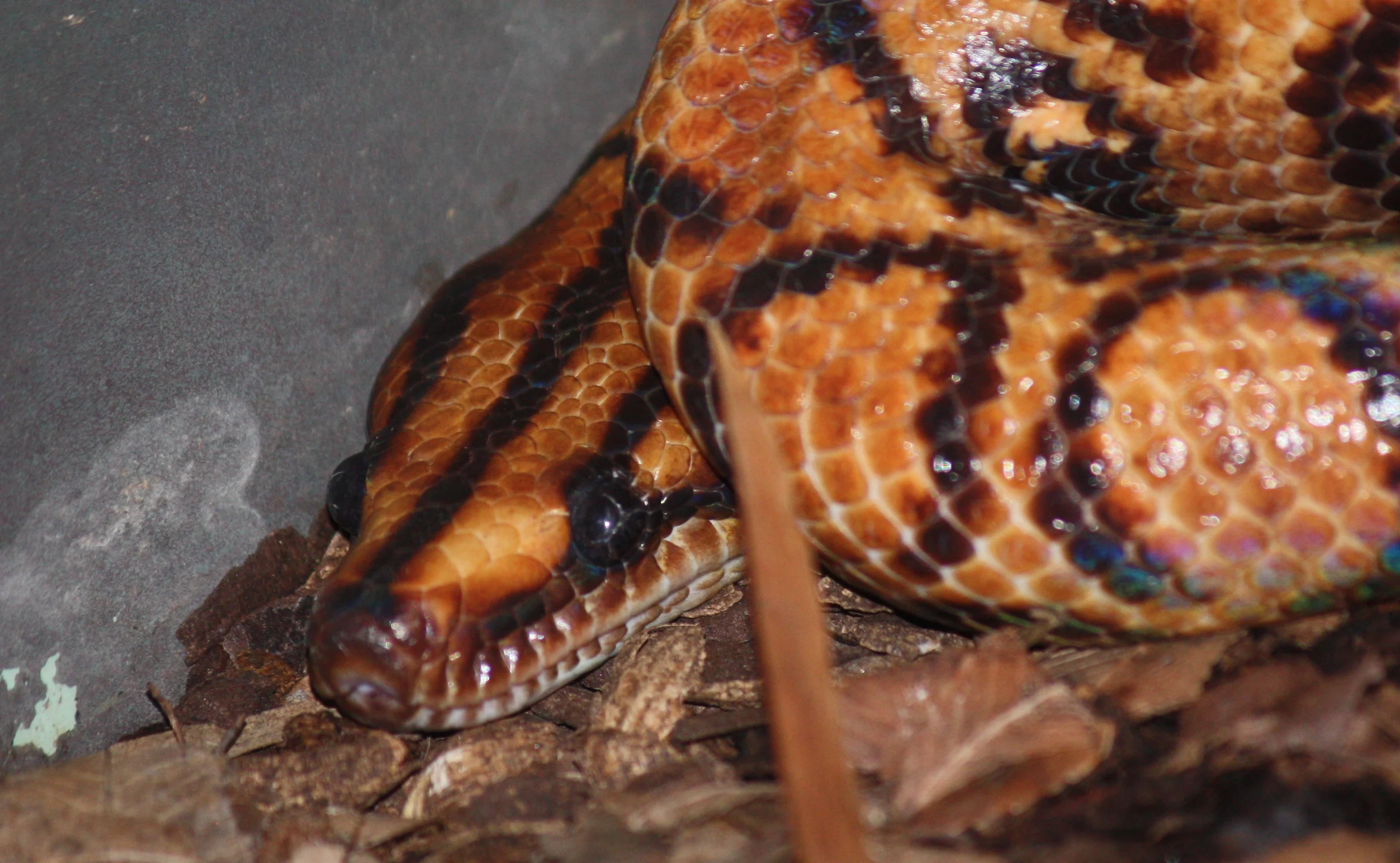
The Brazilian Rainbow Boa (Epicrates cenchria) attracts attention for its beautiful iridescence and relatively calm adult temperament, but it is not an “easy” snake that tolerates a wide margin of environmental error. Juveniles are particularly vulnerable to dehydration and overheating, while adults grow to 1.5–2 meters in length, requiring a spacious, secure enclosure that prevents escape. As they can live for over 20 years, you should adopt one only after considering factors such as equipment costs, feeding, relocation, and long-term care.
This guide is based on a single, healthy, captive-bred individual. The temperature and humidity figures provided are not fixed targets but rather starting points for creating an environmental range from which the animal can choose. Since readings from the same hygrometer can vary significantly depending on placement, you should measure the warm side, the cool side, and the humid hide separately, while also monitoring the animal’s shedding status, activity levels, breathing, and excretion.
This guide is based on a single, healthy, captive-bred individual. The temperature and humidity figures are not fixed targets but starting points for creating an environmental range from which the animal can choose. Since readings can vary significantly depending on the placement of the hygrometer, you should measure the warm side, cool side, and humid hide separately, while also monitoring the animal’s shedding status, activity levels, respiration, and excretion.
Quick Key Requirements
| Category | Recommended Starting Point | Measurement & Application Conditions |
|---|---|---|
| Adult Enclosure | Minimum recommended size: 180×90×90 cm | Larger sizes may be needed based on the individual’s length and activity level; based on actual internal dimensions |
| Warm surface | Approx. 30–32°C | Measure the basking spot surface temperature with an infrared thermometer |
| Warm-side air temperature | Approx. 27–29°C | Measure using a digital probe at the animal’s body height |
| Cool-side air temperature | Approx. 24–26°C | Near the entrance of the hide on the opposite side |
| Nighttime | Approx. 22–25°C | For healthy adults; ensure temperatures do not drop below 21°C for extended periods |
| Relative humidity | Generally 70–80% | Refers to air humidity, not a wet substrate; maintain with adequate ventilation |
| Wet Hide | Always available | Use damp moss or sphagnum moss (moist but not waterlogged) |
| Lighting | Light/dark cycle of approximately 12 hours | Use a timer adjusted for the season and indoor natural light |
| UVB | Low Provides linear UVB at a specific intensity | Check the distance and mesh loss specific to the product; ensure shaded areas are also provided |
| Diet | Rodents similar in thickness to the animal’s midsection, or slightly smaller | Adjust spacing based on the individual’s body size, growth stage, and digestion status |
Considerations before adoption: space, lifespan, and source
An enclosure width of 180 cm is a realistic starting point for an adult to fully extend its body, move around, and choose its preferred temperature within the thermal gradient. While a juvenile can start in a smaller container, a temporary setup should not become an excuse to delay acquiring the proper equipment for an adult. The initial budget must cover a large enclosure, a thermostat, multiple sensors, lighting, a stable power supply, and storage space for frozen prey.
Verify whether the animal is captive-bred (CB) and check for records regarding feeding responses, shedding, the last defecation, and health check-ups. Wild-caught individuals carry a high risk of dehydration from transport, parasites, and feeding refusal, and their capture can negatively impact conservation efforts. Do not simply accept the seller’s claim that the animal is “CB”; it is best to obtain documentation regarding the birth date, parental lineage, and feeding history.
With proper care, this species can live for over 20 years. Consider not only your current living situation but also potential moves, long-term travel, changes in family circumstances, and access to veterinary care. Check local regulations and housing complex rules in advance. Identify reptile-specific rescue and rehoming options in case you are ever unable to continue caring for the animal, and never release it into the wild.


Enclosure size and structure
For an adult, a front-opening enclosure measuring at least 180×90×90 cm is recommended as a starting point. Increase the length and depth for larger females or particularly active individuals. Length allows the snake to stretch out almost fully; depth accommodates turning and temperature gradients; and height allows for the safe placement of thick branches and shelves. If the enclosure has a large floor area but a barren interior, the animal may feel exposed, and the usable space is effectively reduced.
Juveniles can start in 60–90 cm enclosures, but a larger space may be used from the beginning provided there are plenty of hiding spots. A lack of hiding places and visual barriers is a more significant issue than the idea that “large enclosures stress out hatchlings.” By using cork pieces, artificial plants, leaf litter, and low shelves to create a path that is constantly obscured, the snake can explore while remaining able to hide easily.
The door requires a locking mechanism that cannot be opened by the snake pushing against it with its snout. Ventilation vents and cable holes must be sized or covered so the snake’s head cannot pass through, and protective guards should be installed over heat sources and lighting to prevent direct contact. Thick branches must be secured at both ends to support the adult’s weight. Accidents—such as a snake being crushed by a fallen branch or a tipped-over water bowl—result from how equipment is secured, not from the mere presence of the equipment itself.


Temperature Gradient & Measurement
As a starting point, aim for a basking surface temperature of approximately 30–32°C on the warm side, with an ambient air temperature of 27–29°C nearby, and 24–26°C on the cool side. Care guides vary in whether they specify surface or air temperatures, so comparing numbers alone can be confusing. Measure surface temperatures with an infrared thermometer and air temperatures at the snake’s level using a digital thermometer with a wired probe.
Heat sources must be connected to a thermostat. Secure the probes for ceramic heaters or radiant heat panels to prevent them from detaching and causing overheating, and cross-check readings with a separate thermometer. Relying solely on under-tank heating makes it difficult to establish the proper ambient air temperature and gradient in a large enclosure. If using overhead radiant heat, a guard is necessary to prevent the snake from coming into direct contact with the heat source.
Lights can be turned off at night, allowing the temperature to drop gradually to around 22–25°C. While a healthy adult can tolerate lower temperatures for short periods, this is not the same as leaving them in cold conditions for an extended time. Juveniles, recovering individuals, and those currently digesting food may be more sensitive to sudden temperature drops. If the entire room becomes cold at night, use a non-light-emitting heat source connected to a thermostat.
Providing a temperature gradient that the snake can choose from is more important than hitting a specific number at a single point. Provide both warm and cool hiding spots, and measure the temperature at the entrance of each. If the snake consistently stays inside the water bowl or avoids the area directly beneath the heat source, check for issues regarding humidity, mites, or overheating.

_(10599126345).jpg)
Humidity and Ventilation: A Stable Microenvironment Over High Numbers
The general target range for relative humidity is approximately 70–80%. Juveniles and snakes preparing to shed often benefit from access to hiding spots with higher humidity. While some husbandry guides suggest humidity levels above 90% for juveniles, keeping the entire enclosure constantly wet is not recommended. High air humidity is not the same as having soggy, decaying substrate.
Place at least two digital hygrometers at the snake’s body level—one on the warm side and one on the cool side. If water droplets land on the sensors immediately after misting, readings may appear artificially high; therefore, focus on the trend over the course of the day rather than just the peak reading following misting. Automatic misters are convenient but can mask malfunctions, clogs, or excessive humidity, so regular water refills and nozzle inspections are necessary.
Combining a large water dish, deep moisture-retaining substrate, partially covered ventilation, and a humid hide allows you to maintain humidity without soaking the entire enclosure floor. If the surface remains constantly damp and smells of mold, ventilation is insufficient. Conversely, if humidity drops below 50% within a few hours despite daily misting, adjust the ventilation and examine factors such as substrate depth and the drying effects of room heating.
Fill the humid hide with damp sphagnum moss or paper towels (squeezed out to remove excess water) and replace them periodically. The snake should be able to enter and exit at will, and the hide should be placed at one end of the temperature gradient. Respiratory symptoms cannot be attributed solely to humidity being “too high” or “too low.” Since ventilation, temperature, hygiene, and potential infections all play a role, consult a veterinarian with your environmental records if you observe abnormal breathing.

_juvenile_(13908858358).jpg)
Lighting and UVB
Even nocturnal snakes require a distinction between day and night. Use a timer to establish a light-dark cycle of approximately 12 hours, which can be gradually adjusted within a 10–14 hour range depending on the season. Do not leave red or blue “night lights” on at night; even if they appear dim to the human eye, they can still be perceived as light by the snake and disrupt its rest cycle.
Data is limited regarding whether UVB is an absolute survival requirement for carnivorous snakes that can obtain Vitamin D solely through their diet. However, providing low-intensity linear UVB from a safe distance can support natural circadian rhythms and behavioral choices. Consult the lamp manufacturer’s distance guidelines and account for the fact that mesh lids reduce radiation output. Shaded areas and covered hides that the snake can fully retreat into must be provided.
Sunlight passing through glass or clear plastic provides negligible effective UVB while potentially raising internal temperatures to dangerous levels. Do not use sunbathing by a window as a substitute for UVB lighting. Replace lamps according to the manufacturer’s recommended schedule before they reach the end of their lifespan, and if possible, verify output levels at the snake’s height using a UV meter.
Substrate, Hides, and Water
Using moisture-retaining substrates—such as coconut chips, a mix of coco-peat and bark, or fertilizer-free potting soil mixed with leaf litter—at a depth of 7–12 cm aids in moisture regulation and encourages exploratory behavior. Avoid materials that release strong aromatic oils (like cedar), dusty sand, and soil containing fertilizers or pesticides. Using white paper towels during the quarantine period for new individuals makes it easier to monitor waste and check for mites.
Place hides—sized so the snake’s body touches the walls—on both the warm and cool sides of the enclosure. Rather than relying on a single large box, provide various snug spaces such as cork tunnels, low caves, or areas under leaf litter. Covering the front and parts of the sides of the enclosure can reduce exposure to human movement.
The water dish should be wide enough for the snake to submerge part or all of its body and heavy enough not to tip over easily. Change the water daily and clean the dish immediately if it becomes contaminated with waste. While soaking in water can be normal behavior, prolonged immersion may indicate issues such as overheating, dehydration, mite infestation, or a lack of suitable hiding spots.

_juvenile_(14115578555).jpg)
Prey size and feeding intervals
Use thawed frozen rodents as the primary food source. A safe starting point is to select prey where the thickest part is roughly equal to or slightly smaller than the thickest part of the snake’s body. While a meal size of approximately 10% of body weight is often recommended, this is not an absolute rule applicable to all situations (e.g., lean prey vs. obese snakes); prioritize observing body condition and growth rate.
Start with feeding intervals of roughly 7–14 days for juveniles and 2–4 weeks for adults, then adjust as necessary. Feeding large meals weekly during the growth phase can lead to rapid obesity, and a high-calorie diet for non-breeding adult females can cause fat accumulation. Look for signs of underweight status, such as a deeply recessed spine and a triangular body cross-section, or signs of overweight status, such as a thick neck and tail base with visible skin stretching between the scales.
Thaw frozen prey in the refrigerator and warm it thoroughly—including the center—using warm water; do not use a microwave, as this can cause localized overheating. Use long feeding tongs to serve the prey, ensuring your scent does not mix with the scent of the food. As a general rule, do not use live rodents, as they can bite the snake and cause serious injury. If the snake refuses food, do not immediately switch to a larger prey item; instead, check the following factors in order: temperature, hiding spots, shedding status, season, and overall health.
Avoid unnecessary handling or deep-cleaning the enclosure for about 48 hours after feeding. If the snake regurgitates the food, do not attempt to feed it again immediately. Since causes can vary—ranging from prey that is too large to low temperatures, stress, or infection—review your environmental records; if the issue recurs or the snake loses weight, consult a veterinarian experienced in treating reptiles.
Assessing Shedding and Hydration Status
As shedding approaches, the snake’s color often becomes dull, and its eyes turn a cloudy blue before clearing up again; the actual shedding usually occurs within a few days of this clearing. During this period, vision is impaired and defensive instincts may heighten, so avoid handling or forcing the snake to eat. Rough surfaces like cork bark and branches help the snake rub off its old skin.
A normal shed comes off as a relatively continuous piece from head to tail. Check to ensure the eye caps and the tip of the tail have come off, but do not manually peel off stuck skin while it is dry. Instead, provide a humid hide and adjust the environment. Attempting to remove retained eye caps with tweezers can damage the cornea and surrounding tissues.
Wrinkled skin, sticky saliva, lethargy, hardened urates, and incomplete shedding can be signs of moisture or environmental issues. Conversely, blisters, a red belly, and a foul-smelling substrate suggest excessive moisture and potential contamination. Proper moisture management does not simply mean “spraying lots of water”; it involves maintaining clean drinking water, appropriate ambient humidity, and surfaces that allow for drying, alongside adequate ventilation.
Behavior, Handling, and Co-housing
Do not handle a newly arrived animal unnecessarily for at least a week—or ideally, until it has fed reliably two or three times. Before handling, open the enclosure door and lightly touch the animal’s side to signal that it is not feeding time, then lift it by supporting multiple points along its body. Avoid grasping the head, pressing on the neck, or lifting the animal solely by the tail.
Start with short sessions of 5–10 minutes; return the animal to its enclosure if it shows signs of rapid breathing, persistent attempts to escape, tightly coils its body while hiding its head, or assumes an aggressive posture. While rapid defensive reactions are common in young animals, attempting to “tame” them through repeated forced contact can increase stress. Prioritize a stable environment and brief, predictable interactions.
As a general rule, house animals individually. Even if two animals appear calm together, they may compete for the same hiding spots and optimal temperature zones, and co-housing increases the risks of feeding-related accidents and disease transmission. Co-housing for breeding purposes should only be considered if quarantine, sex verification, and sufficient physical health are ensured, and if there is supervision and a spare enclosure available for immediate separation.

_(10599165546).jpg)
Cleaning and Quarantine
Change the water daily and promptly remove feces, urates, and wet substrate, ensuring a generous area around the waste is also cleared away. Prevent the accumulation of food scraps and mold, and perform partial substrate changes and full inspections monthly or as needed based on the level of soiling. Even in a bioactive enclosure, glass cleaning, water dish disinfection, and equipment checks are necessary.
It is safest to quarantine a new snake in a separate room from other reptiles for at least 60 to 90 days. Use dedicated tongs, water dishes, and cleaning tools, and always tend to existing animals before handling the new individual. Schedule a basic health check—including a fecal exam—immediately after adoption, and begin keeping records of weight, feeding, shedding, and defecation.
When using disinfectants, first remove organic matter, then strictly follow the product’s concentration and contact time guidelines. For products requiring rinsing, rinse thoroughly to eliminate odors and residues, then allow to dry completely. When returning decorations to the enclosure, check for secure placement, sharp edges, damaged cables, and the correct positioning of the thermostat probe.
Signs of health issues and criteria for veterinary care
Breathing with the mouth open, wheezing, bubbles around the nostrils or mouth, and a posture with the neck extended upward are signs requiring prompt veterinary attention. Do not simply apply medication at home for symptoms such as facial or oral swelling, cheesy-looking discharge, or an inability to close the jaw properly. Bring records of temperature and humidity, videos of the symptoms, and recent feeding and weight logs to the veterinary clinic.
Repeated vomiting, diarrhea lasting more than three weeks, bloody stool, cloacal prolapse, sudden weight loss, and neurological symptoms (such as an inability to right itself after flipping over) require veterinary care. While a refusal to eat does not automatically confirm illness, it is best not to wait if a young animal repeatedly refuses food or loses more than 10% of its body weight.
Black specks moving between scales or small arthropods repeatedly seen in the water bowl may indicate mites. Do not arbitrarily spray commercial insecticides on the snake; instead, isolate it from other animals and follow veterinary instructions. Burns may involve deep tissue damage even if they appear small initially; remove the heat source and seek veterinary care.
Common Mistakes Made by Beginners
- Simply increasing humidity levels: Keeping the entire substrate wet increases the risk of skin issues, respiratory problems, and mold growth. Incorporate both a humid hide and proper ventilation into the enclosure design.
- Using only a single sensor: Warm surface temperatures, warm air temperatures, and cool air temperatures are distinct measurements. Use an infrared thermometer and at least two probes.
- Using a heat source without a thermostat: Fluctuations in room temperature and equipment inaccuracies can lead to burns.
- Keeping the snake in a small, temporary enclosure for too long: Determining enclosure size based solely on body size deprives the snake of temperature gradients and opportunities for exercise.
- Feeding too frequently: For snakes, which are slow-growing and long-lived, rapid growth is not synonymous with good health.
- Interpreting cohabitation as social bonding: Sharing the same hide may stem from competition for resources rather than social interaction.
- Forcibly removing shed skin: First, correct humidity, hydration, and hide conditions; have a professional examine issues involving the eyes or tail tip.
Maintenance Checklist
Daily
- Check maximum and minimum temperatures on the warm and cool sides
- Check humidity trends and substrate condition at both locations
- Provide clean water; remove waste and contaminants
- Observe respiration, posture, skin, and signs of attempted escape
Weekly
- Clean water dish and hide box
- Check heat source guards, enclosure locks, and branch stability
- Record prey size and feeding intervals
- Replace contents of the humid hide
Monthly
- Record weight and body condition under consistent conditions
- Cross-check thermometer and hygrometer readings
- Check substrate depth and inspect for mold or mites
- Review plans for power outages or extended absences
Monitor seasonal changes and long-term records
Even with indoor housing, room temperature and humidity fluctuate significantly with the seasons. Summer presents issues like enclosure overheating and rapid water contamination, while winter heating dries the air and can cause the cool side to become excessively cold. When seasons change, adjust one factor at a time—such as heat source output, ventilation opening size, or misting frequency—rather than changing everything at once, and record the results.
There is no need to intentionally induce low-temperature dormancy in pet animals that are not being bred. The cooling schedules for breeding found online are specialized management protocols based on the assumption of healthy, adult specimens with optimal physical condition and specific breeding goals. Applying these directly to young or underweight individuals can increase the risk of digestive stasis and a compromised immune system. Seasonal cues should first be provided through gradual changes in the light-dark cycle and by allowing the indoor temperature to drop safely at night.
The logbook should record the date, morning and night temperature and humidity, type and weight of food offered, feeding acceptance, defecation, shedding, body weight, and behavioral changes. Trends are more significant than isolated figures; for instance, a record showing three consecutive weight drops—measured using the same scale and at the same time of day—is more meaningful than a single measurement indicating a slight loss. Such records also assist veterinarians in narrowing down potential diagnoses.
Preparing for power outages, overheating, and prolonged absences
During a power outage, avoid opening the enclosure frequently to retain residual heat and humidity, and monitor the rate of indoor temperature decline using a separate thermometer. Placing hot water bottles or chemical hand warmers in direct contact with the snake can cause localized burns. Apply insulation to the exterior of the enclosure without completely blocking ventilation, and if a prolonged outage is anticipated, prepare a safe alternative heating location and a transport container.
Overheating in summer can prove fatal more quickly than exposure to low temperatures. If the “cool side” of the enclosure exceeds 30°C due to air conditioner failure or direct sunlight, turn off all heat sources and either move the enclosure to a cooler room or lower the ambient room temperature. Do not place ice packs directly inside the enclosure, as this can cause dangerous rapid cooling through direct contact. Seek emergency veterinary care immediately if you observe mouth gaping, irregular movements, or a loss of balance.
During prolonged absences, a person experienced in reptile care must check the water, temperature, humidity, and enclosure security daily. Automatic watering systems and thermostats cannot replace human oversight. For healthy adults, it may be safer to skip a few feedings rather than forcing a substitute caretaker to feed them; however, for juveniles or animals undergoing treatment, a specific plan should be established with a veterinarian. Leave emergency contact information, care records, and the location of the transport carrier with the caretaker.
Frequently Asked Questions
Should the humidity be maintained at 100% at all times?
No. While some sources recommend very high humidity for juveniles, keeping the entire enclosure constantly wet leads to ventilation and hygiene issues. Generally, aim for an ambient humidity of 70–80% while providing a more humid hide, and adjust based on the animal’s response.
Is UVB lighting necessary?
Although direct data confirming absolute necessity is limited, a safely installed, low-intensity linear UVB light can facilitate natural behavioral choices. Adequate shade and proper distance from the light source must be ensured.
Should I feed them in a separate container?
Usually, this is unnecessary. Moving the animal can increase stress and the risk of regurgitation. Feed them in their regular enclosure using long tongs, and use a specific signal so that opening the enclosure door is not always associated with feeding.
Is it a docile species?
While adults often become docile, individual temperaments vary significantly, and younger individuals may exhibit quick defensive reactions. Rather than assuming a docile nature, prioritize providing hiding spots, a stable environment, and brief, predictable handling sessions.
Related Articles
Reference Materials
- World Wildlife Fund. “Do Brazilian Rainbow Boas Make Good Pets?” Responsible Pet Guide. Original Source
- PetMD. 2023. “Brazilian Rainbow Boa Care Sheet.” Veterinarian-reviewed care information. Original Source
- Chicago Exotics Animal Hospital. “Brazilian Rainbow Boa Care.” Original Source
- ReptiFiles. “Brazilian Rainbow Boa Care Sheet.” Reference for husbandry conditions and enclosure setup. Original Source
- Negron, J. 2023. Animal Diversity Web, “Epicrates cenchria: Rainbow Boa.” University of Michigan Museum of Zoology. Original Source
- Garcia, V. C. et al. 2022. Reproductive cycles of neotropical boid snakes evaluated by ultrasound. Zoo Biology 41: 74–83. DOI
Suggest an edit
Tell us which sentence may be incorrect and provide a verifiable source. Submissions are reviewed before publication.