Last updated 2026.10.16 · Edited by silveston · Compiled by an independent hobbyist without professional credentials
Before Acquisition: Name, Origin, and a Prepared Enclosure

%20female%20with%20eggs%20...%20(Captive%20specimen)%20(43875165374).jpg)
This guide covers the Nelson’s, Sinaloan, and Pueblan milksnake forms now included in Lampropeltis polyzona. Because they were formerly sold as subspecies of L. triangulum, verify parental origin and records rather than identifying an animal from its sales label alone. One Korean listing for a Nelson’s form displays both L. triangulum nelsoni and L. polyzona. That difference reflects a taxonomic revision; it does not prove that every husbandry parameter is identical among forms. Before a transaction, confirm lawful captive-breeding or import documentation and any current transfer or possession-reporting requirements with the competent authority.
The figures below are starting ranges based on the RSPCA’s kingsnake guidance and ReptiFiles’ milksnake material, not absolute values established experimentally for every L. polyzona. Former subspecies differ in locality and adult size, so adjust conditions in response to the individual’s measured length, feeding response, shedding, and weight trend. Distinguish room-air temperature from the temperature of the surface on which the snake rests. Likewise, do not rely only on an average humidity reading from the center of the enclosure; record conditions in both the cool hide and the warm end.
At minimum, the enclosure’s longest side should allow the snake to stretch out fully. For kingsnakes, the RSPCA recommends a length at least equal to the snake’s total length, with width and height each at least about one-third of that length. For a 100 cm animal, do not treat 100 × 35 × 35 cm as a mechanical formula. Aim for at least 100 cm of floor length plus sufficient room for movement, hiding, and ventilation. Enlarge the enclosure as the adult grows. A hatchling may begin in a smaller setup, but measure it as it develops; even a large enclosure can feel secure when furnished with several snug, size-appropriate hides.
Escape prevention and ease of cleaning matter as much as size. Milksnakes can squeeze through door gaps and cable ports, so secure locks, ventilation screens, and lamp guards are essential. An unventilated sealed plastic box or glass enclosure in direct sunlight risks overheating and contamination. Run a new enclosure empty for at least several days and record temperature and humidity before introducing the animal. During the first week, secure hiding and a calm environment take priority over feeding. Repeatedly lifting hides or removing the snake for photographs during acclimation creates unnecessary stress.
Thermal Gradient and Night: Manage the Sensor’s Location Too

%20female%20juvenile%20(36013472342).jpg)
During the day, place the heat source at one end so the snake can choose between a warm area and a cool one. As an initial setting, use the RSPCA’s kingsnake range of 26–30°C at the basking site and 21–24°C at the cool end. These values must be checked at the surface where the snake actually rests and in the air immediately above it, not merely at the ceiling near the lamp. Measure surfaces with an infrared thermometer and air temperature with digital probes at both ends. Sunlight, room heating, and substrate depth can produce very different real temperatures from the same thermostat setting.
Every heater should run through a suitable thermostat, and lamps must be guarded so the snake cannot touch them. A probe placed too far from the heat source may falsely indicate that the target has not been reached and allow overheating. Conversely, attaching the probe directly to a very hot object may leave the broader warm zone too cool. Adjust placement after measuring just above the basking floor where the snake most often rests and at the entrance to the cool hide. Recording readings morning and evening—especially as seasons change—helps reveal equipment failure or shifts in household temperature early.
In an ordinarily heated home, visible lamps can be switched off at night and the temperature allowed to decline gradually. The RSPCA permits a nighttime drop to about 18°C for kingsnakes, but this should not be imposed automatically on a small hatchling, a recovering animal, or a regional form of different origin. If the room falls below that level, connect a non-light-emitting heater to a thermostat and discuss the animal’s condition with an experienced reptile veterinarian. Leaving a red lamp on all night disrupts the light–dark cycle. The enclosure must retain a cooler area where the animal can avoid heat even at night.
It helps to think of the thermal gradient not as an equipment list but as a map of genuine choices. If the only hide is on the hot side, the snake may tolerate excessive heat to feel secure; if water is available only on the cool side, subtle dehydration risks may be missed. Place comparable hides at both ends and check how vertical ornaments alter temperatures beneath them. If the animal suddenly confines itself to one end or repeatedly attempts to escape, reassess measurement locations and the arrangement of shelters even when the displayed numbers appear normal.
Humidity, Ventilation, and Light: Avoid Both Aridity and Dampness


The RSPCA recommends roughly 40–55% relative humidity for kingsnakes, while ReptiFiles gives a general range of 40–60% for milksnakes. Do not combine figures from different sources and declare them a species-specific absolute. Instead, treat about 40–60% at a central sensor in a ventilated enclosure as a starting range. The warm end will often be drier, and the cool end and nighttime air more humid. Persistently wet substrate promotes mold and skin problems, while excessive dryness can impair shedding. Water-bowl placement and ventilation must be adjusted together.
Before a shed, provide a snug humid hide on the cool side with damp moss or another replaceable medium. It should be moist but not dripping, and replaced immediately if soiled or moldy. A localized humidity choice is more useful than keeping the entire enclosure wet with constant misting. Dry paper towel makes feces and skin condition easy to monitor during quarantine, but for long-term housing a burrowable substrate, leaf litter, and securely fixed rocks and branches broaden behavioral choice. Do not force arid conditions with a deep layer of sand alone.
Lighting establishes the rhythm of day and night. Begin with approximately 12 hours of light and 12 hours of darkness, with all visible lighting off overnight. For kingsnakes, the RSPCA suggests a low-output 2–7% UVB tube and a gradient from about UVI 0.7 at the basking position to zero in shade. This is not a controlled study specific to L. polyzona, so account for lamp distance, reflector, and mesh, and verify the intensity with a UVI meter at animal level. Deep shade that the snake can enter voluntarily is essential.
Albino animals may be more sensitive to intense light, so do not increase ultraviolet-B exposure merely because the snake in a photograph looks pale. If it persistently closes its eyes or avoids illuminated areas, reassess the lighting and broader environment and consult a veterinarian. Sunlight filtered through window glass and a product labeled as a “heat lamp” should not be assumed to provide adequate ultraviolet B. Conversely, installing a high-output ultraviolet-B lamp too close is also hazardous. Light, temperature, and the choice of concealment must work together to create a safe daytime environment.
Food and Water: Being Able to Swallow Is Not the Same as Being Safe

%20swallowing%20a%20Quail%20chick%20...%20(Captive%20specimen)%20(44593611631).jpg)
Records of wild L. polyzona eating snakes, lizards, birds, and small mammals are fascinating, but they do not justify offering live wildlife or another pet snake in captivity. Use frozen-thawed rodents from a verified source as the staple. Thaw prey completely, warm it appropriately, and offer it with feeding tongs; discard items that have been refrozen or left out for too long. Avoid live prey, which can bite and injure the snake. When feeding response is poor, examine environment, shedding status, and stress before simply increasing prey size.
Begin with prey whose widest point is about the same as, or only slightly wider than, the snake’s thickest point. Growing animals take smaller meals relatively often, while intervals for adults should lengthen according to body condition. The RSPCA’s kingsnake guidance suggests one small mouse every 5–6 days for juveniles and larger prey every 7–14 days for adults, but this is not a fixed calendar for every L. polyzona. Track weight and body condition, and adjust the schedule with a veterinarian if obesity or weight loss develops.
A photograph of a captive Pueblan-type animal swallowing a quail chick shows that it can process avian prey; it is not a prescription to make chicks the routine staple. Consider the nutritional composition of whole prey, digestive condition, previous diet, and the snake’s size together. Do not attempt the first meal immediately after acquisition; wait until the animal uses its hides reliably and begins exploring. If repeated refusal or regurgitation is followed by continued anorexia, do not dismiss it as “pickiness.” Review husbandry and health.
Keep a clean water bowl large enough for the snake to soak in at the cool end and replace the water daily. Change it immediately if feces or substrate enters, and clean the bowl. Failure to witness drinking does not make water unnecessary. Open-mouth breathing, suspected dehydration, or persistent loss of appetite calls for a reptile-experienced veterinarian rather than home medication. Following the RSPCA recommendation to avoid excessive handling for at least 48 hours after a meal also reduces the risk of regurgitation.
Hiding, Shedding, and Handling: More Choice, Less Contact


Provide a snug hide at both the warm and cool ends, connecting them with leaf litter, cork, and securely anchored branches. A spacious enclosure with only one hide forces the animal to choose between security and its preferred temperature. Use a substrate that permits burrowing, while managing the feeding area to limit accidental ingestion. Heavy rocks placed loosely on soil may collapse if the snake tunnels underneath; secure them directly to the base first. Support branches so they cannot fall.
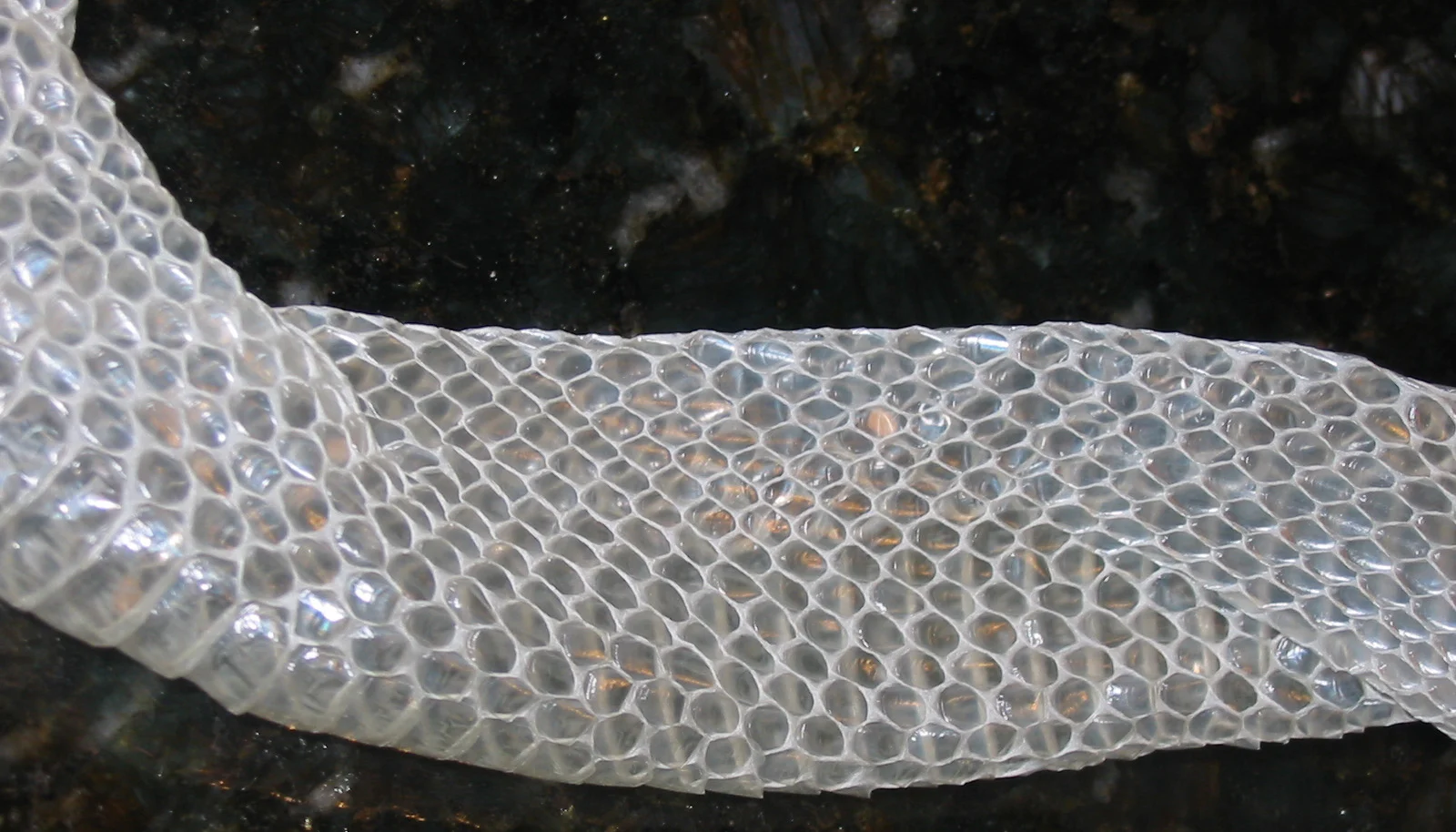
Before shedding, the eyes may turn cloudy and activity or feeding response may decline. Do not peel the skin manually; provide a humid hide and ample water. After the shed, carefully check whether retained spectacles or old skin remains on the tail tip. Repeated incomplete sheds call for a combined review of humidity, ventilation, hiding places, and skin condition. Assuming dryness is the only cause and soaking the entire enclosure can create a different set of skin problems. Wounds or persistent retained skin require veterinary attention.
Once the animal has settled, begin routine handling in short sessions. Lift gently around the middle and support any length hanging free; never pull it by the head or tail. Handling a snake immediately after touching prey may prompt a feeding response and bite. Wash your hands and watch its behavior. If the snake draws its body into an S-shaped defensive posture or tries urgently to flee, end the session. Do not remove it during shedding, soon after feeding, or in an excessively cold room. When children handle the animal, an adult must supervise escape prevention and hand hygiene.
The natural history of kingsnakes eating other snakes is a compelling reason to avoid cohabitation. A larger enclosure and twice as many hides do not eliminate the risk of cannibalism. Unless deliberately breeding, keep one snake per enclosure. Even brief breeding introductions should be managed by an experienced keeper with quarantine, condition assessment, and equipment ready for immediate separation. Placing two snakes together for a photograph or into one water bowl is unnecessary. Do not project a human interpretation of “loneliness” onto a solitary snake.
Cleaning, Health Records, and Signs Beginners Miss

%20female%20with%20eggs%20...%20(36140365626).jpg)
Remove feces and wet substrate as soon as they are found, and wash and refill the water bowl daily. Clean furnishings and walls periodically with a reptile-safe disinfectant appropriate to the material, following its instructions for rinsing and complete drying. The RSPCA suggests a full clean roughly once a month, but frequency should reflect fecal output and substrate type. Move the snake to a secure temporary container so disinfectant cannot contaminate food or water. Wash your hands after disposing of waste and keep enclosure equipment separate from areas used to wash human dishes.
Weigh the snake regularly under comparable conditions and keep simple records of feeding dates, prey size, feces, sheds, temperature, and humidity. Missing one meal is different from refusing food for weeks while losing weight. A shift from complete sheds to repeated fragments, bubbles or wheezing during breathing, or blisters and wounds on the skin also deserves documentation. None of these signs alone establishes a diagnosis. Thermometer error, excessive humidity, dehydration, and infection can appear similar and require examination.
Quarantine every new animal with separate equipment from existing reptiles, and discuss fecal testing and an initial health examination with a veterinarian. If you see black specks resembling external parasites, repeated regurgitation, or persistent hiding, do not improvise with insecticides, antibiotics, or vitamins. Wash your hands before and after contact, and never use a kitchen worktop or dining table as an exercise area. Reptiles can carry microorganisms capable of infecting people even when they appear healthy. Homes with young children or immunocompromised residents need an especially strict hygiene plan.
Common beginner errors include buying abundant equipment but measuring only one location, keeping the entire enclosure wet to “help” a shed, abruptly increasing prey size, and repeatedly handling a hatchling in an attempt to tame it. A daily checklist can be simple: inspect the door lock and water, read the warm surface, cool air, and humid hide, and note feces or behavioral changes. Weekly, compare feeding and weight records, inspect skin and eyes, and test lamps and the thermostat. The purpose of a care guide is not to memorize numbers but to maintain an environment in which the snake can make safe choices.
Read the natural-history profile for this species
References
- The Reptile Database — Lampropeltis polyzona
- Ruane et al. (2014), species limits in milksnakes
- RSPCA — Kingsnake care
- ReptiFiles — Milksnake care
- Seoul Reptile — Nelson’s milksnake listing
Suggest an edit
Tell us which sentence may be incorrect and provide a verifiable source. Submissions are reviewed before publication.