Last updated 2026.10.05 · Edited by silveston · Compiled by an independent hobbyist without professional credentials
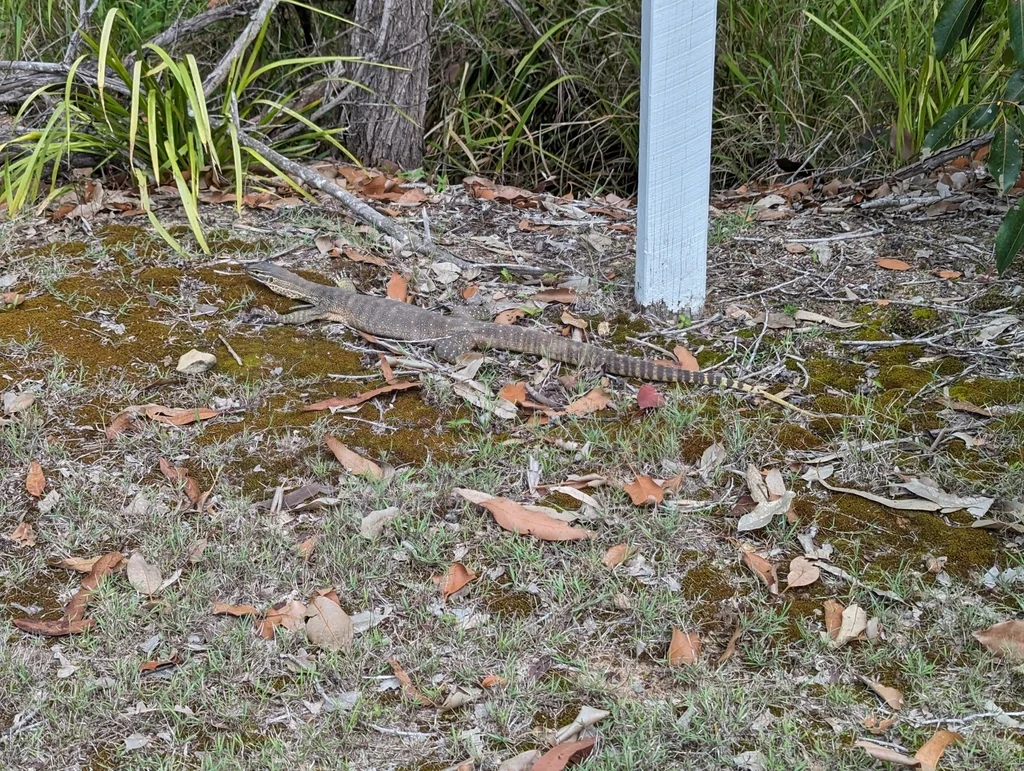
The Argus monitor (Varanus panoptes) is a fast, powerful, constantly investigative large monitor. Strong feeding responses do not make it easy to manage. An adult needs a room-sized enclosure in which it can turn, dig deeply, climb, and keep a safe distance from people. A glass tank with one hot spot and a shallow layer of substrate may contain the body but cannot contain the behaviour. This guide aims beyond keeping the animal alive: it provides a system that permits thermoregulation, burrowing, exploration, and learning.
The values below are starting ranges, not absolutes to be set with one thermometer. Materials, ventilation, body size, lineage, and season change the result. Measure surface temperature with an infrared thermometer, air and burrow temperatures with digital probes, and UV exposure with a UV Index meter when possible. Reading the Argus monitor species wiki first makes clear why floodplain and savanna ecology, burrow use, and deep nesting demand both large space and deep substrate.
Care essentials
| Management item | Practical starting point |
| Adult enclosure | At least about 240×120×120cm; preferably 300×150×180cm or larger |
| Basking surface | A broad area around 50–60°C, measured without accessible burn hazards |
| Warm-side air | 29–32°C by day |
| Cool-side air | 24–27°C by day |
| Night | Generally 22–26°C; a gradual drop may suit healthy adults |
| UVB | Target roughly UVI 3–6 at the basking position and adjust by measurement |
| Substrate | Shape-holding soil mix; ideally at least 60cm deep for adults |
| Cohabitation | Single housing is the default |
Check the table’s conditions of use, detailed explanations, and references together.
First decision: can you realistically meet this species’ needs?
Adult accommodation is closer to construction than furniture. Plan for the mass of soil and water, electrical load, waterproofing, drainage, ventilation, doors and locks, and safe cleaning access. A BIAWAK husbandry report describing an adult pair in a custom 366×122×244cm enclosure illustrates how much horizontal and vertical space these monitors can use. If that scale cannot be maintained for years, or an experienced exotics veterinarian is unavailable, a smaller monitor species is the kinder choice for both animal and keeper.

Space by growth stage and escape prevention
A hatchling or small juvenile may begin in an enclosure around 120×60×60cm, but this is not a permanent standard that postpones adult planning. Growth is rapid, so reassess body length, turning room, thermal gradient, and substrate depth every 2–3 months. A subadult can move through housing of at least 180×90×90cm before the adult enclosure is completed. At every stage, the monitor must be able to stretch its tail without folding it and travel far enough to choose genuinely different temperatures.
A nose can force a sliding door and claws can open weak vents. Reinforce frames with metal or another rigid material and use two-stage locks. Put wires and probes in protective conduit, and secure heat lamps inside metal guards beyond reach. Support heavy stones and logs directly from the floor, then add substrate around them; objects placed on loose soil can collapse when undermined. Drains and service doors must also resist being pushed open from inside.

Thermal gradient: a map of choices, not one hot point
Begin with a basking surface around 50–60°C, but do not heat only a small spot. Several lamps warming a broad stone or rigid shelf allow the trunk to heat evenly and reduce local overheating. Measure multiple surface points with an infrared thermometer, then measure air temperature at the same area separately with a probe. Check the highest surface the back can reach. Persistent gaping, immediate retreat from the basking area, or remaining directly under heat all day are reasons to reassess the gradient.
Start with 29–32°C air on the warm side and 24–27°C on the cool side. At night, extinguish visible light and allow a gradual fall to roughly 22–26°C, using a conservative lower limit for juveniles, recovering animals, or cold seasons. Connect heat sources to thermostats and add independent over-temperature protection. Whole-floor heating can prevent escape into cooler soil, so use underfloor sources locally and monitor temperatures within the deep substrate.
Where to measure
- Infrared thermometer: centre and edge of the basking surface and the highest accessible point
- Probe 1: shaded air at body height on the warm side
- Probe 2: air at body height on the cool side
- Probe 3: deepest hide or burrow interior
- Record: daily maximum and minimum; map several surfaces weekly

Lighting and UVB: brightness, ultraviolet, and distance
Provide bright daytime light together with UVB. Mount a high-output linear T5 UVB lamp above the basking zone and adjust distance, reflector, and mesh attenuation to produce about UVI 3–6 at back height. A lamp marketed as “desert” does not reveal actual exposure. Glass and most clear plastics remove much UVB, while fine mesh also reduces it. If a UV Index meter is unavailable, follow the manufacturer’s distance chart conservatively, although measured management is safer.
Begin with a regular photoperiod of about 12 hours and add seasonal variation if desired. Switch off red and blue bulbs at night as well: monitors can see colour, so a lamp dim to people is not necessarily dark to them. If night heat is required, use a lightless ceramic emitter or radiant panel under thermostat control. UVB output declines even while the tube still glows, so record measured UVI and the manufacturer’s replacement interval.

Humidity, ventilation, and deep substrate
Provide a relatively dry surface and a moist burrow at the same time instead of keeping the entire enclosure wet. General air humidity can begin around 50–70%, but the moisture gradient within the soil matters more than one reading. Mix sand, fertilizer-free topsoil, and a clay component so a squeezed handful holds shape without releasing water. Adult housing should offer at least 60cm depth where possible, and breeding females need a deeper section. Include inspectable drainage so water cannot collect in an anaerobic layer.
Use low and high vents for cross-flow while preserving humidity within the burrow. Surface misting alone may leave the top wet and the lower layers dry. A watering tube can recharge deeper soil; monitor burrow temperature and humidity with a probe. Mould odour, a surge in flies, or a cold sticky floor layer indicates excess water or poor drainage. Repeated retained shed, dry skin around eyes and toes, and powdery soil suggest insufficient local moisture.

Hides, furnishings, and behavioural enrichment
Place a close-fitting hide on both the warm and cool sides and connect them to an area deep enough for self-dug burrows. Add large cork tubes, firmly anchored branches, shelves at several heights, visual barriers, and a large water basin. Argus monitors are not fully aquatic, but they drink, soak, and often defecate in water. The basin must not tip when the whole animal enters and must remain accessible for safe removal and cleaning.
Enrichment returns time for hunting and investigation; it is not decoration. Instead of placing every item in a bowl, hide some food in leaf litter, cardboard boxes, or secure holes. Use mild, nontoxic scent cues and do not redesign the entire enclosure every day. Target training can teach the monitor to move to a station and enter a transport box, reducing stress during cleaning and veterinary care. Deliver a small reward immediately after the correct behaviour and never wiggle fingers as if they were prey.
Food and feeding: diversity, body condition, and controlled pace
Build the staple diet from varied invertebrates such as crickets, locusts, silkworms, black soldier fly larvae, and limited superworms. Supplement intermittently with appropriately sized whole prey such as rodents, quail, eggs, or suitable freshwater fish according to growth and activity. Avoid fatty meat scraps, processed meat, and seasoned food. Repeated muscle meat lacks the calcium and micronutrients present in bones and organs. Gut-load feeder insects and use calcium and multivitamins without excess, accounting for UVB, whole-prey intake, and life stage.
Young monitors may take small meals almost daily without becoming grossly distended at one feeding. Begin subadults around 4–5 meals weekly and adults around 2–4, then adjust to body condition and seasonal activity. Track weight trend, fat around the tail base and neck, whether the abdomen drags, and whether the animal explores vigorously. Weigh under the same conditions weekly and take photographs. A strong appetite is not permission to feed to fullness every time; chronic excess increases obesity and fatty-liver risk.
Tongs reduce the chance of hands being mistaken for food, but can also condition a lunge whenever tongs appear. Use a target cue before feeding and stand away from the doorway. When a meal is refused, check temperature, shedding, reproductive state, stress, feces, and weight before immediately changing foods. Persistent loss of appetite, weight decline, or repeated vomiting warrants evaluation by a reptile-experienced veterinarian.

Water, shedding, and cleaning
Provide clean water at all times and inspect it at least daily. If the animal defecates in the basin, replace the water immediately, clean the vessel, and rinse thoroughly. A drainable pool is useful in a large enclosure, but a pump and filter must not recirculate fecal contamination. Shedding may occur in patches. Layers retained on toes, tail tip, or eyelids require a review of the humid burrow, hydration, nutrition, and possible mites. Pulling dry skin by force can damage skin and digits.
Remove feces, leftovers, and contaminated substrate every day; clean the basin and high-contact surfaces thoroughly each week. Replace bulk substrate according to contamination and drainage—bioactive deep substrate never means maintenance-free. Quarantine a new animal for at least 60–90 days with separate tools and space, and arrange fecal testing and a health examination. Separate equipment and hand hygiene prevent transfer to established animals.
Behaviour, handling, and cohabitation
An Argus monitor should not be restrained into “tameness.” Begin by sitting quietly near the enclosure and making human movement predictable. Read tongue-flicking, body lowering, route searching, throat inflation, and tail whipping, and preserve the choice to retreat. Do not offer food whenever the door opens. Use a long target and rewards for voluntary movement. When lifting is unavoidable, support trunk and pelvis together and keep the head away from the face. Gloves do not make grabbing the head or tail safe.
Single housing is the rule. Even without open fighting, one animal may monopolize heat, hides, or food, and attacks can begin abruptly at maturity. Breeding introductions belong with experienced keepers using a large, closely observed space that can be divided immediately. Do not begin unless a complete individual enclosure is ready for each monitor. Contact with other species or small household pets risks predation, injury, and disease transmission.
Warning signs and veterinary care
- Coldness and lethargy despite basking, or continuous gaping even in the cool area
- Refusing two or more scheduled meals with weight loss, or abnormal abdominal swelling
- Nasal or oral bubbles, wheezing, raised-head breathing, or repeated open-mouth breathing
- Soft or bowed jaw and limbs, tremors, seizures, or fractures
- Retained shed, swelling, or darkening tissue on toes and tail tip
- Persistent diarrhea, blood or suspected parasites, or a sudden change in defecation
- Nose rubbing, repetitive pacing, persistent escape attempts, or self-injury
These signs do not establish a diagnosis. Bring temperature, UVB, humidity, feeding and weight records, photographs of feces, and a fresh fecal sample if possible to a reptile-experienced veterinarian. Do not use human medicines, leftover antibiotics, or unprescribed dewormers: dosing errors can injure liver and kidneys and delay diagnosis. For urgent transport, use a rigid locked box with a nonslip towel and place any heat source outside so it cannot contact the animal.
Frequent beginner mistakes
- Keeping an adult in the glass tank purchased for a juvenile.
- Treating basking-surface temperature and air temperature as the same reading from one thermometer.
- Using shallow sand and treating digging as enclosure destruction.
- Equating appetite with health and overfeeding energy-dense prey.
- Trusting a UVB lamp label without measuring distance, mesh attenuation, and declining output.
- Escalating defensive behaviour through forced handling.
- Missing resource monopolization because cohabiting animals are not visibly fighting.
- Purchasing before identifying a veterinarian and preparing a secure transport box.
Weekly management checklist
- Daily: check water, feces, appetite, breathing, eyes and toes, doors and locks
- Daily: record basking-surface and warm- and cool-air maxima and minima
- Weekly: record weight and full-body photographs; inspect UVB distance, guards, and cables
- Weekly: check burrow moisture, drainage, mould, and pests
- Monthly: reassess space and furnishings for growth; test backup power and thermostats
- Regularly: arrange fecal and veterinary checks; retain legal and individual records
References
- The Reptile Database. Varanus panoptes Storr, 1980.
- Christian, K. A. et al. (1996). Thermoregulation of Monitor Lizards in Australia. Ecological Monographs 66:139–157. doi:10.2307/2963472.
- Doody, J. S. et al. (2015). Deep nesting in a lizard, déjà vu devil’s corkscrews. Biological Journal of the Linnean Society 116:13–26. doi:10.1111/bij.12589.
- Ward-Fear, G. et al. (2024). Live Fast, Die Young. Ecology and Evolution 14:e70625. doi:10.1002/ece3.70625.
- BIAWAK 2(2). Husbandry notes for adult Varanus panoptes horni in a 366×122×244cm enclosure.
- IUCN SSC Monitor Lizard Specialist Group. Varanus panoptes.
Suggest an edit
Tell us which sentence may be incorrect and provide a verifiable source. Submissions are reviewed before publication.